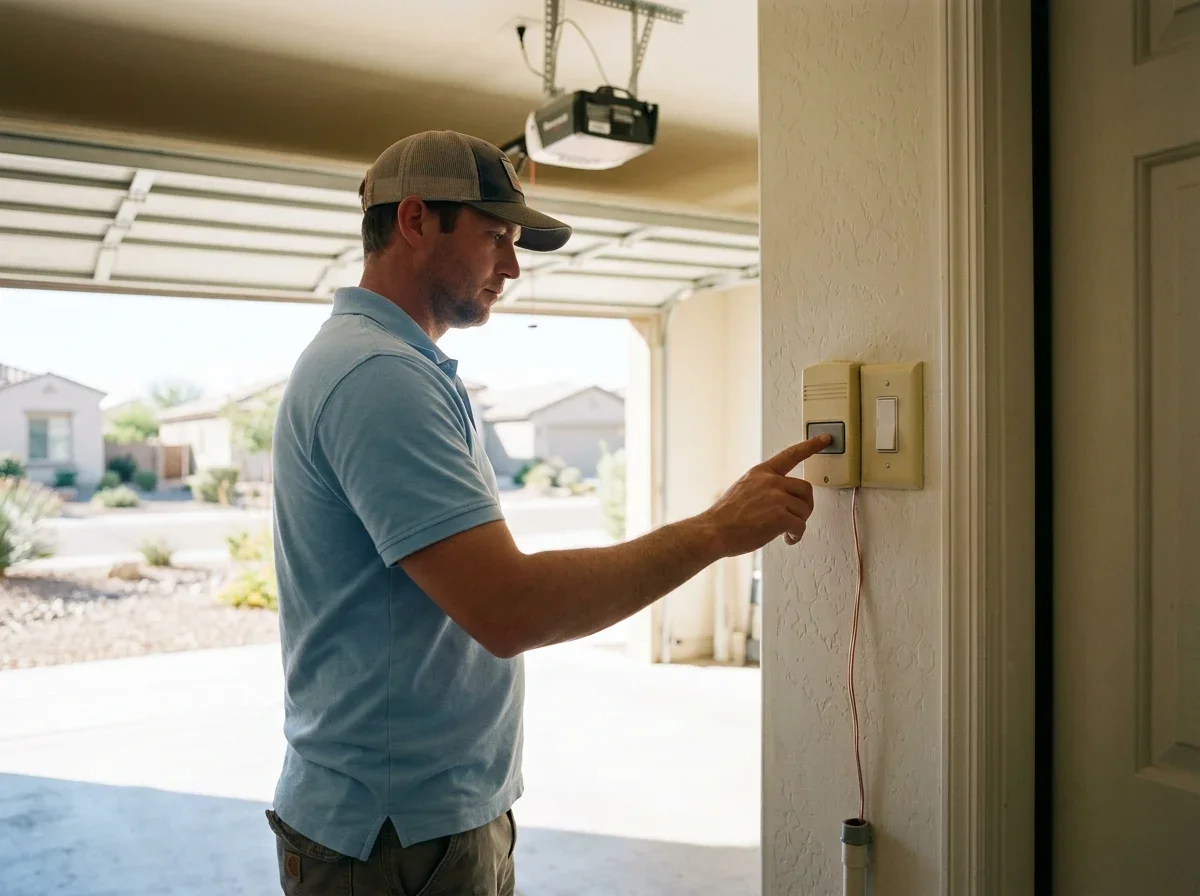
Belt Drive vs. Chain Drive Opener Differences
A belt drive opener is a motor that pulls a trolley along a rail using a steel-reinforced rubber belt. A chain drive does the same job with a steel chain. Belt models are generally described as quiet and a fit for garages beside bedrooms, while chain models are positioned as durable and budget-friendly.[1]
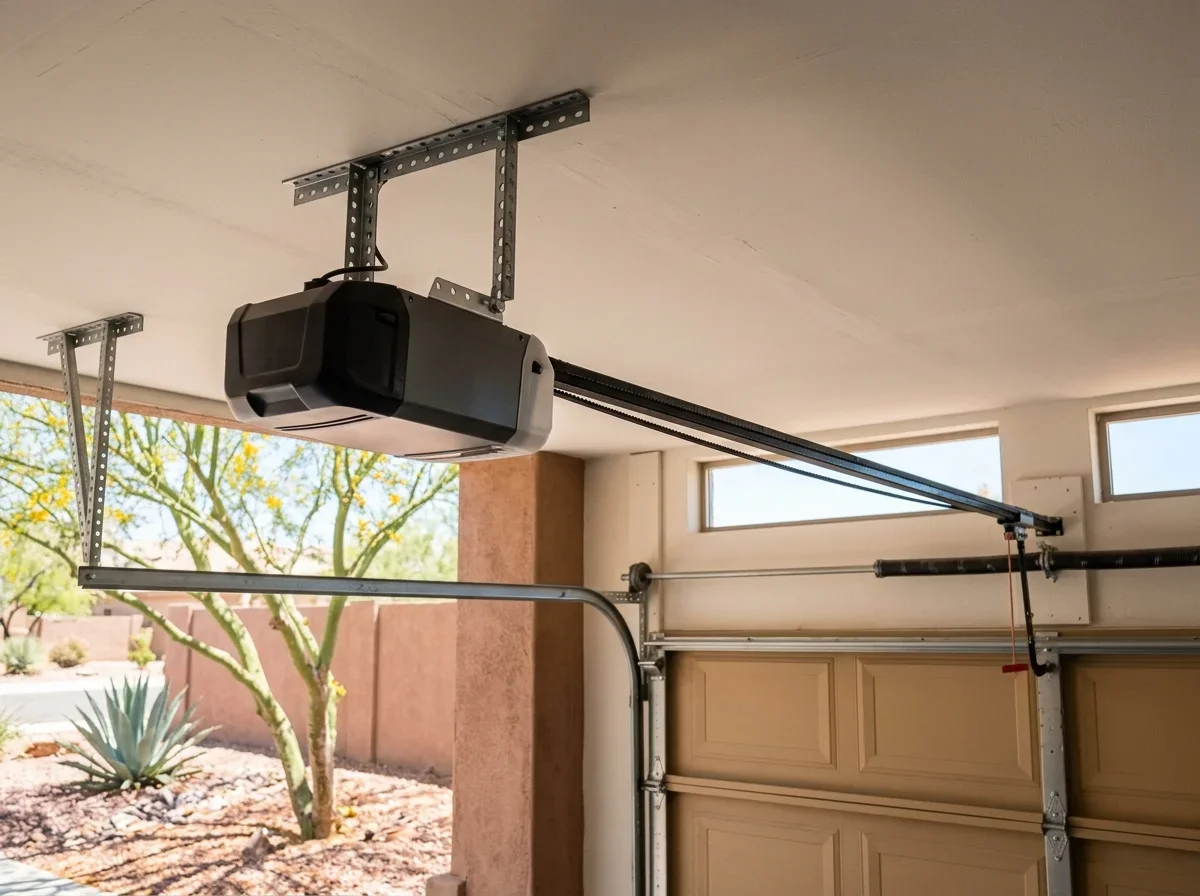
If a bedroom shares a wall with your garage, lean belt. If the garage is detached, chain is often fine.
LiftMaster draws the same line: belt drives for attached garages, chain drives for heavy or frequently used doors.[2]
A third option, the screw drive, moves the trolley along a threaded steel rod. It's covered in Screw Drive vs Belt Drive Garage Door Opener, so this page stays on belt versus chain.
Belt drive vs. chain drive at a glance
| Belt drive | Chain drive | |
|---|---|---|
| Noise and vibration | Smoother, less metallic rattle | More rattle and vibration |
| Upkeep | Little routine lubrication | Needs lubrication and tension checks |
| Upfront price | Higher tier | Lower tier |
| Lifting strength / heavy doors | Check the spec sheet on heavy or oversized doors | Commonly chosen for heavy, busy doors |
| Best fit | Garage under or beside living space | Detached garage, tight budget, heavy door |
Quieter Option for a Garage Next to a Bedroom
A belt removes metal-on-metal contact from the drive train. DC-motor belt models are designed to cut the noise and vibration associated with chain-drive and AC-motor units.[3] That's a real advantage, but it's only part of the picture.
An opener hangs from the ceiling or header, so the rail passes motion straight into the framing. With a bedroom above, that structure-borne vibration can matter more than the sound you hear in the garage.
Where the sound comes from
- Motor hum: choose a DC motor with soft-start and soft-stop. Wall-mount openers can also reduce sound carried through the ceiling.[3]
- Rail and trolley: this is the part a belt improves. Correct belt or chain tension and clean alignment keep it that way.
- The door itself: worn rollers, dry hinges and an out-of-balance door make noise no opener can hush. See garage door roller and track repair.
- Shared-wall vibration: secure, well-braced mounting matters. A loose bracket turns a quiet belt into a drum.
Many doors in the Phoenix metro are decades old, so worn rollers and hinges are likely contributors. A garage door maintenance tune-up is a cheap first test.
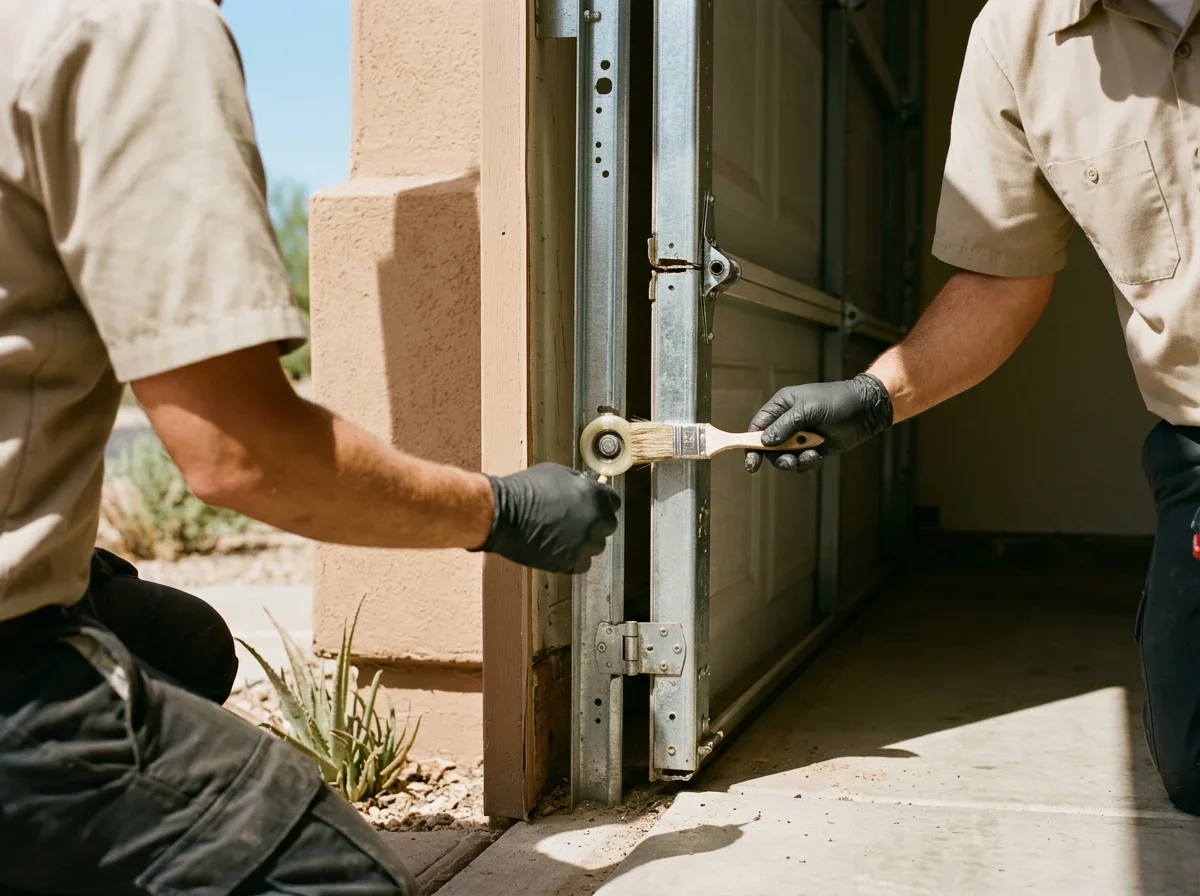
DASMA recommends monthly checks of rollers, hinges, springs and panels.[4]
Try this before buying: disconnect the opener and lift the door by hand. If it's loud, a belt won't fix it.
Pro tip
Disconnect the opener and lift the door by hand before choosing a drive. A noisy door needs roller and hinge work, not a new belt.
If it feels heavy or won't stay halfway open, the issue is spring balance, not the drive. Leave spring work to a trained technician.
Upkeep and Price Compared
Chain drives usually cost less up front but need more attention. LiftMaster states that belt drives are maintenance-free compared with chain units that require lubrication.[5] Treat "maintenance-free" loosely. The belt, pulley and mounting hardware can still wear or loosen.
The price gap varies by horsepower, motor type and features. For current figures, see opener installation cost.
Long-term cost depends as much on the door as the drive. An opener fighting a poorly balanced door runs rough and wears faster, chain or belt. Compare motor and rating on the spec sheet.[6]
Wi-Fi and battery backup depend on the model, not the drive, so compare them separately in smart garage door openers.
Key takeaways
Belt drives suit garages next to living space
Chain drives suit heavy doors, tight budgets and detached garages
A noisy door needs repair, not a new opener
Check the spec sheet for horsepower and door weight
When a Chain Drive Is the Better Choice
Chain makes sense in three common cases:
- Heavy or oversized doors. Chain units are designed to handle heavy and frequently used doors.[2] Many belt models handle standard residential doors well, so compare the horsepower rating and door weight on the spec sheet rather than assuming.
- Tight budgets, where the lower price is the deciding factor.
- Detached garages, or garages away from living space, where noise matters less.
Disadvantages of a belt drive
Belts cost more, and a heavy custom door can push the limits of some models. A belt also won't quiet a noisy door.
Can you switch from chain to belt?
Usually this means replacing the whole opener, not swapping a part. Check rail length, mounting, and compatibility with your door, remotes and safety sensors. Opener installation and replacement covers the process.
Before booking, verify the installer on the Arizona ROC contractor search. Ask who handles the wiring, whether your city requires a permit, and for proof of workers' compensation and general liability insurance.
Quick answers
Is a belt drive opener quieter than a chain?
Generally yes. A belt removes metal-on-metal contact, though a noisy door or loose mounting can still make noise.
Which needs more upkeep?
Chain drives need lubrication and tension checks. Belt drives need little routine lubrication but are not truly maintenance-free.
Can I swap a chain opener for a belt?
Usually it means replacing the whole opener. Check rail length, mounting and compatibility with your door, remotes and safety sensors.
Related questions
Questions
- Chamberlain. "Garage Door Opener Buyer's Guide." https://www.chamberlain.com/about-chamberlain/buyers-guide. Accessed October 17, 2026.
- LiftMaster. "Garage Door Opener Buyer's Guide." https://www.liftmaster.com/buyers-guide/garage-door-openers. Accessed October 17, 2026.
- LiftMaster. "Creating a Quiet Home Begins in the Garage." https://www.liftmaster.com/builder-knowledge-center/quiet-home. Accessed October 17, 2026.
- Door & Access Systems Manufacturers Association International (DASMA). "Automatic Garage Door Opener Safety & Maintenance Guide." https://www.dasma.com/wp-content/uploads/2024/04/Automatic-Garage-Door-Opener-Safety-Maintenance-Guide-trilingual-3-22-24.pdf. Accessed October 17, 2026.
- LiftMaster. "Home Builders Article Page." https://www.liftmaster.com/builder-knowledge-center/homebuilders-article. Accessed October 17, 2026.
- Chamberlain. "Quiet Wi-Fi Belt Drive Garage Door Opener." https://www.chamberlain.com/quiet-wi-fi-garage-door-opener-with-wireless-keypad/p/B2401TMC. Accessed October 17, 2026.