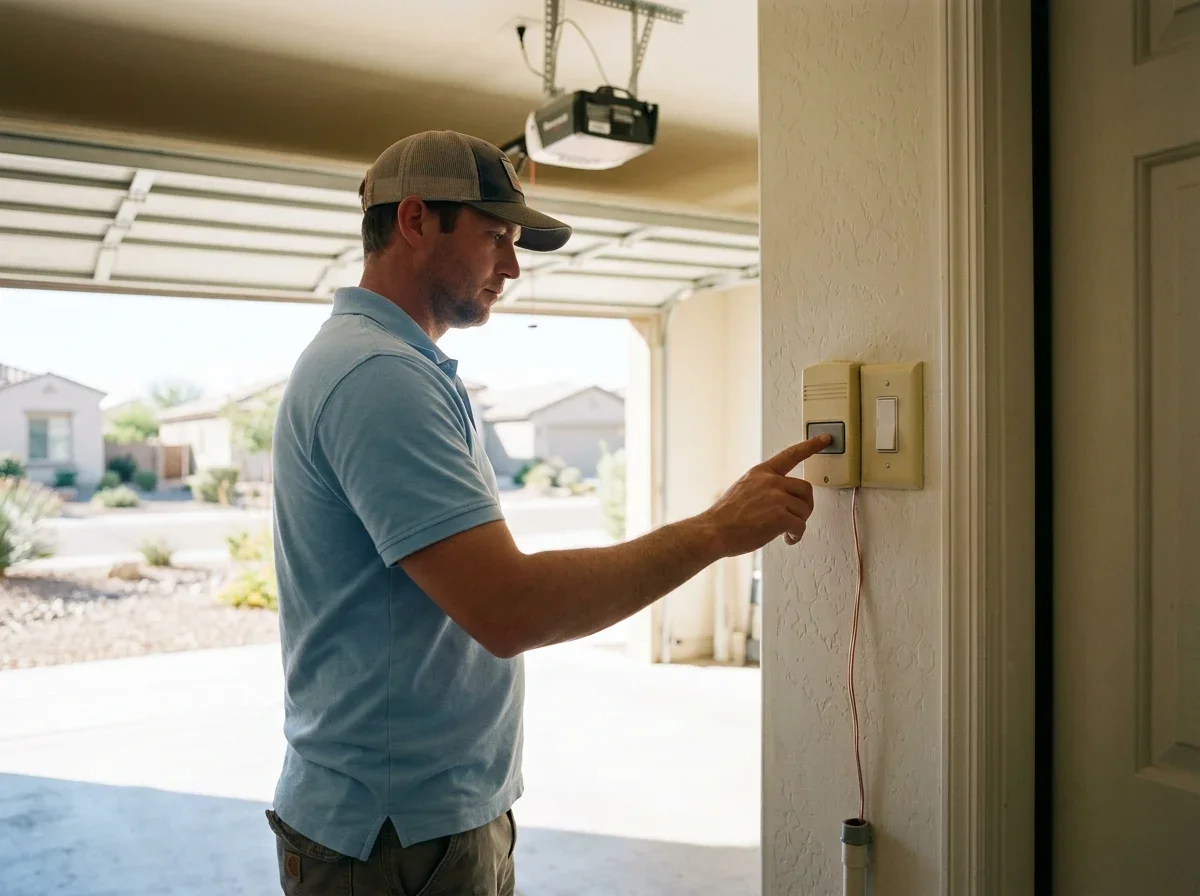
Screw Drive vs Belt Drive Opener
Belt drive is generally the quieter choice. Screw drive has fewer moving parts and is often the cheaper one to buy.
LiftMaster describes its DC belt-drive openers as using reinforced rubber belts and quiet DC motors to cut vibration and noise, which suits living space near or above the garage.[1] That is the main reason belts dominate the quiet end of the market.
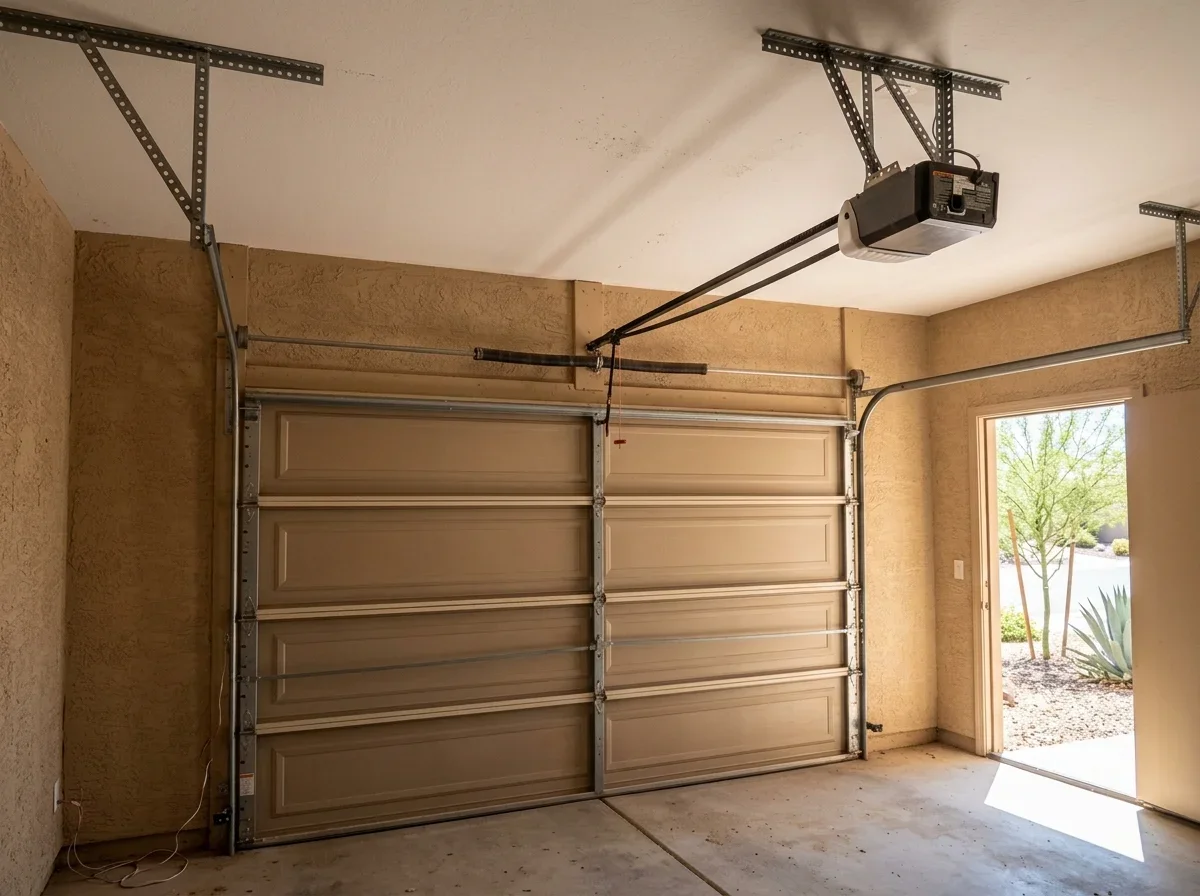
Both drive types lift typical residential doors, so check the rated door weight on any model you consider.
Then look at your layout. A bedroom above or beside the garage favors belt. A detached garage makes noise a minor concern.
Noise, Upkeep and Price Side by Side
| Factor | Belt drive | Screw drive |
|---|---|---|
| Noise | Smoother, with less vibration[2] | Can be louder, with more vibration |
| Upkeep | Check belt tension as the manual directs | Often needs periodic lubrication of the threaded rail |
| Purchase price | Often higher | Often lower |
Noise depends on more than the drive. Worn rollers, loose hinges, an unbalanced door and a poorly mounted opener all add racket, and a belt unit will not hide them.
A screw drive with fresh lubrication can also run more quietly than one that has been neglected for years.
On price, compare actual model quotes rather than assuming a gap. Ask each installer for the motor type, battery backup and warranty terms on both options. Those features move the total as much as the drive does.
For upkeep, follow the maintenance intervals in your model's manual. They differ by manufacturer, so the manual beats any general rule.
Which Suits an Arizona Garage
A garage in Phoenix can run far hotter than the outdoor air, and summer highs reach 106°F. Heat stresses lubricants, plastic parts and electronics, so look at the manufacturer's stated operating temperature range for any model you consider. Spec pages and manuals list it, and an installer can confirm it.
That range matters more than the drive type.
No authoritative source ties either design to better performance in desert heat. Treat claims that one drive handles it best with caution.
Compare these points instead:
- Motor type, with DC motors common on quieter models[3]
- Stated operating temperature range
- Battery backup and warranty length
- Whether the garage is climate controlled
Whichever you choose, the opener must meet the federal safety standard, 16 CFR Part 1211, which requires entrapment protection and testing.[4][5] Test the auto-reverse after installation, service or repair.[6]
Checklist
Compare before you buy
0 of 5 ticked
Tick them off as you go. Nothing is saved or sent.
Choose belt if quiet matters, especially with rooms above or beside the garage. Choose screw if you want simple mechanics and a lower purchase price, and you'll keep up with lubrication.
Have the door inspected and balanced first. A strained door makes either type noisy.
Pro tip
Ask each installer to quote the same motor type, battery backup and warranty on both drive types so the prices compare fairly.
Still deciding between belts and chains? See belt vs. chain drive openers. When you're ready to buy, garage door opener installation and replacement covers what the job involves, and an installer can confirm which model fits your door and garage.
Questions
- LiftMaster. "Creating a Quiet Home Begins in the Garage." https://www.liftmaster.com/builder-knowledge-center/quiet-home. Accessed October 17, 2026.
- LiftMaster. "Quiet Garage Door Openers." https://www.liftmaster.com/garage-door-openers/quiet-garage-door-openers. Accessed October 17, 2026.
- LiftMaster. "6690L | LiftMaster 1-1/4 HPs Belt Drive Opener with Battery Backup and myQ Connectivity." https://www.liftmaster.com/liftmaster-1-1-4-hps-belt-drive-opener-with-battery-backup-and-myq-connectivity/p/6690L. Accessed October 17, 2026.
- U.S. Consumer Product Safety Commission. "Automatic Residential Garage Door Operators." https://www.cpsc.gov/FAQ/Automatic-Residential-Garage-Door-Operators. Accessed October 17, 2026.
- Electronic Code of Federal Regulations. "16 CFR Part 1211 — Safety Standard for Automatic Residential Garage Door Operators." https://www.ecfr.gov/current/title-16/chapter-II/subchapter-B/part-1211. Accessed October 17, 2026.
- Door & Access Systems Manufacturers Association International. "Federal and State Residential Garage Door Operator Requirements." https://www.dasma.com/wp-content/uploads/pubs/TechDataSheets/OperatorElectronics/TDS351.pdf. Accessed October 17, 2026.