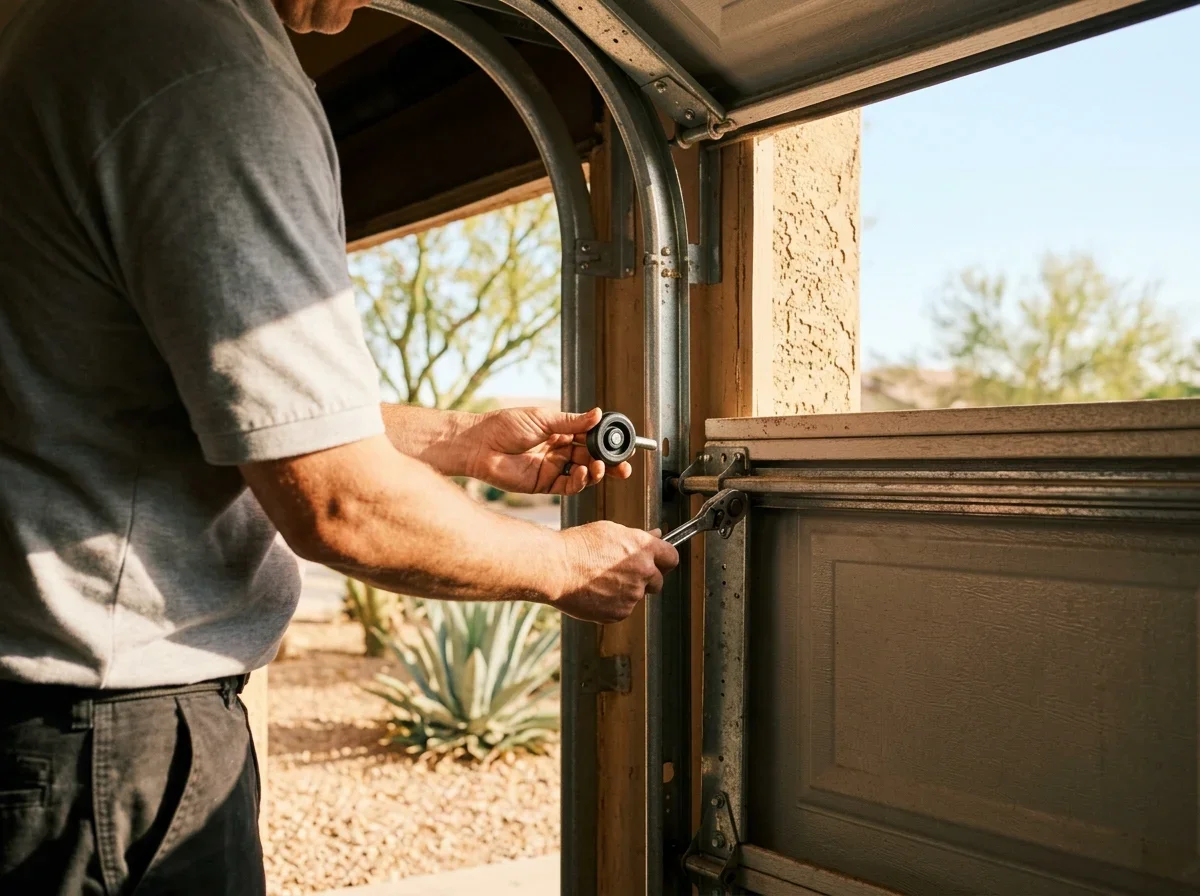
What an Off-Track Garage Door Means
A garage door is off track when one or more rollers have left the track channel, leaving the door crooked, jammed, or stuck partly open or closed.
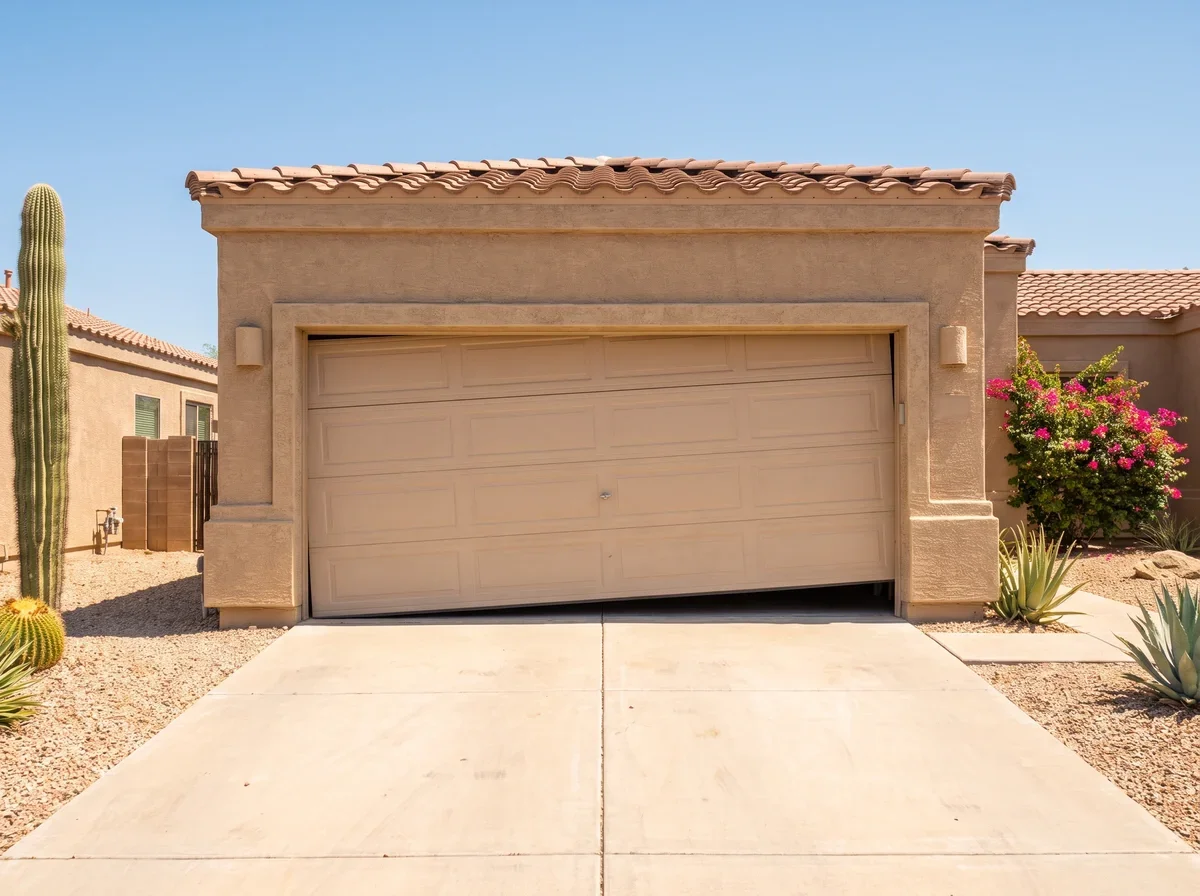
You will usually notice a door that won't move, a tilt, a gap at one corner, grinding, or an opener that runs while the door stays put. For the wider list of symptoms, see garage door won't open.
Stop using the opener, keep people and vehicles clear, and do not force the door in either direction.
How a Garage Door Comes Off the Track
Most derailments trace back to worn or broken rollers, a bent or misaligned track, loose track brackets or back-hangers, a frayed or snapped cable, or a vehicle bumping the door. A track can look fine and still sit slightly out of alignment.
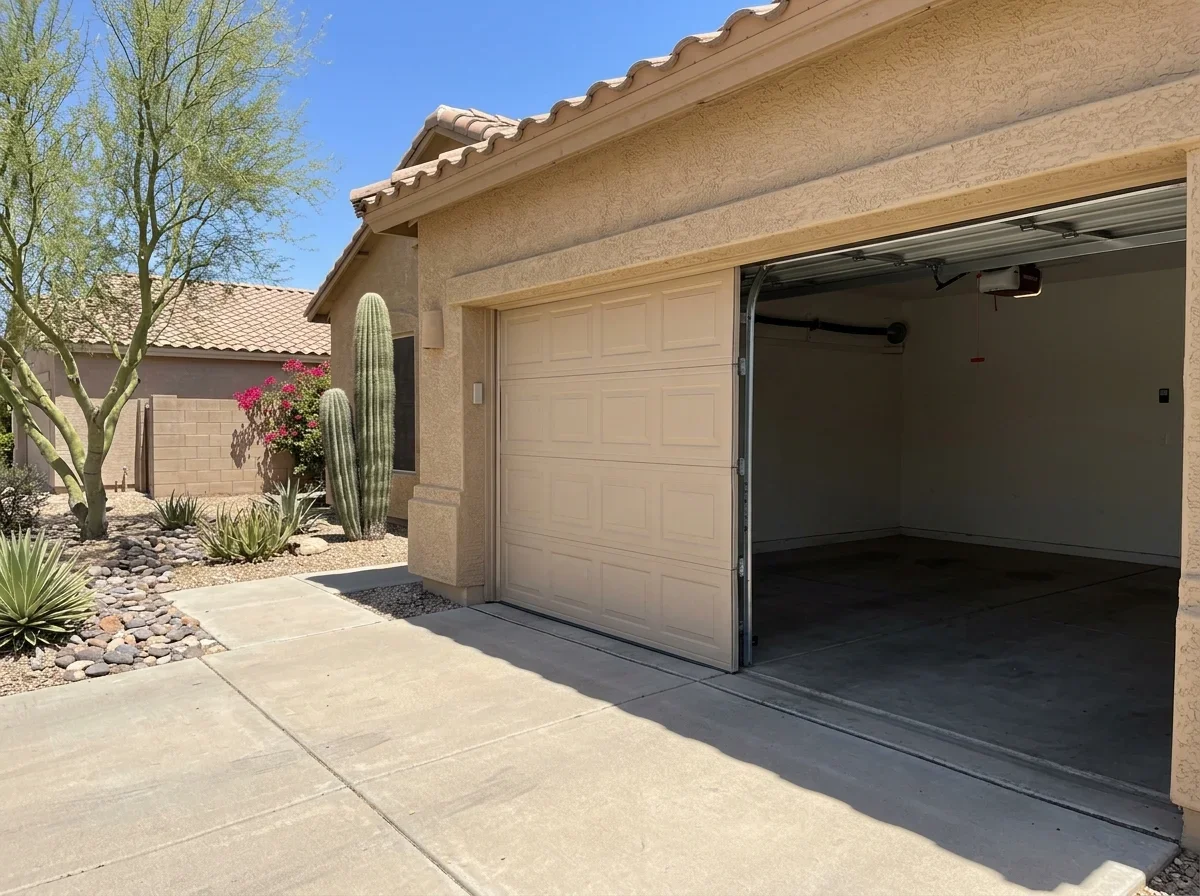
In the Phoenix area, a haboob can pack fine dust and debris into track channels and around rollers, and wind can push a door that is already out of alignment. After a dust storm, look along each track for debris before you run the door.
The harder question is whether you have a roller problem or a spring or cable problem. Cable slack or disengagement can cause uncontrolled door movement, damage, or severe injury.[4]
| What you see | Likely fault | Next step |
|---|---|---|
| One roller out, panels straight, tracks intact, door low | Roller or alignment | DIY-adjacent, with care |
| One side hangs lower, cable slack or off the drum | Cable | Pro job |
| Gap in the torsion spring, or a loud bang beforehand | Spring | Pro job |
| Door very heavy, or drops when lifted a few inches | Spring or balance | Pro job |
| Kinked track or creased panel edge | Bent metal | Pro job |
Cable and spring faults have their own pages: cable off the drum covers the first.
Why You Shouldn't Force It Back or Use the Opener
The door weighs a lot and sits under spring tension. Forcing it can bend sections, drop the door, or crush hands and anyone standing nearby. DASMA states that frayed or worn lift cables can break and cause injury, and that spring systems should be repaired only by trained professionals.[2]
Running the opener on a crooked door is just as risky. It keeps pushing against resistance, which can strip the opener or fold panels further.
Some parts are off limits entirely. Homeowners should not loosen or adjust bottom brackets, cables, or red-colored fasteners.[1]
If a spring is broken, the door should not be operated at all.[3]
Pro tip
If you hear a loud bang from the garage, treat it as a possible broken spring and leave the door alone until a pro checks it.
Putting a Garage Door Back on the Track
Try this only when the door is closed or low, the metal is straight, and no spring or cable looks damaged. If any condition fails, skip to the list below.
- Pull the release cord to disconnect the opener, then clamp the door so it cannot move.
- Inspect the roller stem, hinge, and track for bends or damage.
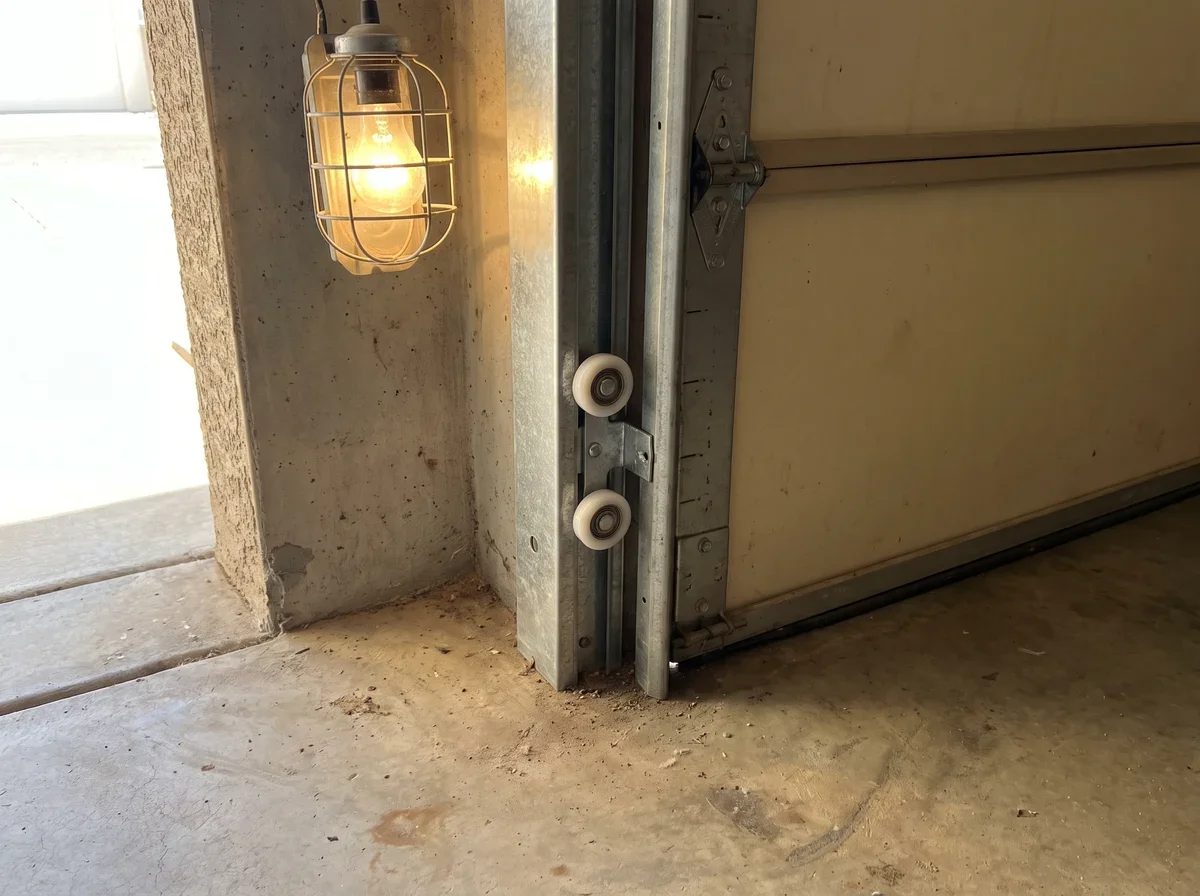
- Reseat the roller in the channel and check that the track is parallel to the opposite side.
- Test by hand through the full travel before reconnecting anything.
- Return the door to the closed or low position before re-engaging the opener carriage.
Re-engaging the opener with rollers out of the track can jam or damage it, so keep people clear of the opening while the door moves.[3]
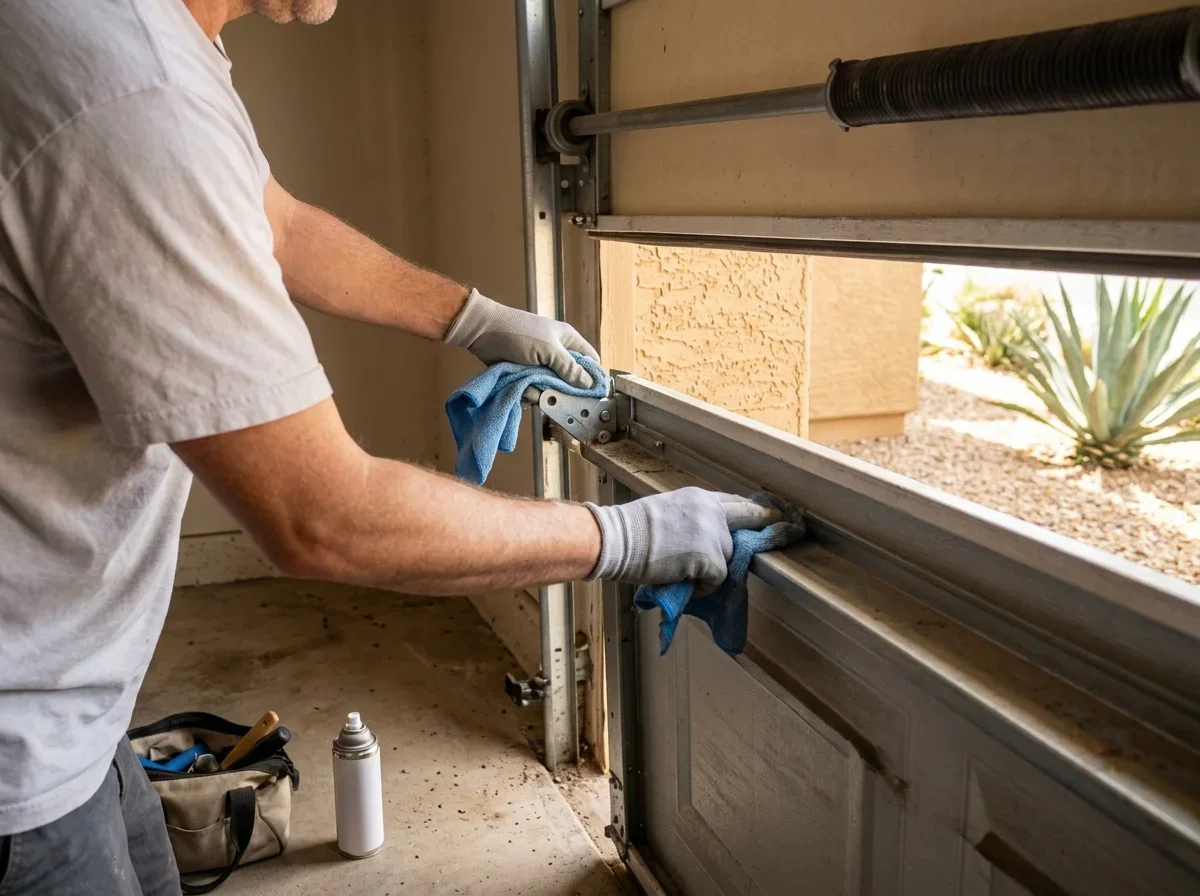
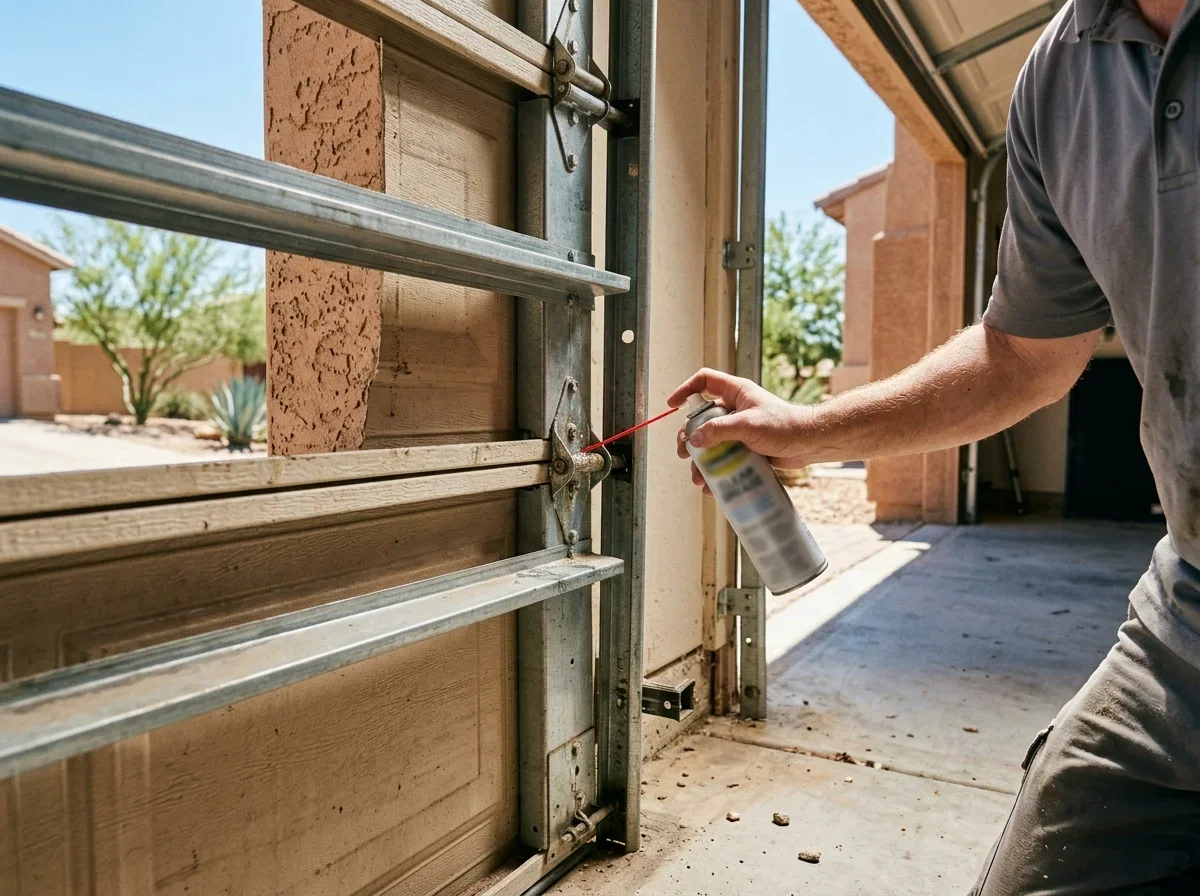
Reseating a roller without fixing the cause usually means it pops out again. Check the brackets and back-hangers, and wipe the tracks rather than packing them with grease, especially in dusty Phoenix garages.
Stop and call a pro if:
- A section, track flange, or panel edge is bent, creased, or buckled
- The cable is slack, frayed, or off the drum
- The door is partly raised or off both tracks
- A spring looks broken or the door feels unusually heavy
Bent metal means the door will derail again even after the roller is reseated. Replacing a garage door panel may be on the table.
Our garage door roller and track repair page explains what a pro visit covers.
Before you authorize structural work, check the contractor's license on the Arizona ROC contractor search, confirm the class covers the work in your contract, and ask for proof of workers' compensation and liability insurance.
Quick answers
Can I use the opener on an off-track door?
No. The opener keeps pushing against resistance, which can strip it or fold panels further.
Can I put the door back on the track myself?
Only when the door is closed or low, the metal is straight, and no spring or cable looks damaged.
When should I call a pro?
Call if metal is bent, the cable is slack or off the drum, the door is partly raised, or a spring looks broken.
Related questions
Questions
- Door & Access Systems Manufacturers Association International (DASMA). "Automatic Garage Door Opener Safety & Maintenance Guide." https://www.dasma.com/wp-content/uploads/2024/04/Automatic-Garage-Door-Opener-Safety-Maintenance-Guide-trilingual-3-22-24.pdf. Accessed October 17, 2026.
- Door & Access Systems Manufacturers Association International (DASMA). "Safety Tips." https://www.dasma.com/safety-tips/. Accessed October 17, 2026.
- Door & Access Systems Manufacturers Association International (DASMA). "Residential Sectional Garage Door and Electric Operator." https://www.dasma.com/wp-content/uploads/2023/04/TDS167.pdf. Accessed October 17, 2026.
- Door & Access Systems Manufacturers Association International (DASMA). "TDS 1501: Jackshaft Operators on Standard-Lift Sectional Doors." https://www.dasma.com/wp-content/uploads/2023/03/NewTDS1501_Spring2023.pdf. Accessed October 17, 2026.