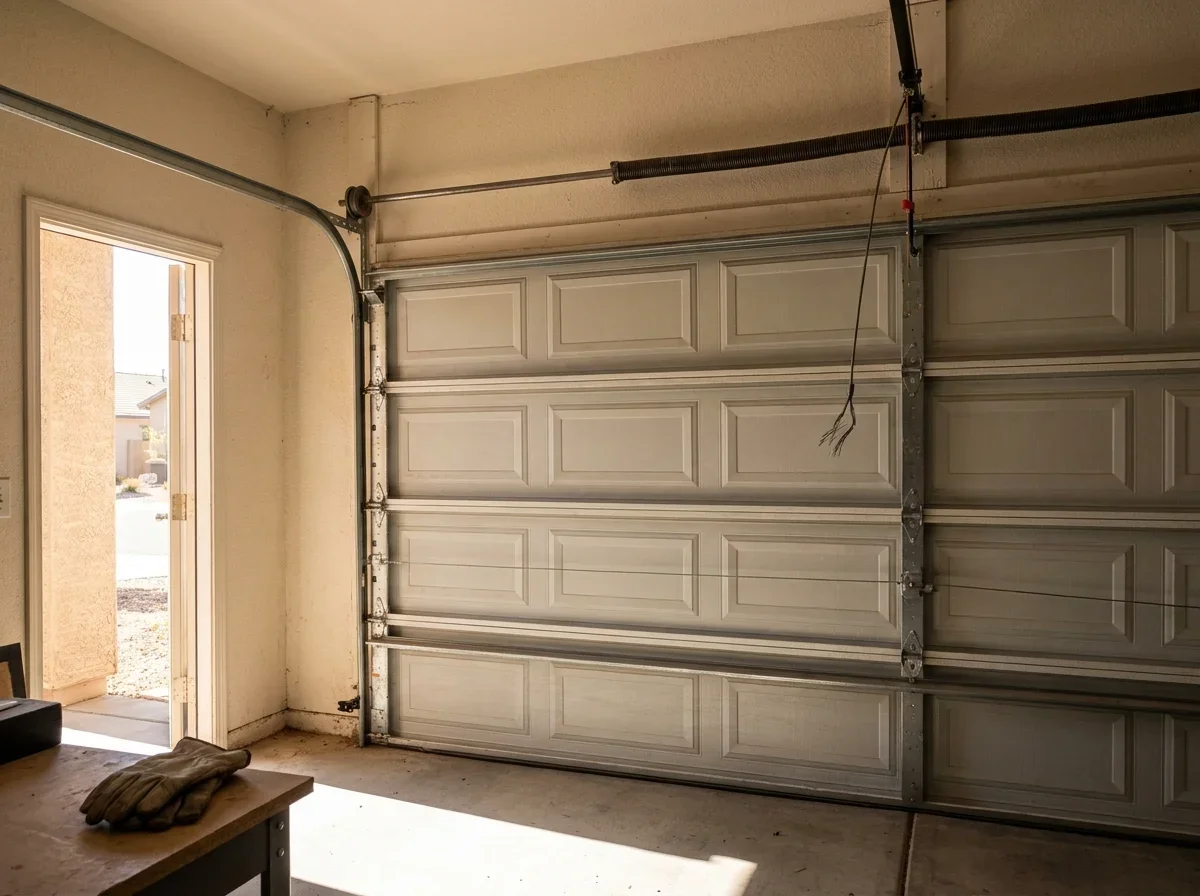
Garage Door Cable Off the Drum
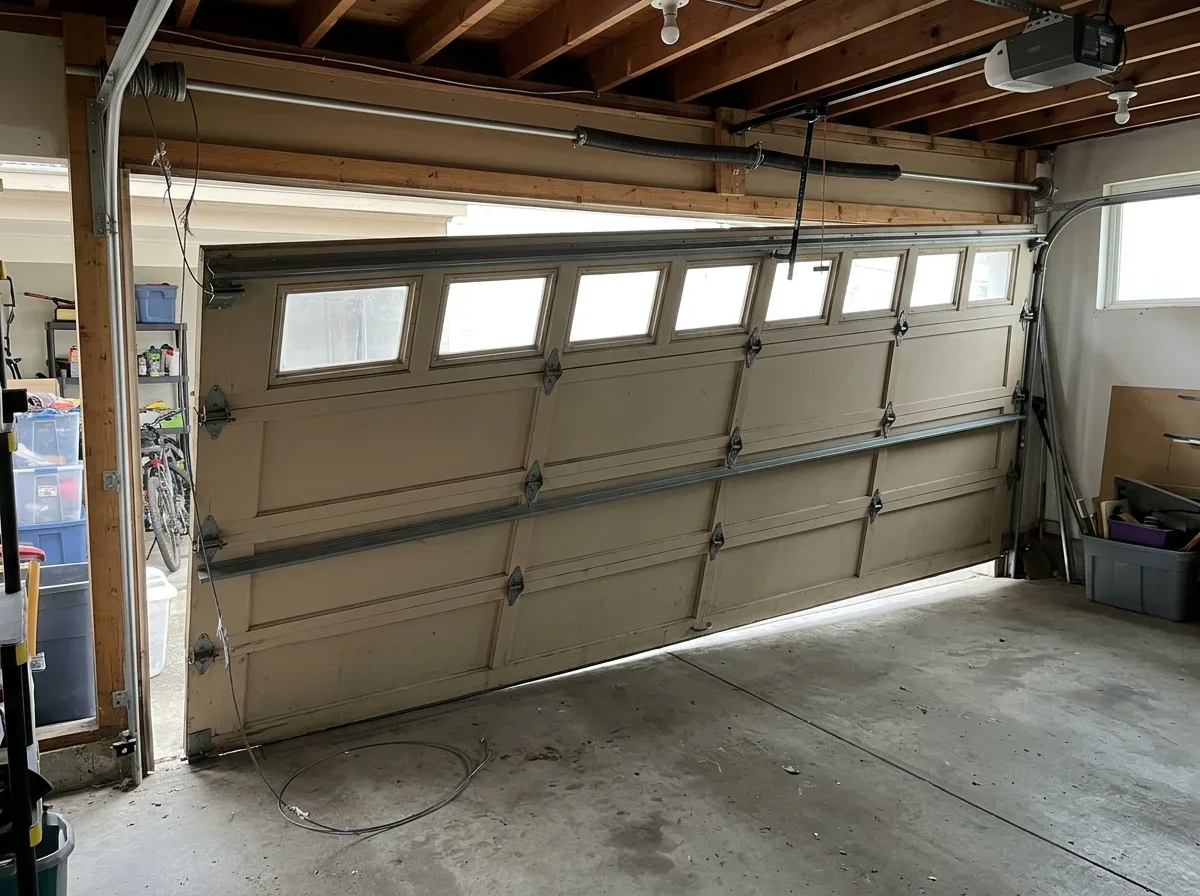
When a cable slips off its drum, the door can lose its balance. One side may hang higher than the other, the door can twist in the opening, and a roller can pop out of the track.
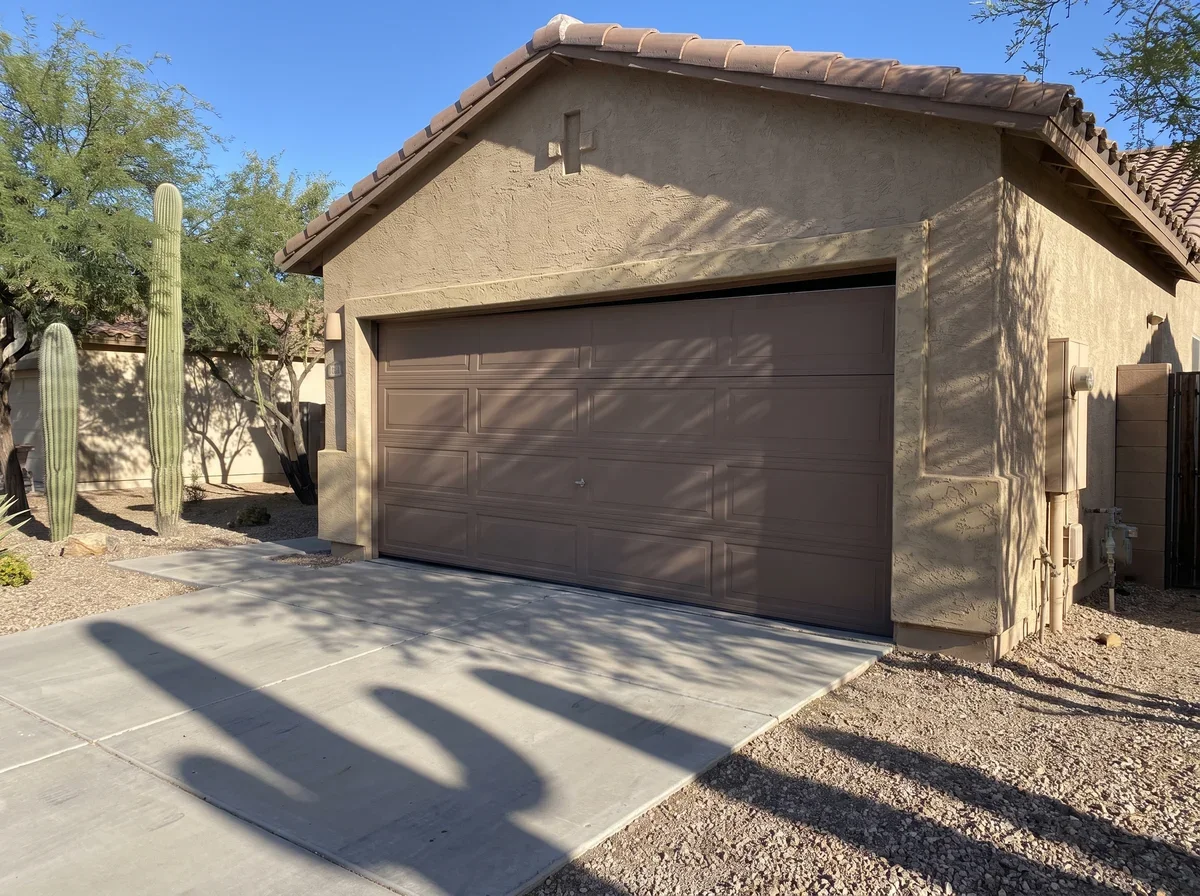
That's how a cable problem turns into an off-track door.
Treat it as a warning sign, not a cosmetic glitch. DASMA cautions that cable slack and disengagement can cause uncontrolled door movement, door damage, or severe injury.[3]
Slack is the usual starting point. The drum is built to take up and release cable in an orderly way, and the cable has to stay securely anchored for that to work.[2] When a spring weakens or the door's balance shifts, the cable can go loose and jump the groove.
The slip is often the symptom, not the root cause.
Phoenix summers push garage temperatures well past 106°F, so hardware that's already worn gets no relief.
How to Tell It From Other Cable Problems
Three problems look alike from the driveway, and each points to a different repair. Check the top corner first, then the track, without touching anything under tension.
Cable off the drum
The cable hangs loose or sits outside the grooves near the top corner, and the drum itself is still on the shaft. The door may lift unevenly, with one side several inches higher than the other.
Snapped cable
The cable is frayed, separated, or lying on the floor. DASMA notes that worn or frayed cables can break and cause injury.[1]
Off-track door
The rollers are out of the track, often with a visible bend in the metal. A door can have a loose cable and be off track at the same time, and that's common once a cable lets go on one side.
Our guide to a garage door that's off track covers that situation in more detail.
A cable that slipped off may also be kinked or stretched, so putting it back isn't always a lasting fix.
Why This Is a Pro Repair
Drums, springs, and cables work together under high tension. Rewinding the system isn't like rethreading a loose wire, and a mistake can hurt you worse than the original problem.
DASMA says untrained people should not remove, repair, or adjust springs, cables, brackets, or related parts.[4] Its inspection guidance goes further and says to contact a trained technician when spring-tension components or cable attachments look loose.[5]
Pro tip
Photograph the cable, drum, and door position before anyone touches them, so the technician can see exactly how it failed.
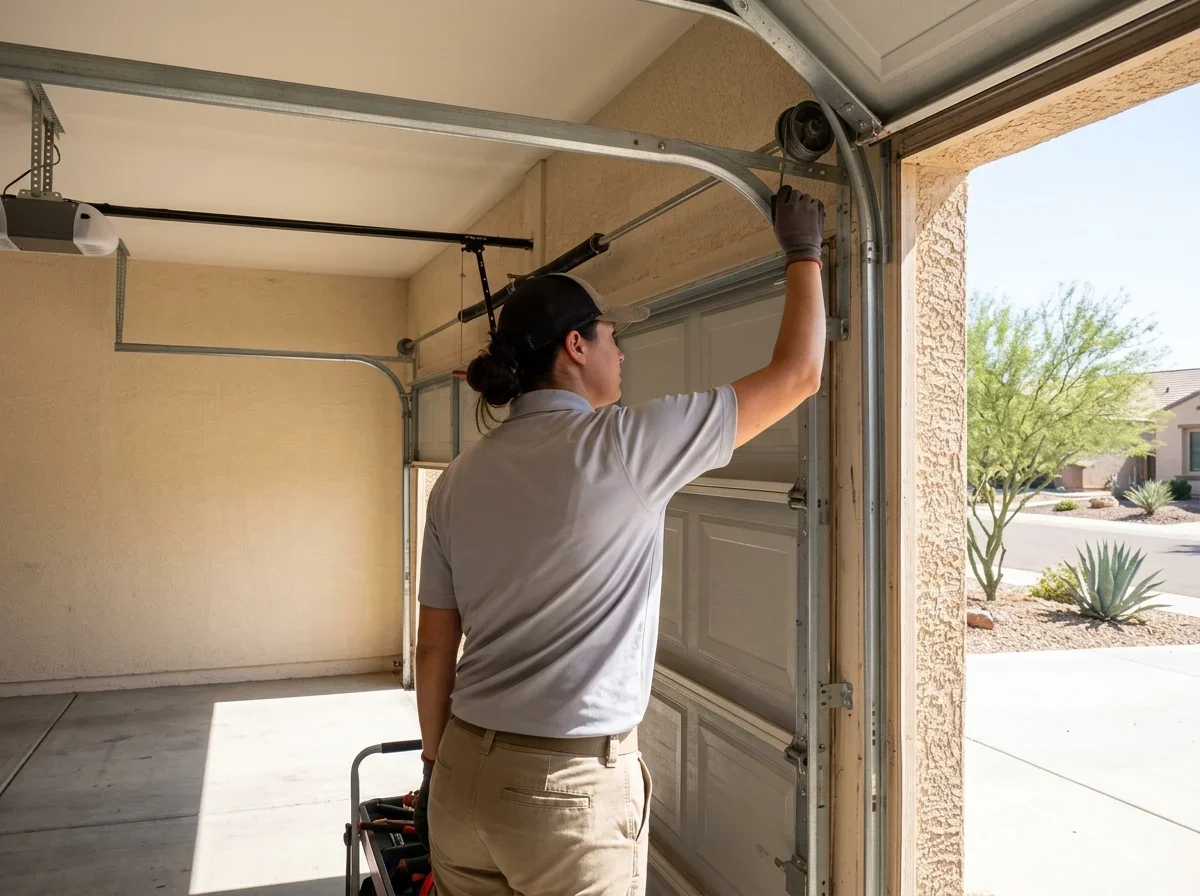
A technician also looks at the whole system instead of the one visible symptom. That means both cables, both drums, cable wear, spring balance, rollers, and tracks.
If the cable just goes back on without finding why it slipped, it will likely slip again.
Until then:
- Stop using the opener, and don't try to lift or lower the door by hand.
- Keep people and vehicles clear of the door.
- Photograph the cable, drum, and door position for the technician.
- Leave drum set screws and springs alone.
When you're ready to book, look for a licensed company and confirm the license on the Arizona Registrar of Contractors lookup at roc.az.gov. You can read more about what the work involves on our garage door cable repair page.
Quick answers
Can I put a garage door cable back on the drum myself?
DASMA says untrained people should not remove, repair, or adjust springs, cables, brackets, or related parts, so this is a job for a trained technician.
Why did the cable come off the drum?
Slack is the usual starting point. A weakened spring or a shift in the door's balance can let the cable go loose and jump the groove.
Should I keep using the opener?
No. Stop using the opener, don't lift or lower the door by hand, and keep people and vehicles clear of the door.
Questions
- Door and Access Systems Manufacturers Association (DASMA). "Garage Door Systems." https://www.dasma.com/safety-tips/garage-door-systems/. Accessed October 17, 2026.
- Door and Access Systems Manufacturers Association (DASMA). "ANSI/DASMA 102-2000." https://www.dasma.com/wp-content/uploads/2021/01/ANSIDASMA102.pdf. Accessed October 17, 2026.
- Door and Access Systems Manufacturers Association (DASMA). "TDS 1501: Jackshaft Operators on Standard-Lift Doors." https://www.dasma.com/wp-content/uploads/2022/12/TDS1501.pdf. Accessed October 17, 2026.
- Door and Access Systems Manufacturers Association (DASMA). "TDS 167: Residential Garage Door System Inspection and Maintenance." https://www.dasma.com/wp-content/uploads/2023/04/TDS167.pdf. Accessed October 17, 2026.
- Door and Access Systems Manufacturers Association (DASMA). "TDS 151: General Code Inspection Guidelines for Garage Doors." https://www.dasma.com/wp-content/uploads/2022/03/TDS151.pdf. Accessed October 17, 2026.