What Happens When a Garage Door Cable Breaks
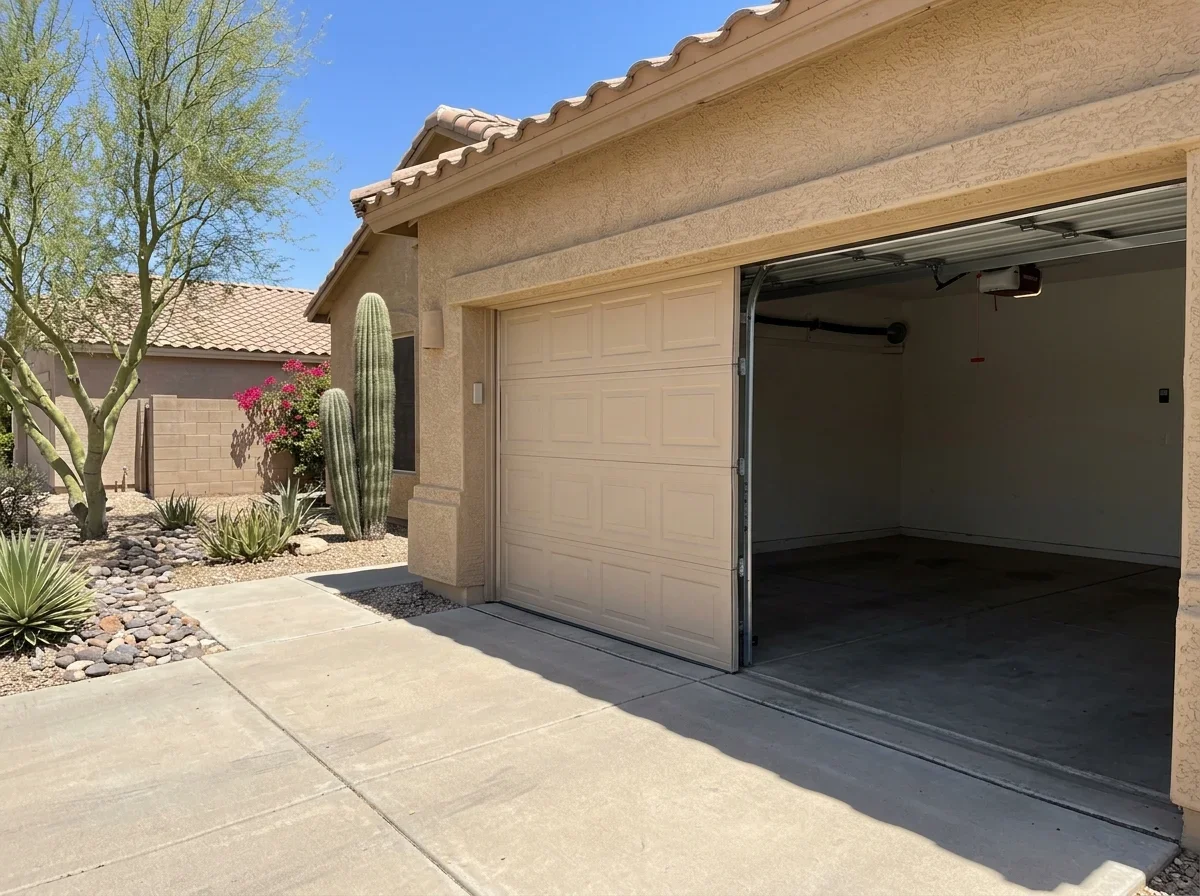
The door usually hangs crooked or sticks partway, with one side sitting lower than the other. That uneven look is the clearest sign.
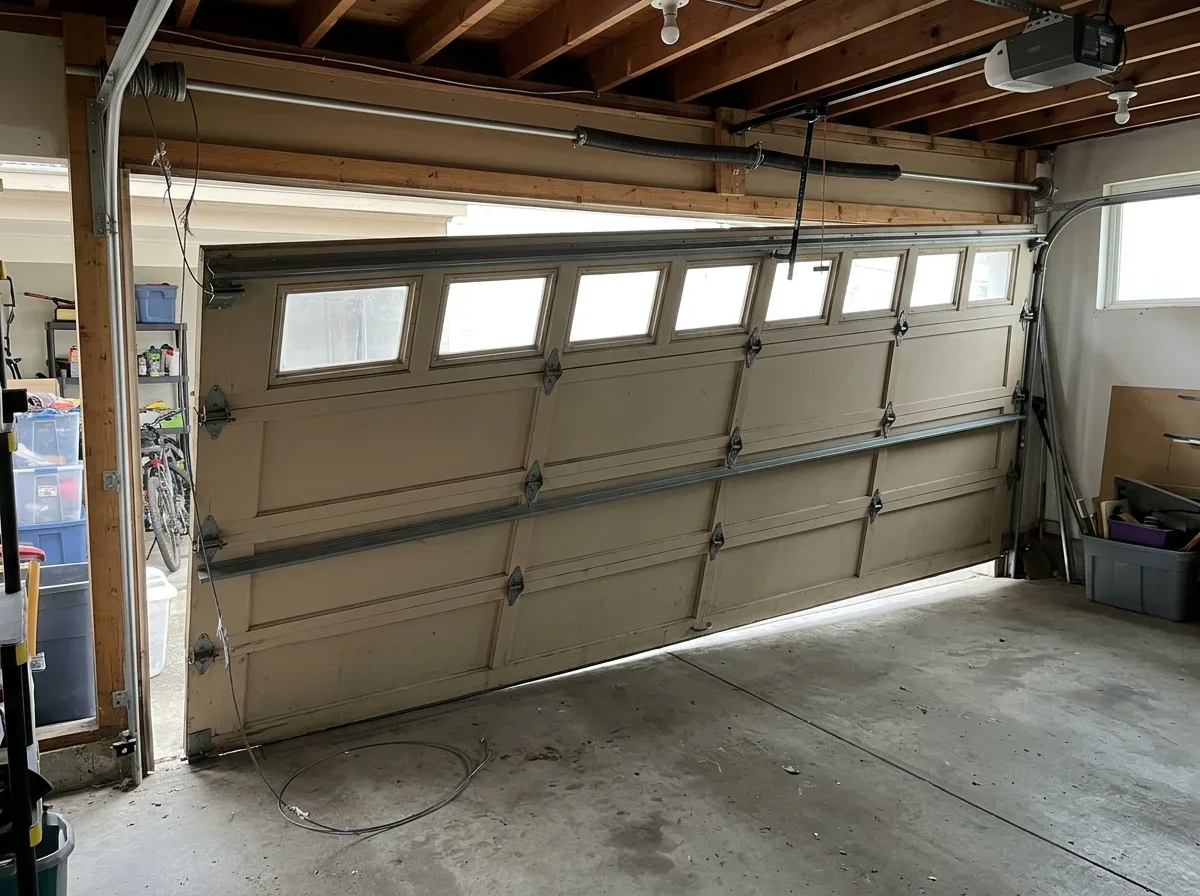
Lift cables work in pairs, one on each side, and each carries about half the door's weight. When one snaps, the other side is left carrying the load. The door tilts, binds in the tracks, or refuses to rise at all.
Other signs show up too:
- A loud bang from the garage when the cable lets go
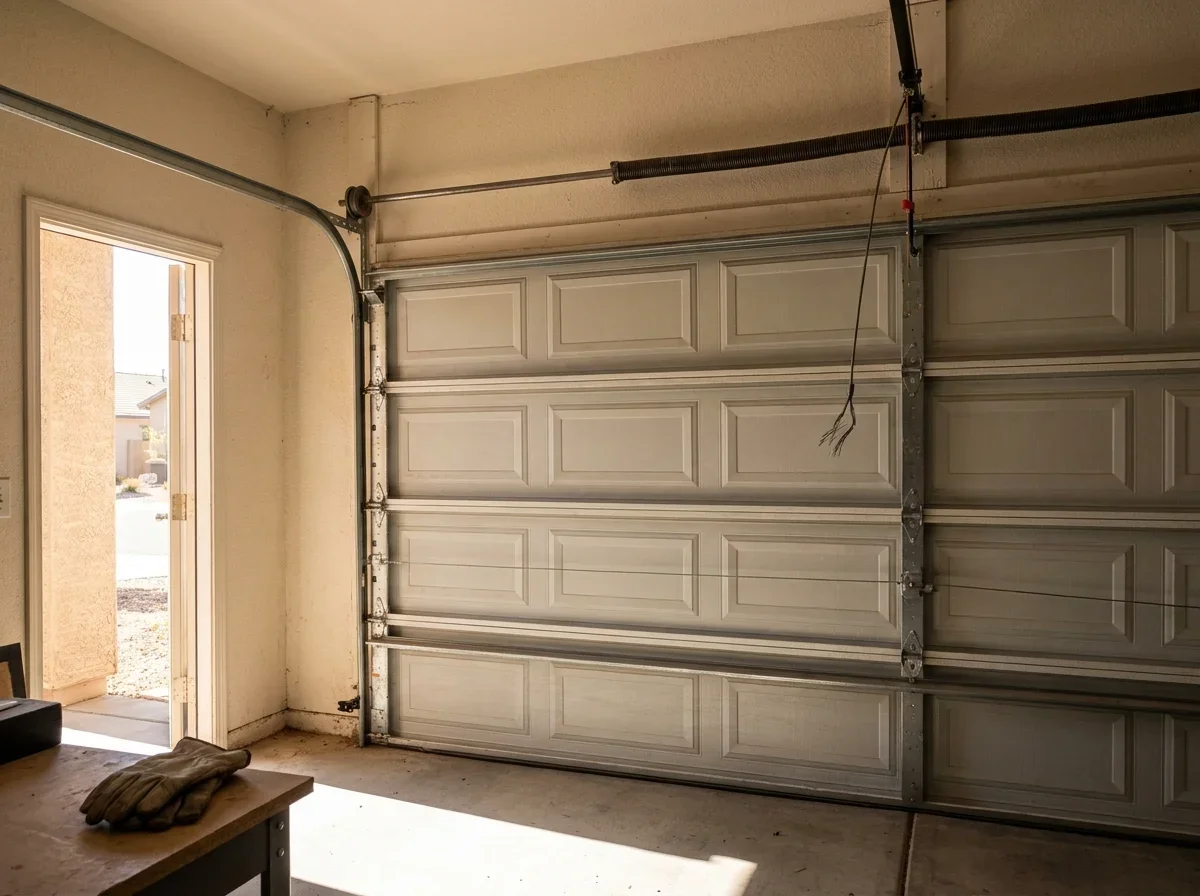
- A loose or dangling cable on the floor or hanging beside the door
- A door that feels heavy, jams, or will not lift
Sometimes there's no dramatic sound. You just find the door off-level one morning.
A cable that has slipped off its drum can look a lot like a snapped one. Either way, the spring system is involved.
A broken cable can also be a symptom of a failing torsion spring, which can leave both cables loose.
Why You Should Not Keep Using the Door
The opener may still hum along, which makes it tempting to keep pressing the button. Don't. Running a lopsided door can bend the track, jam the door, or let it fall.
The Door & Access Systems Manufacturers Association (DASMA) says that if a problem is found, the door should be carefully lowered to the closed position and the motorized operator disconnected.[1]
The opener takes a beating as well. It's built to guide a balanced door, not drag one side of a heavy panel assembly through the tracks.
Then there's the tension. DASMA warns against loosening or adjusting bottom brackets, cables, and supports because garage door systems contain hazardous forces. It also calls the door the largest moving object in the home.[2] A cable under spring tension can behave unpredictably when it fails, and replacement belongs with a trained technician.[3]
Treat it as part of a high-tension lifting system, not a loose wire you can clip back on.
Some doors have a broken-cable device at the bottom fixture meant to slow or stop a fall if a lifting cable breaks.[4] Don't count on yours to hold.
DASMA's safety guidance is to keep people away from a moving door and never stand or walk beneath it.[5]
Next Steps After a Cable Break
Start by stopping. Don't press the wall button or test the door again, and keep people, pets, and vehicles clear. If the door is already crooked or one side has dropped, leave it where it is rather than forcing it level.
Then gather what a technician will want to know:
- Photograph the cable and the area around the drum and bottom bracket.
- Note which side broke, left or right as you face the door from inside.
- Write down any sounds you heard and what the door did.
Skip any urge to lift, clamp, or reconnect the cable yourself. The springs tied to it can store enough energy to cause serious injury.
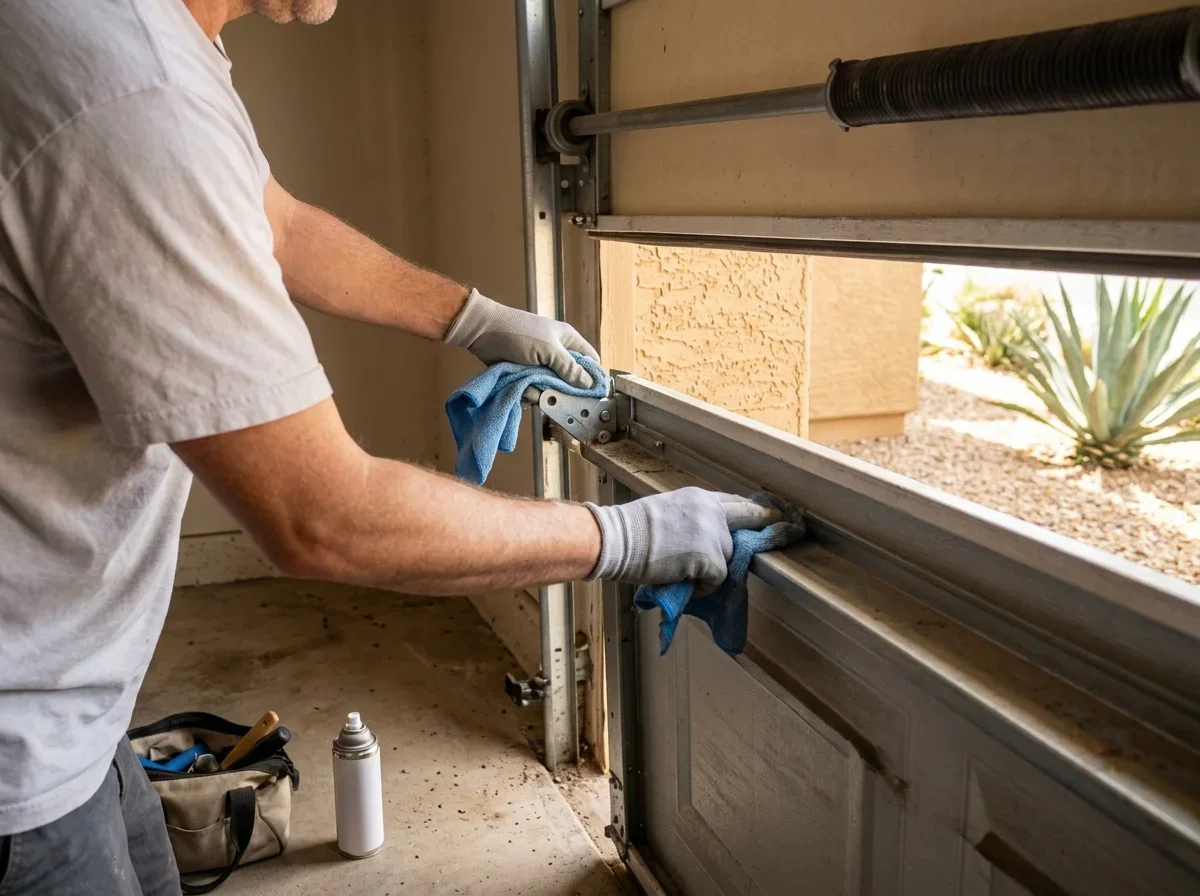
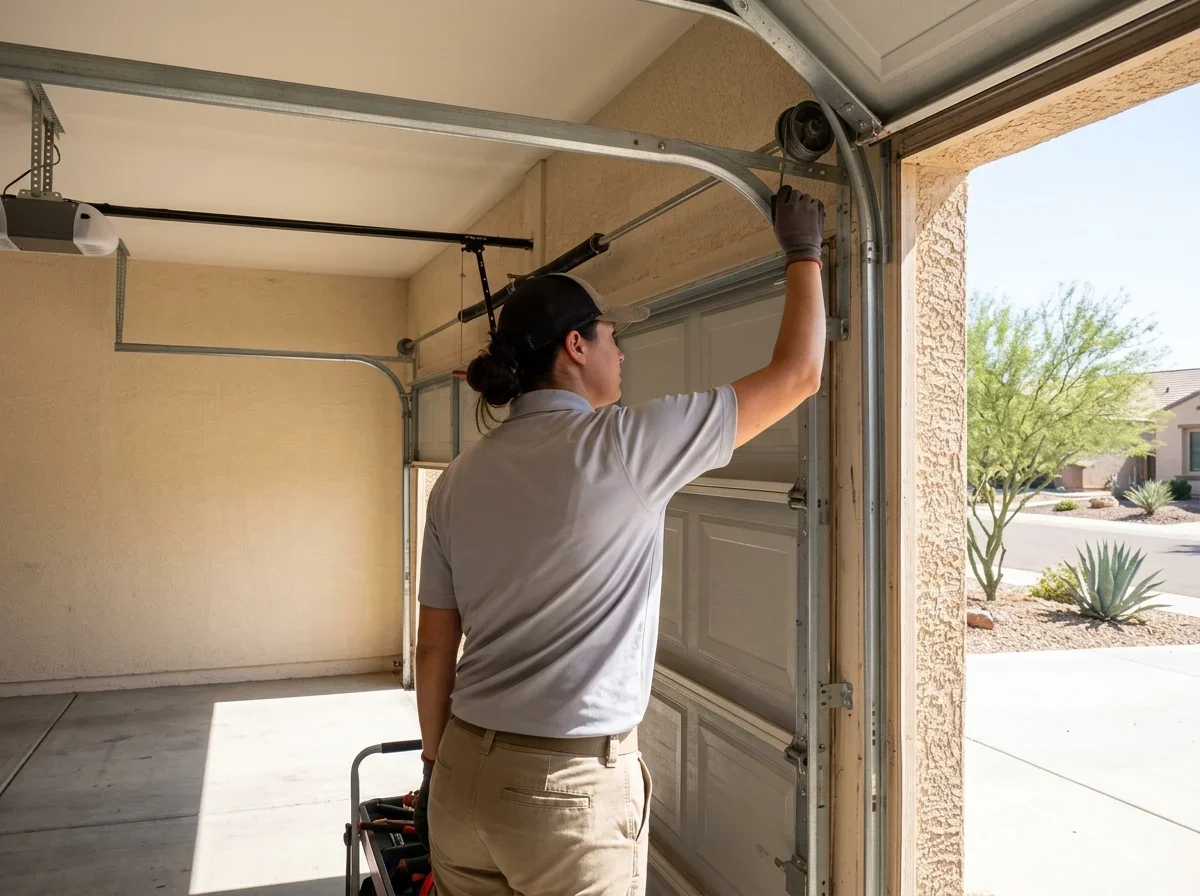
Finally, get a professional on the job. Ask the technician to look at the second cable, both drums, the springs, rollers, and track alignment, not just the visible break.
Checklist
Ask the technician to inspect
0 of 6 ticked
Tick them off as you go. Nothing is saved or sent.
Cables tend to age together, so replacing them as a pair is worth discussing.
If you're in the Phoenix area, confirm the company's license on the Arizona Registrar of Contractors lookup at roc.az.gov before scheduling.
For the full repair picture, see our garage door cable repair page, or read more on what a snapped garage door cable means.
Quick answers
Can I keep using the door with one broken cable?
No. A lopsided door can bend the track, jam, or fall, and it strains the opener.
Can I reattach the cable myself?
No. The springs tied to the cable store enough energy to cause serious injury, so replacement belongs with a trained technician.
Should both cables be replaced?
It is worth discussing, since cables tend to age together.
Questions
- Door & Access Systems Manufacturers Association International (DASMA). "Building Occupant – Checking a Garage Door for Damage." https://www.dasma.com/wp-content/uploads/pubs/TechDataSheets/CommercialResidential/TDS174.pdf. Accessed October 17, 2026.
- Door & Access Systems Manufacturers Association International (DASMA). "Automatic Garage Door Opener Safety & Maintenance Guide." https://www.dasma.com/wp-content/uploads/2024/04/Automatic-Garage-Door-Opener-Safety-Maintenance-Guide-trilingual-3-22-24.pdf. Accessed October 17, 2026.
- Door & Access Systems Manufacturers Association International (DASMA). "Garage Door Systems Safety Tips." https://www.dasma.com/safety-tips/garage-door-systems/. Accessed October 17, 2026.
- Door & Access Systems Manufacturers Association International (DASMA). "Sectional Garage Door Terminology." https://www.dasma.com/wp-content/uploads/2020/06/TDS160-Sectional-Garage-Door-Terminology.pdf. Accessed October 17, 2026.
- Door & Access Systems Manufacturers Association International (DASMA). "Safety Guidelines." https://www.dasma.com/wp-content/uploads/2020/10/Garage-door-safety.pdf. Accessed October 17, 2026.