Garage Door Stuck Open: Do This First
An open door is a security and pest risk, so decide quickly. Run the safe checks in the next section, then either close the door by hand or book emergency garage door repair for same-day help.
Keep people, pets and cars clear of the door path. Never stand or walk under a door that is partly open or hanging crooked.
Safe Checks You Can Do Yourself
Work through these in order, from lowest risk to highest.
- Power. Confirm the opener is plugged in and the breaker is on.
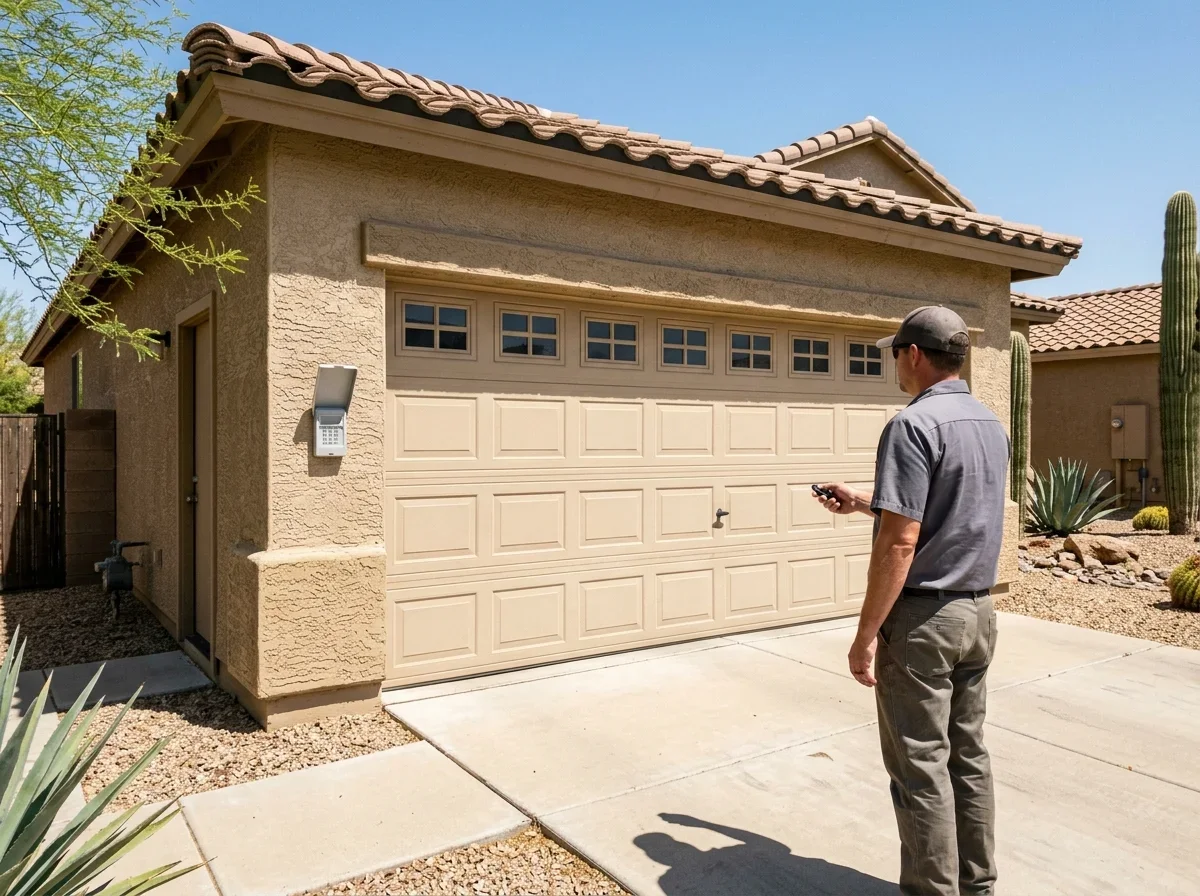
- Remote and wall button. Replace the remote batteries, then press the wall button. If the wall button works, the remote is the problem.
- Obstructions. Clear anything in the doorway, and look along the bottom edge for a damaged seal or debris.
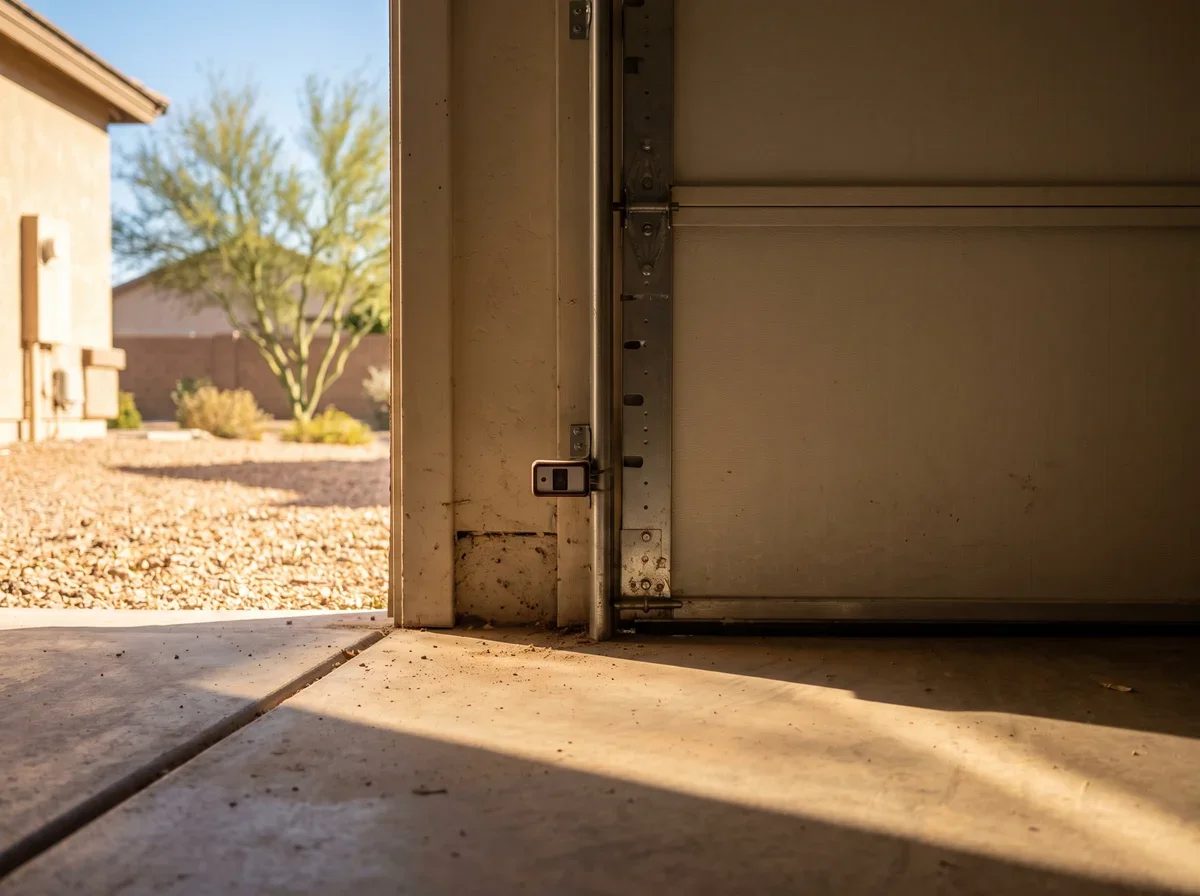
- Sensors. Look at the two photo-eyes near the floor. Wipe both lenses with a soft cloth, check that each indicator light is steady, and look for a bumped bracket or loose wire. Federal guidance puts these sensors 4 to 6 inches above the floor.[3] For blinking lights and alignment, see garage door sensor blinking or misaligned.
- Travel limits. A door that stops short or reverses at the floor may need a down-limit adjustment. Follow your opener manual and change settings in small steps.
After a haboob or monsoon storm, check the tracks, sensor lenses and floor line for grit.
Checklist
Safe checks in order
0 of 5 ticked
Tick them off as you go. Nothing is saved or sent.
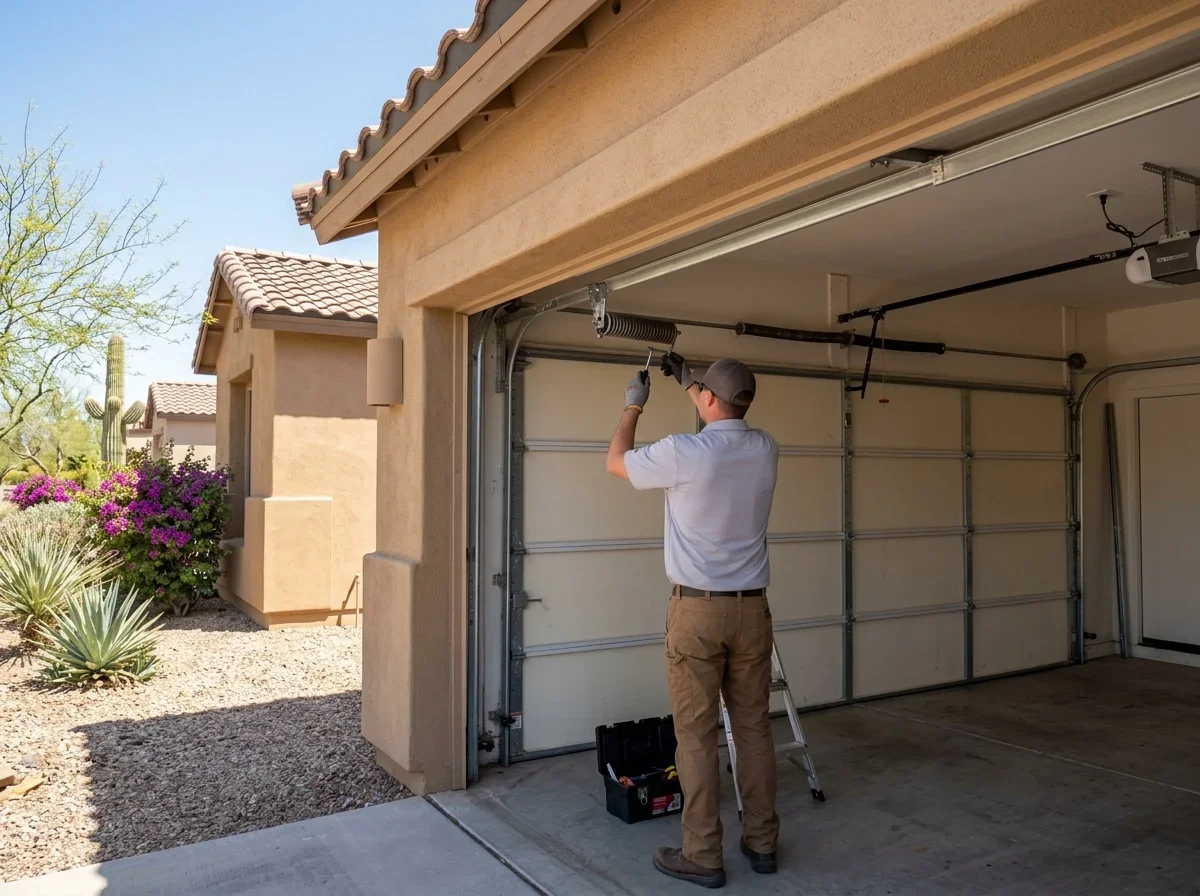
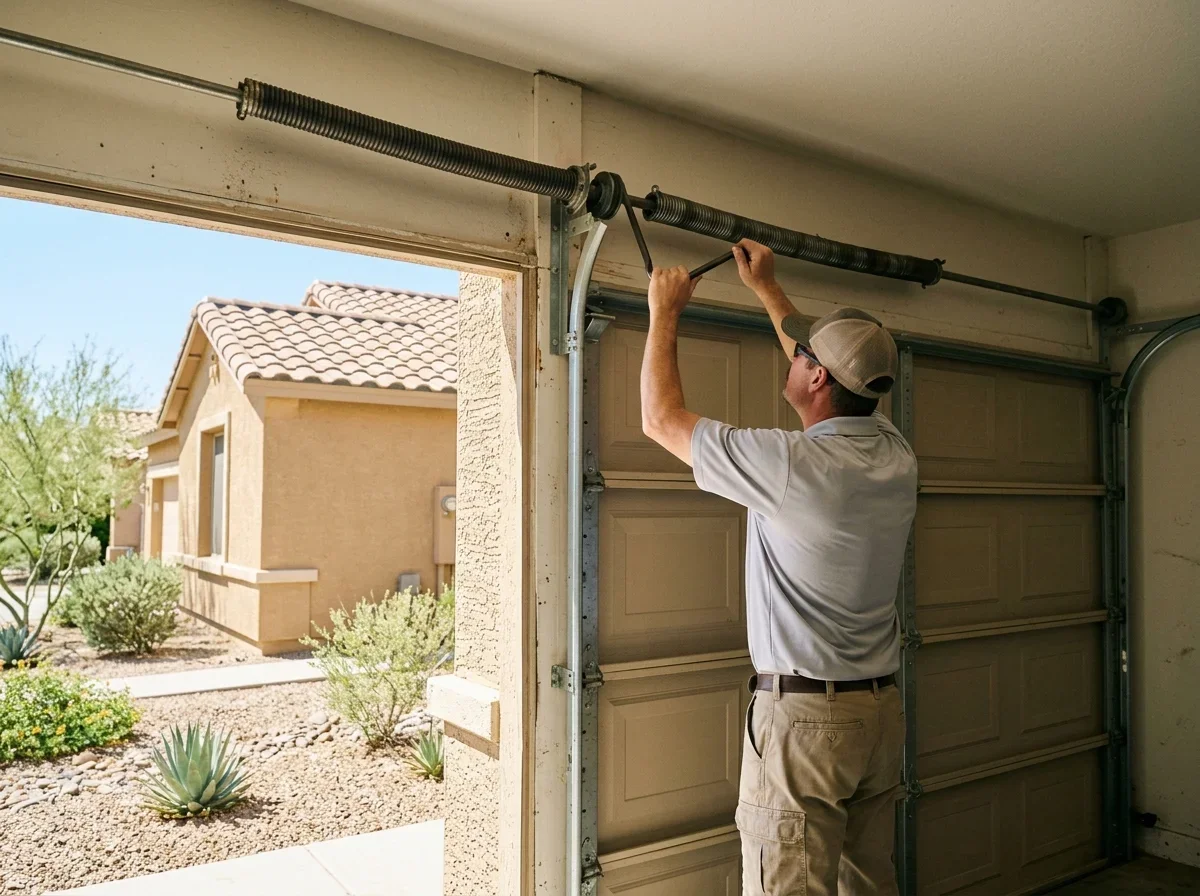
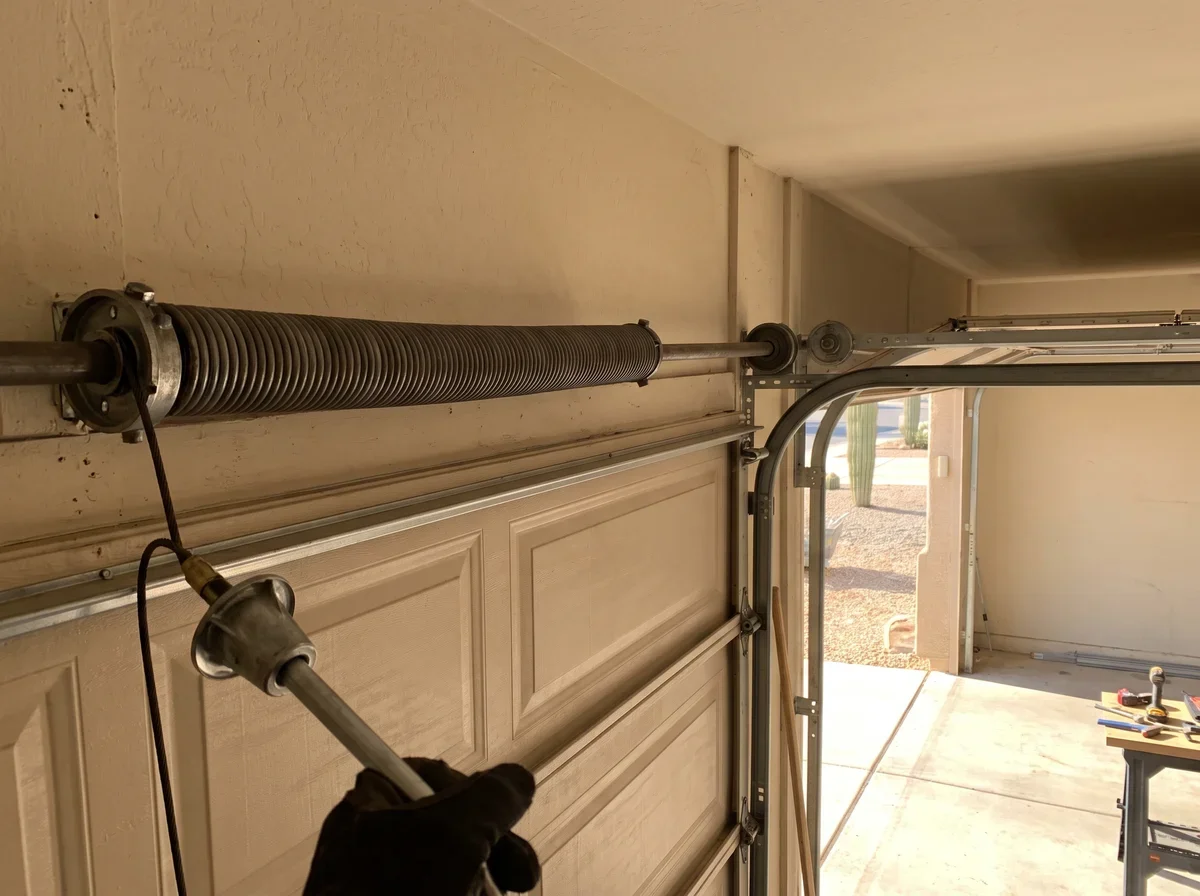
Stop now if you see a gap between spring coils, a frayed or fallen cable, a bent track, or a crooked door. Do not touch springs, cables or bracket bolts. Don't force the door. Call a pro.
Why the Door Goes Down and Then Back Up
Reversal at the floor usually means the opener thinks it hit something. Openers made after January 1, 1991 must reverse a closing door within two seconds of contact with a two-inch test block.[1] That is the system doing its job.
Sort it by symptom:
- Reverses just before the floor: suspect the down limit or closing force.
- Reverses mid-travel: suspect a binding track or the sensors.
- Closes only while you hold the button: suspect a sensor fault. A wall control that needs continuous pressure is a recognized safety fallback,[2] but treat it as a clue, not a fix.
Look for debris in the tracks or a damaged roller. A visible dent or gap in the track means stop and call for roller and track repair.
Resist the urge to crank up the force setting. The CPSC advises testing the reversing function every 30 days and taking a non-reversing opener out of service until it is fixed.[4]
Pro tip
Put a two-inch block flat on the floor under the door every 30 days. If the door doesn't reverse on contact, stop using the opener until it is fixed.
Closing a Garage Door Manually
Pull the red emergency release cord only when the door is fully down or fully supported. If a spring is broken, releasing it while raised can let the door slam shut. Check your opener manual or DASMA (Door & Access Systems Manufacturers Association) safety guidance for the exact procedure on your model.
Stop if the door is heavy, jammed, crooked or hard to move. Do not force it.
Once it is down, secure it with a lock or a track clamp. Reconnect the opener trolley only after the door has been repaired.
If a technician is needed, check the license at the Arizona Registrar of Contractors lookup. Ask for proof of liability insurance separately.
Symptom Quick Reference
| Symptom | Likely cause | Safe DIY check | Call a pro? |
|---|---|---|---|
| Nothing happens | Power, remote battery or wall control | Replug, check breaker, new batteries | Sometimes, if power and controls check out |
| Door reverses at floor | Down limit, force or blocked sensor | Clear floor line, wipe lenses, review manual | Sometimes, if settings don't help |
| Sensor light blinking | Misaligned or dirty sensor, loose wire | Wipe lenses, check brackets | Sometimes, if wiring is damaged |
| Gap on one side | Cable, spring or track problem | Look only, touch nothing | Yes, stored-energy parts |
| Works only while holding button | Sensor fault | Clean and realign sensors | Sometimes, if cleaning fails |
| Grinding or off-track | Bent track or worn roller | Look for debris, no forcing | Yes, a bind can worsen damage |
Related questions
Questions
- U.S. Consumer Product Safety Commission. "CPSC Safety Standard Targets Garage Door Deaths." https://www.cpsc.gov/Newsroom/News-Releases/1991/CPSC-Safety-Standard-Targets-Garage-Door-Deaths. Accessed October 17, 2026.
- U.S. Consumer Product Safety Commission. "Safety Commission Publishes Final Rules For Automatic Garage Door Openers." https://www.cpsc.gov/Newsroom/News-Releases/1993/Safety-Commission-Publishes-Final-Rules-For-Automatic-Garage-Door-Openers. Accessed October 17, 2026.
- U.S. Consumer Product Safety Commission. "Non-Reversing Automatic Garage Door Openers Are a Hazard." https://www.cpsc.gov/s3fs-public/garage.pdf. Accessed October 17, 2026.
- U.S. Consumer Product Safety Commission. "Non-Reversing Automatic Garage Door Openers Are a Hazard." https://www.cpsc.gov/s3fs-public/pdfs/blk_pdf_523.pdf. Accessed October 17, 2026.