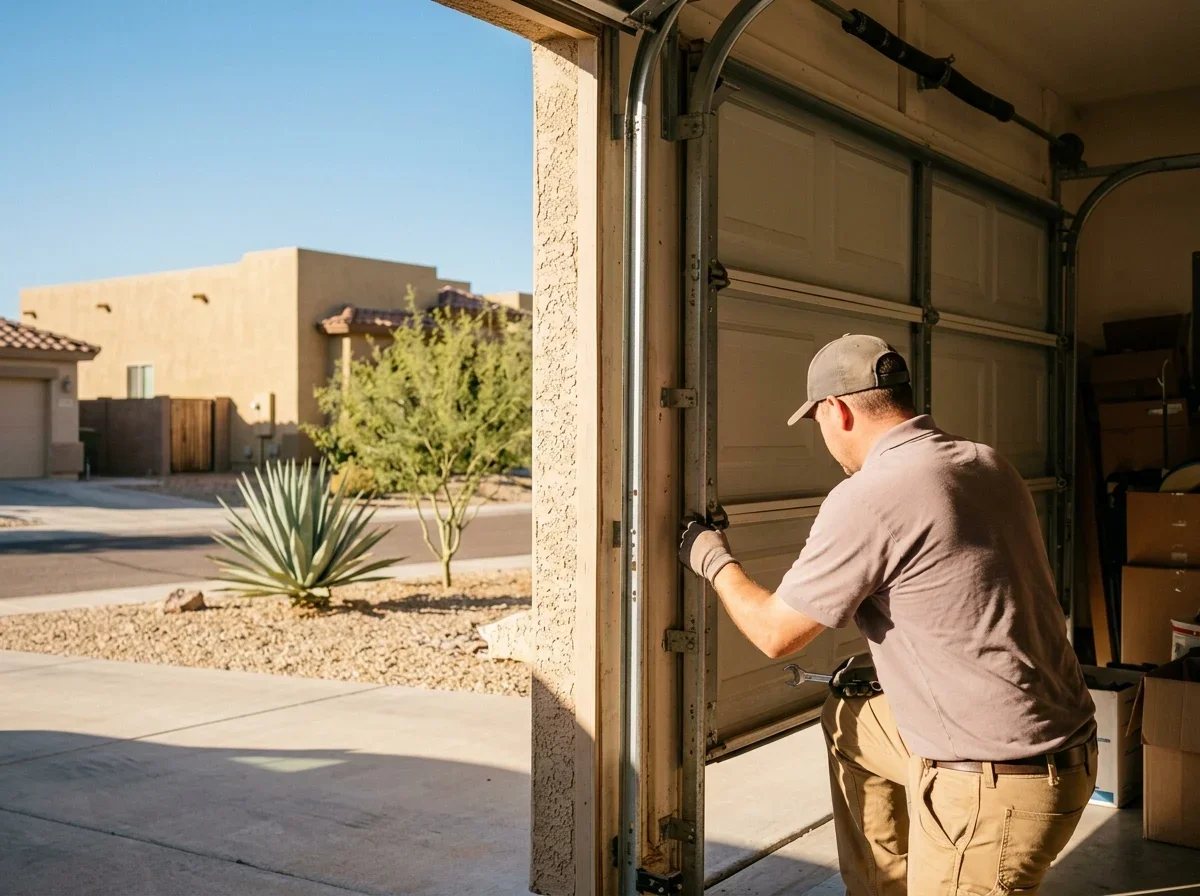
Garage Door Gap on One Side
A one-sided gap usually points to one of three things: uneven spring tension, a slipped or loose cable, or a bent track. In each case the lift hardware is no longer pulling equally on both sides, so the door hangs a little crooked when it closes.
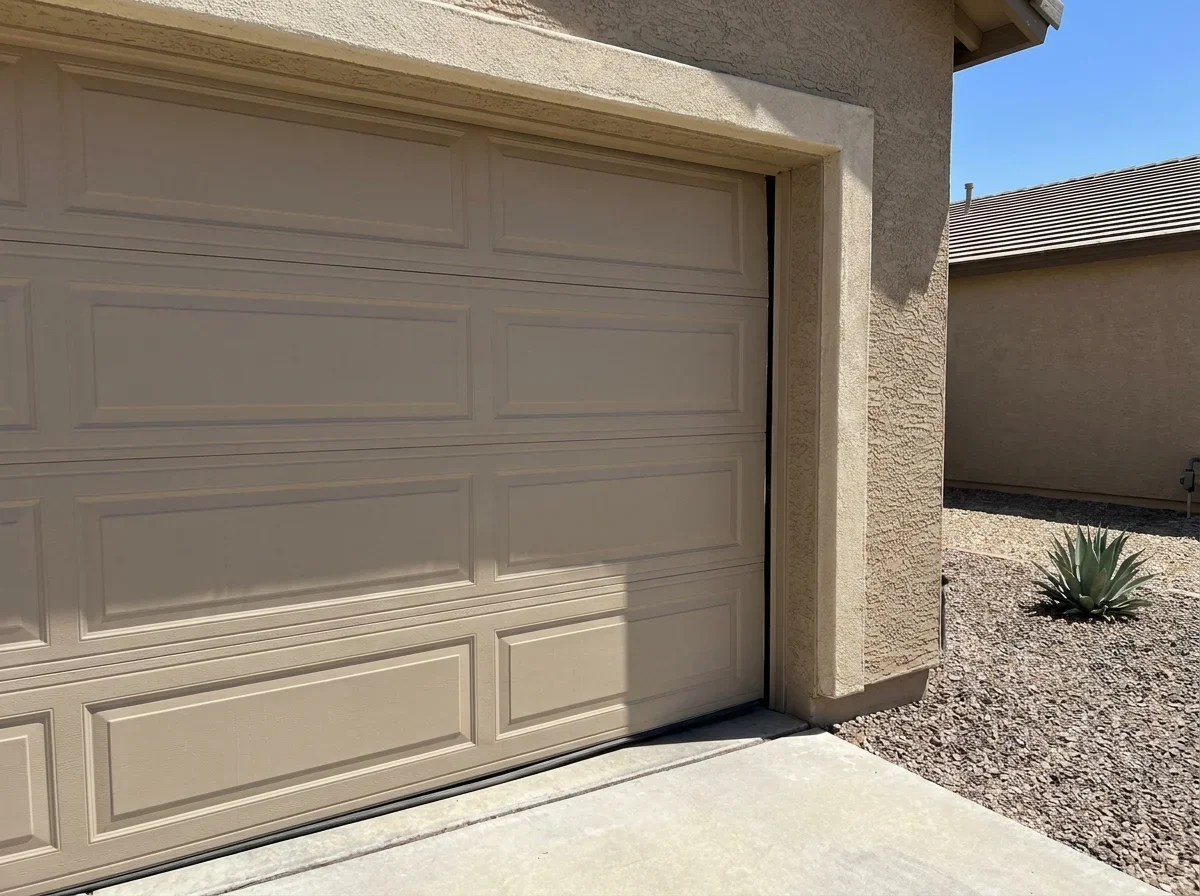
This is not a cosmetic problem. Lift cables are load-bearing parts that must stay securely anchored at each end, as the industry standard for garage door cable assemblies makes clear.[4] A door that sits unevenly can bind in the track, strain the opener, or eventually come off track.
The door is not always the culprit.
A sloped or settled concrete slab can leave a gap even when the door is perfectly level. Phoenix-area garages sit on slab-on-grade foundations over caliche and sandy loam that can shift over the years. Sort out the floor, the door face, and the tracks separately before you replace anything.
What You Can Safely Look At
Stay on the floor and use your eyes. You are gathering clues, not making adjustments.
With the door closed, look for a visibly crooked door, a cable that sags or hangs loose, or a track that looks kinked or pulled away from the wall. A level held against the door face and each vertical track shows whether the door is truly out of plumb. Side-to-side variation of more than about a quarter inch deserves attention.
Then check the simple stuff. Look for debris under the door edge and a worn or flattened bottom seal. To test the slab, lay a long straightedge on the floor along the gap.
If the floor slopes and the door is level, the concrete is the main cause.
Leave the hardware alone.
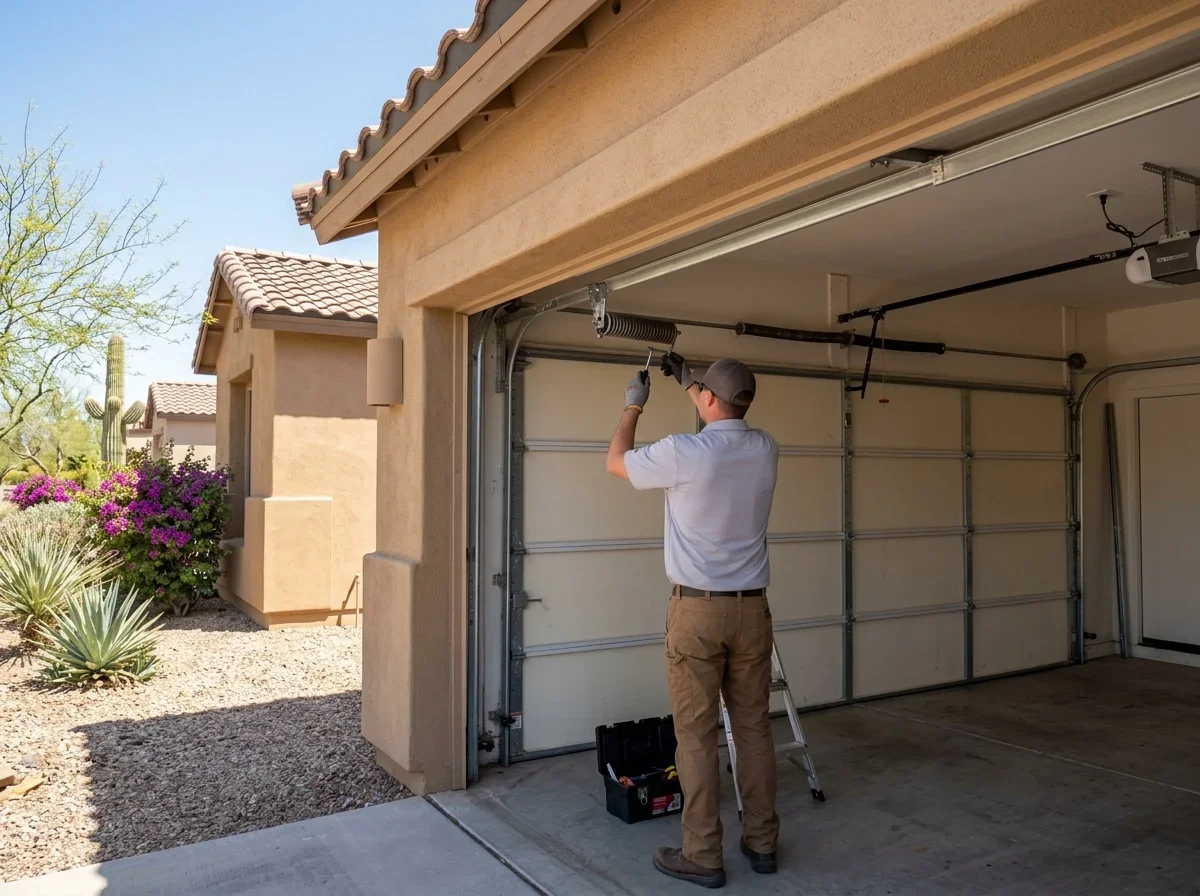
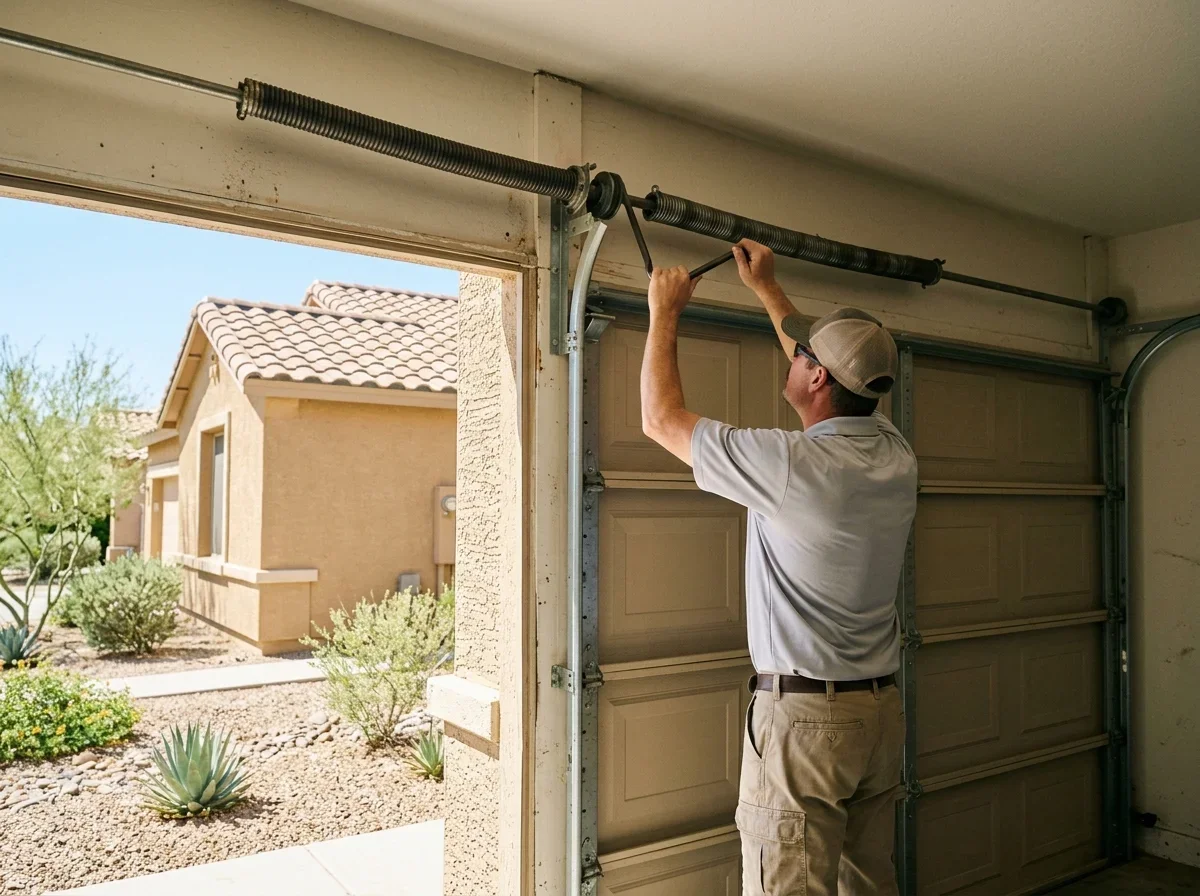
DASMA advises that spring anchor brackets and parts attached to the cables should be inspected visually but not touched. A loose-looking component calls for a trained door technician.[2] Springs and spring hardware carry high tension, and homeowners should not remove, repair, or adjust springs, cables, or brackets.[3]
Frayed or worn cables can break, so cable work is also for a trained technician.[1]
When to Stop and Call a Pro
Stop running the opener if the door looks crooked, jerks, binds, or lifts on one side. Repeated cycles on a slipped cable can turn a small fix into damaged drums, panels, or track.
Correcting unequal tension may mean unloading the spring, resetting the cables, and retensioning the whole system. Track realignment belongs in the same category.
Before you call, jot down what you saw:
- Which side sits high or shows the gap
- Any grinding, popping, or scraping noises
- Whether a cable looks loose or a track looks bent
- Whether the floor slopes along the gap
A technician can use those notes to tell a lifting-system problem from a floor problem faster. If you want the door diagnosed before you authorize a new seal or opener adjustment, start with garage door repair. If the door is also refusing to shut fully, Garage Door Won't Close: Causes and Quick Checks covers the related symptoms.
Pro tip
Level the door face and each vertical track, and lay a straightedge on the floor along the gap, before you call so you can say whether the door or the slab is out of true.
In Arizona, confirm any contractor holds an active license on the Registrar of Contractors lookup at roc.az.gov before work begins.
Questions
- Door and Access Systems Manufacturers Association International (DASMA). "Garage Door Systems." https://www.dasma.com/safety-tips/garage-door-systems/. Accessed October 17, 2026.
- Door and Access Systems Manufacturers Association International (DASMA). "General Code Inspection Guidelines for Garage Doors." https://www.dasma.com/wp-content/uploads/2022/03/TDS151.pdf. Accessed October 17, 2026.
- Door and Access Systems Manufacturers Association International (DASMA). "Residential Sectional Garage Door and Electric Operator Safety and Maintenance." https://www.dasma.com/wp-content/uploads/2022/09/TDS167..pdf. Accessed October 17, 2026.
- Door and Access Systems Manufacturers Association International (DASMA). "ANSI/DASMA 102-2000." https://www.dasma.com/wp-content/uploads/2021/01/ANSIDASMA102.pdf. Accessed October 17, 2026.