Why a Garage Door Reverses Before Closing
Three things cause most reversals: a blocked or misaligned sensor beam, close-force or travel-limit settings that are off, and a binding track or roller. All three look the same from the driver's seat, which is why random adjusting wastes so much time.
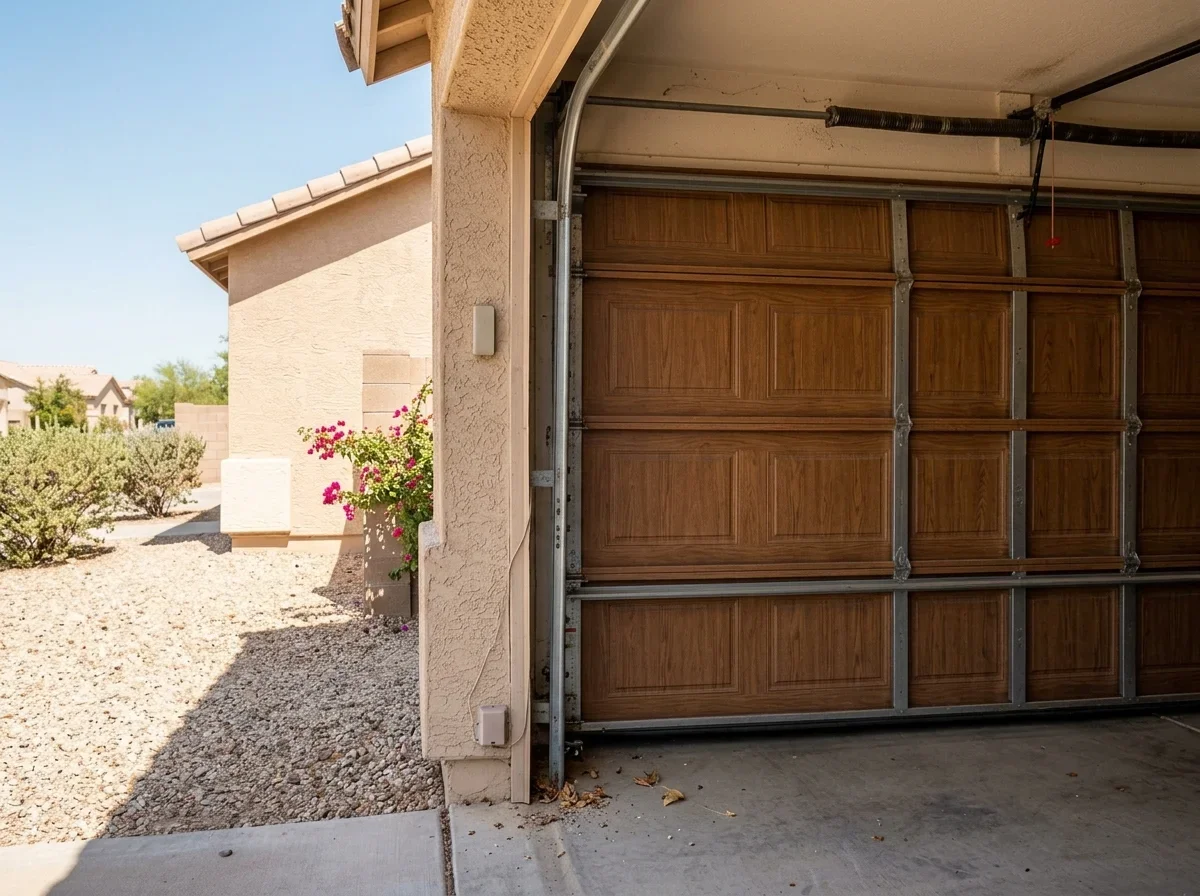
Reversing is a safety feature working, not a defect.
Federal requirements apply to openers made or imported for sale in the U.S. after January 1, 1991, and the CPSC recommends testing the reversing function every 30 days.[3] An electric eye or similar sensor must automatically reverse the door when something enters its closing path.[1]
Where the door reverses is a useful clue. Reversing well above the floor often points to the beam. Reversing near the floor more often points to force, travel limits, or mechanical resistance.
Testing the Beam, Force and Track
Work through these in order and stop when the door closes normally.
Beam
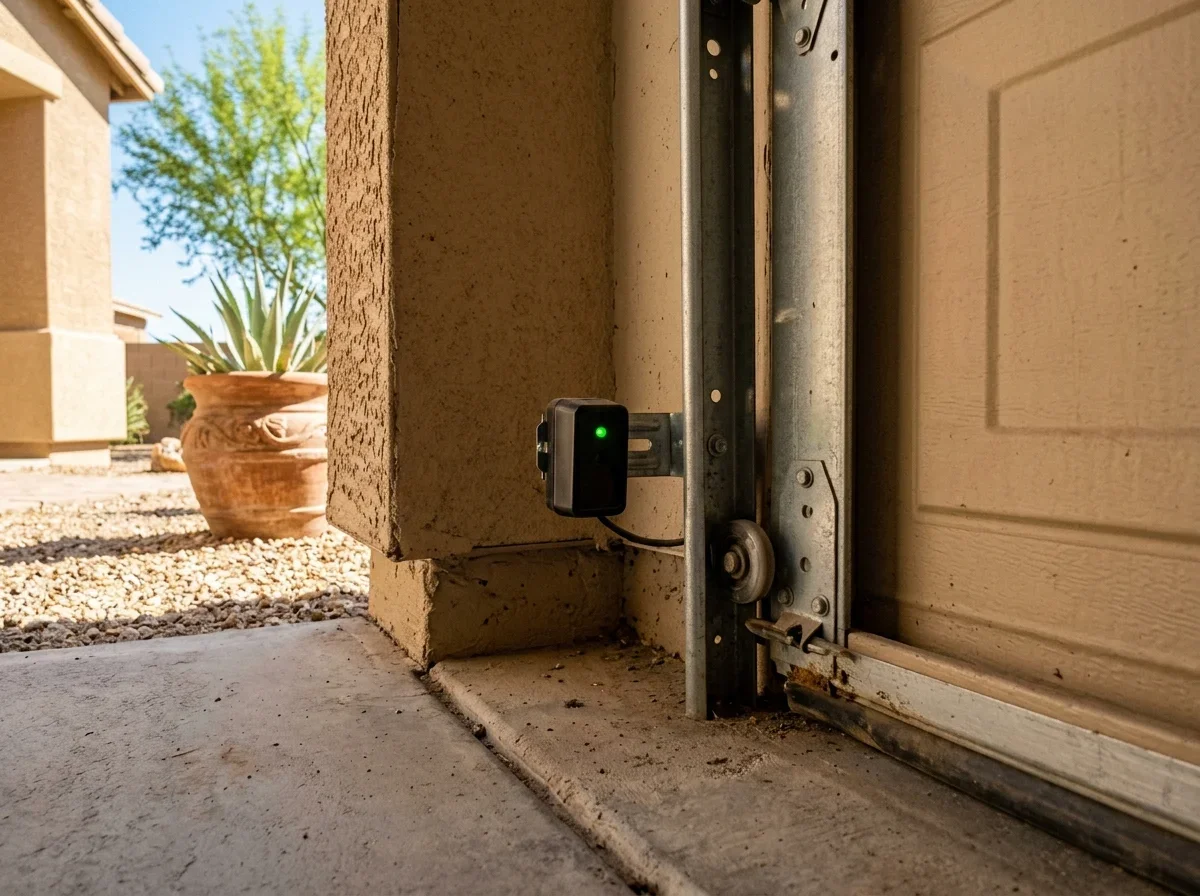
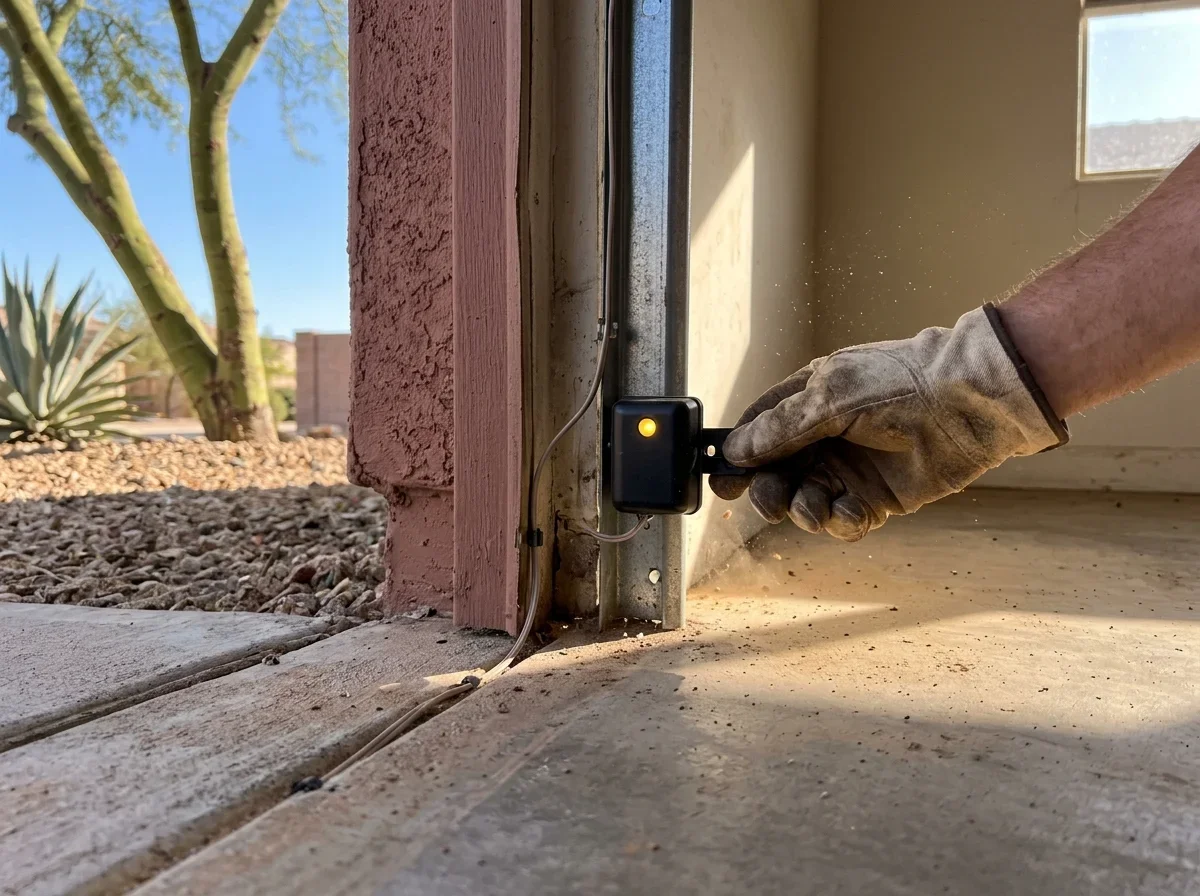
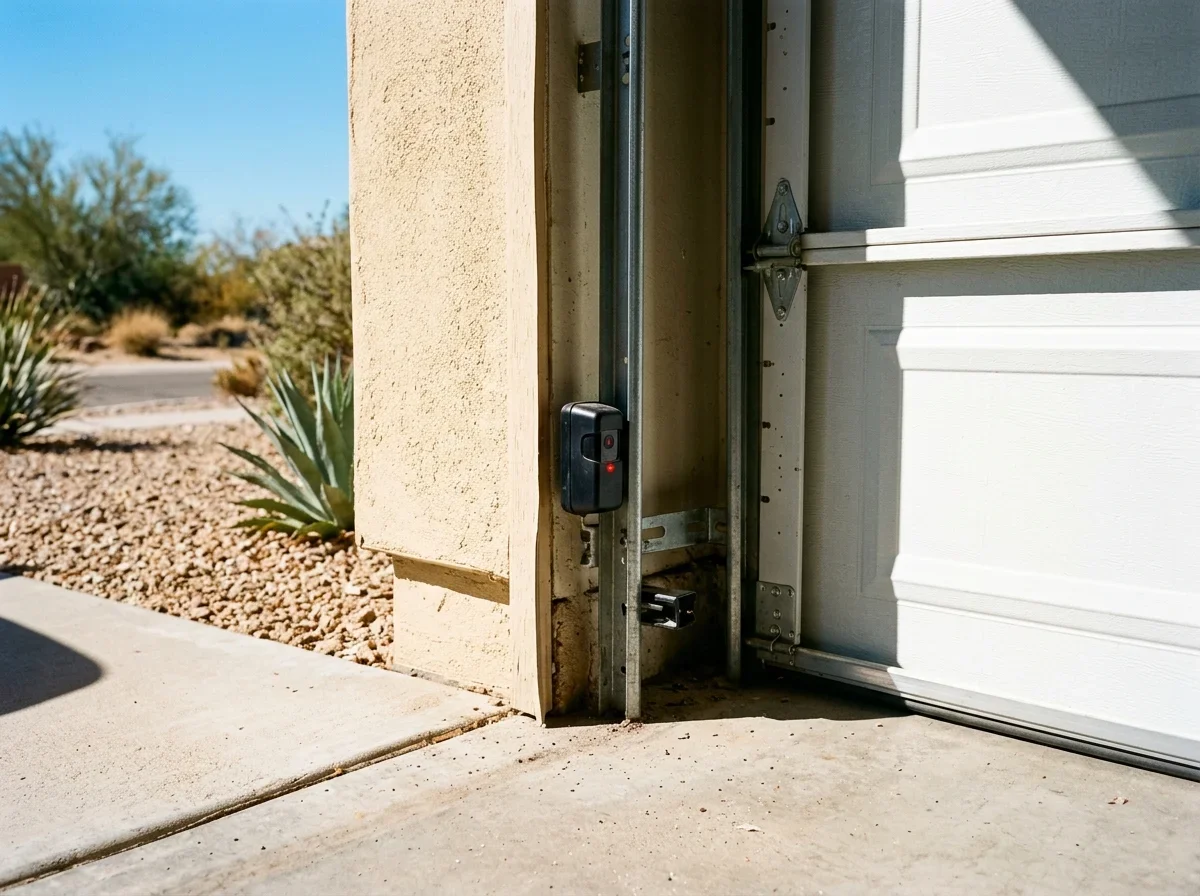
The photo-eye system uses an invisible infrared beam. When something interrupts it during closing, the opener stops and reverses.[5] Wipe both lenses, clear anything crossing the beam, and confirm the two eyes face each other.
The CPSC says sensors should sit 4 to 6 inches above the floor.[2]
Then watch the LEDs while the door runs. They should stay steady the whole way down. A brief flicker means a momentary alignment or wiring problem.
Checklist
Beam check
0 of 5 ticked
Tick them off as you go. Nothing is saved or sent.
Force and travel limits
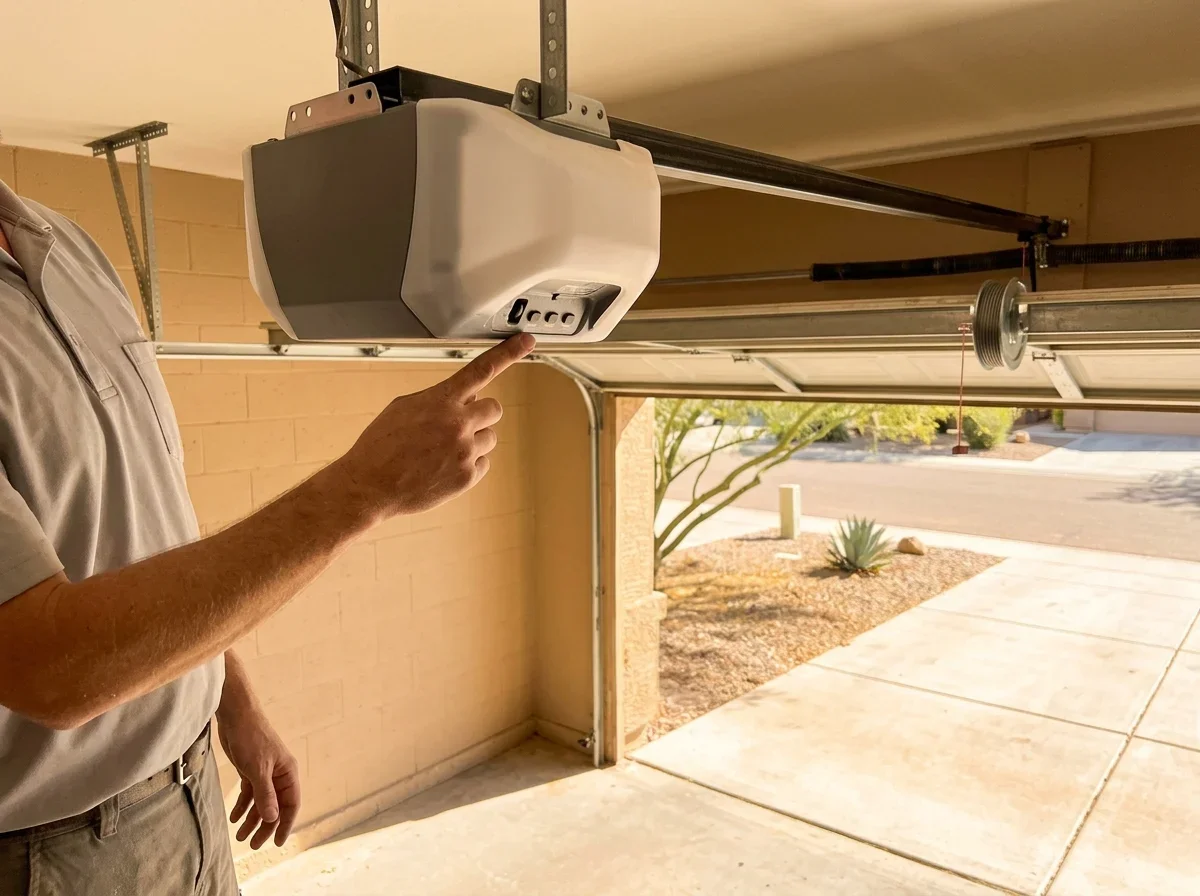
If the beam checks out, look at the opener's close-force and close-travel settings. The adjustment method varies by opener model, so follow your manufacturer's manual.[4]
Change settings in very small steps and test after each one.
Don't raise the force to push through resistance. At least one manual warns against adjusting force to compensate for a binding or sticking door.[4] Cold snaps can also shift travel sensitivity enough to trigger reversing.
Pro tip
Change one setting in a very small step, then test the door before touching anything else.
Track
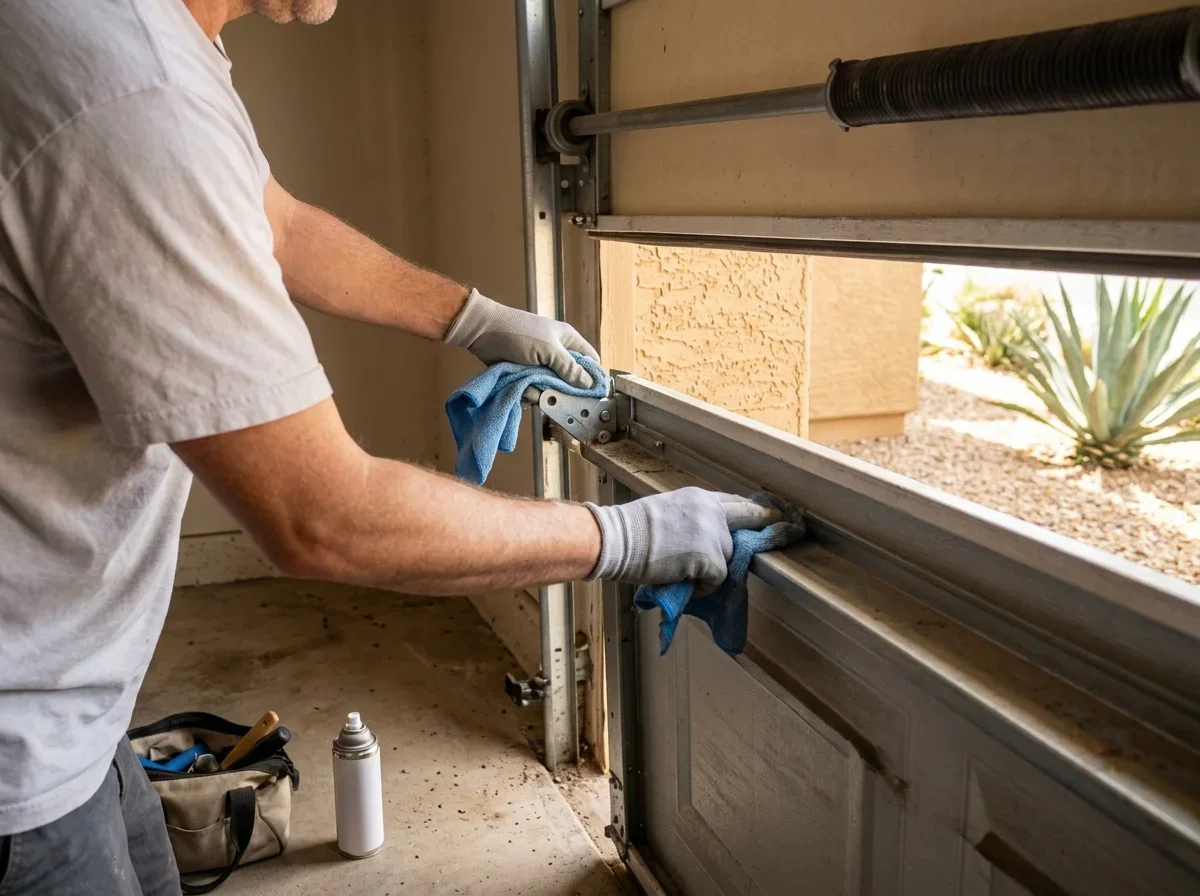
Pull the emergency release and move the door by hand through its full travel. It should glide smoothly. Look for debris in the track, a dented or bent section, a roller catching, frame contact, or a loose rail.
If the door fights you manually, adjusting the opener won't fix the real problem.
If cleaning doesn't solve a beam problem, see our garage door sensor repair service. For a door that won't close at all, the garage door won't close checklist covers the wider set of causes.
When Reversing Needs a Technician
Call a pro if the door still reverses with the sensors clear, steady, and aligned and the track looks fine. That combination suggests a deeper force, limit, or hardware fault.
Call as well if the door is crooked, noisy, or jerky as it travels, or if it feels heavy by hand. Those are signs of track damage or a spring problem, and spring work is hazardous.
Never disconnect the sensors to force the door shut.
If the reversal test fails, the CPSC advises disengaging the opener until it is adjusted, repaired, or replaced.[2]
Costs vary with the fault. One Phoenix-area company's site says basic repairs typically run $100 to $400 (Phoenix-area garage door companies' own websites, checked October 2026). Most service-call fees listed there fall between $0 and $150.
Ask for an itemized written quote before approving work.
Quick answers
How often should I test the reversing function?
The CPSC recommends testing it every 30 days.
Should I disconnect the sensors to get the door to close?
No. Never disconnect the sensors to force the door shut.
What if the reversal test fails?
The CPSC advises disengaging the opener until it is adjusted, repaired, or replaced.
Questions
- U.S. Consumer Product Safety Commission. "Safety Alerts." https://www.cpsc.gov/Safety-Education/Safety-Alerts. Accessed October 17, 2026.
- U.S. Consumer Product Safety Commission. "Non-Reversing Automatic Garage Door Openers Are a Hazard." https://www.cpsc.gov/s3fs-public/pdfs/garage.pdf. Accessed October 17, 2026.
- U.S. Consumer Product Safety Commission. "Non-Reversing Automatic Garage Door Openers Are a Hazard." https://www.cpsc.gov/s3fs-public/pdfs/blk_pdf_523.pdf. Accessed October 17, 2026.
- SSCORP. "Owner’s Manual." https://resources.sscorp.com/door/uploads/7160V%20Product%20Manual.pdf. Accessed October 17, 2026.
- Xtreme Garage. "Owner’s Manual." https://www.xtremeopeners.com/manuals/425-1669/Xtreme.425-1669.pdf. Accessed October 17, 2026.