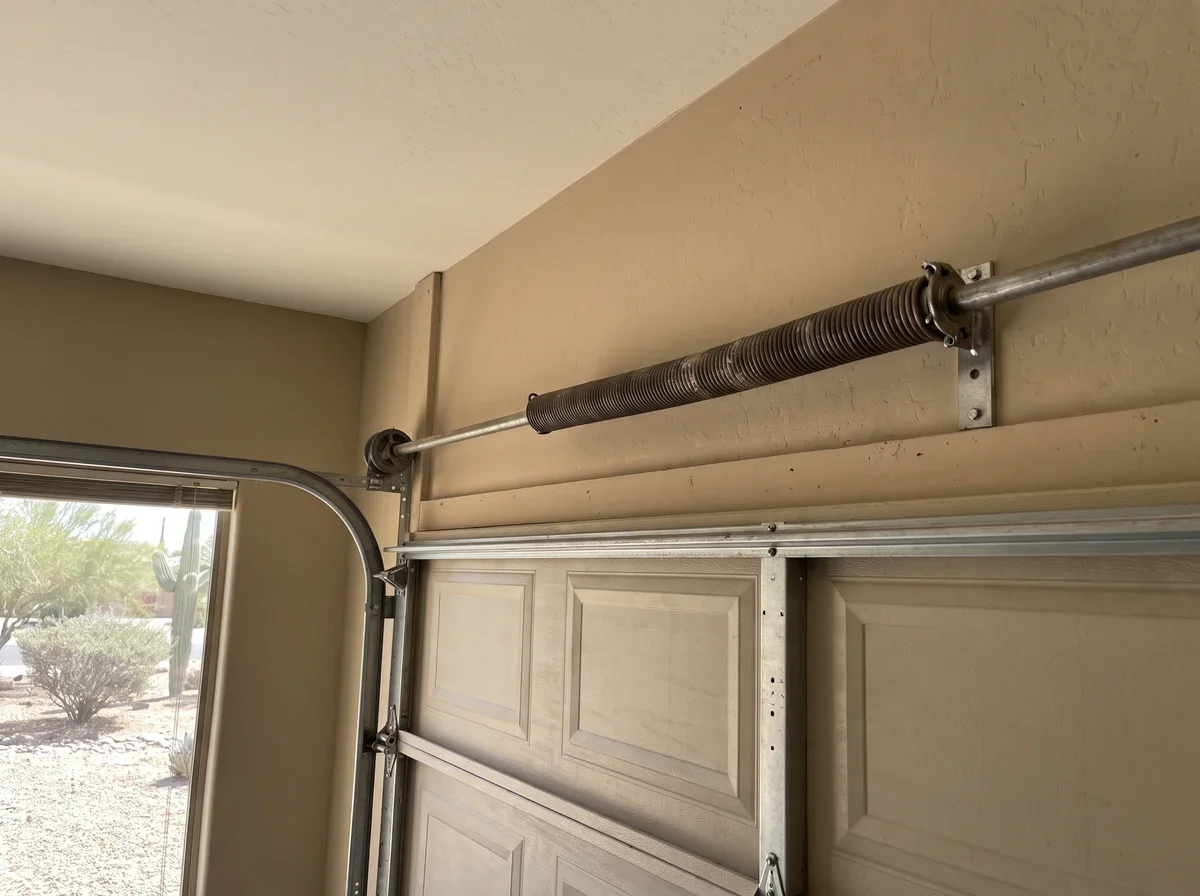
Signs Your Garage Door Spring Is Broken
A broken spring usually announces itself with a loud bang from the garage, sometimes described as a gunshot. Afterward the door won't lift, or it rises only a few inches and stops.
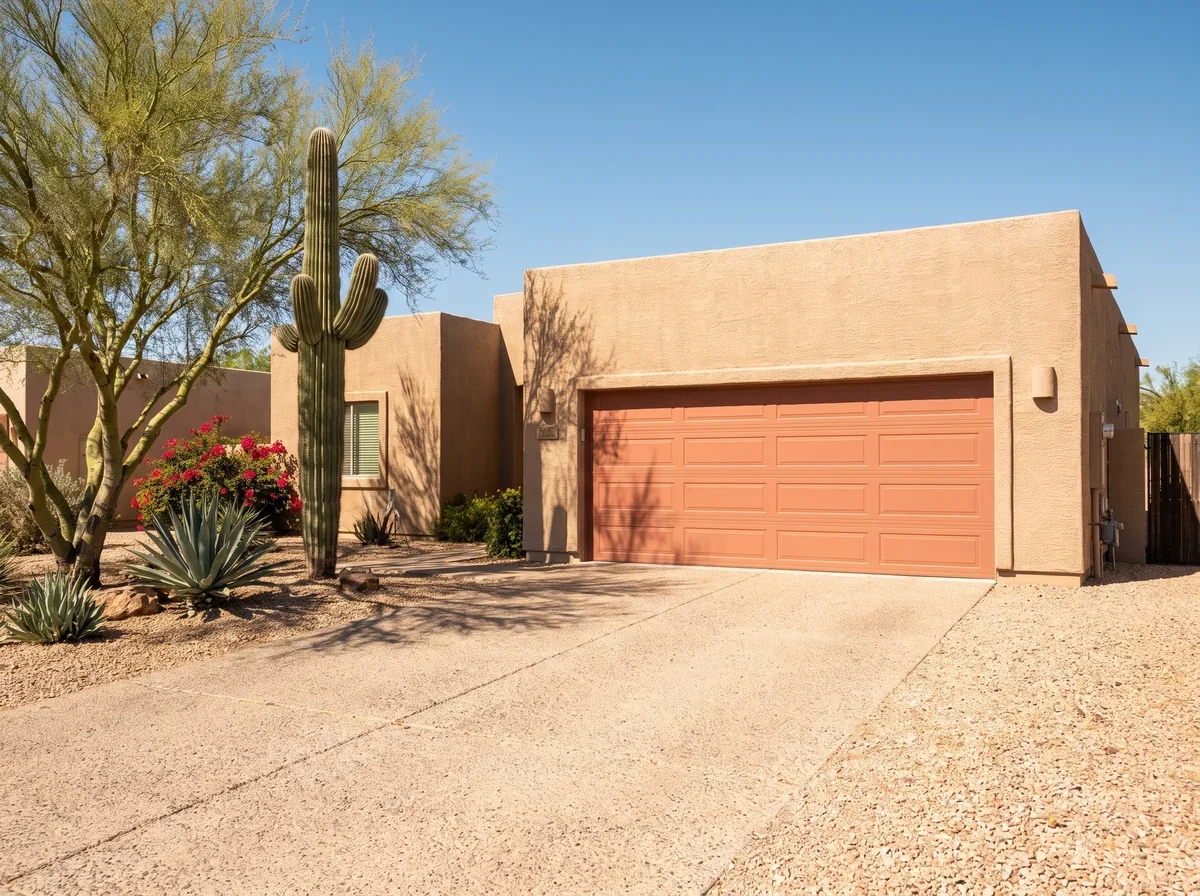
Other signs to look for:
- The door feels extremely heavy when you try to lift it by hand
- Cables look crooked or slack
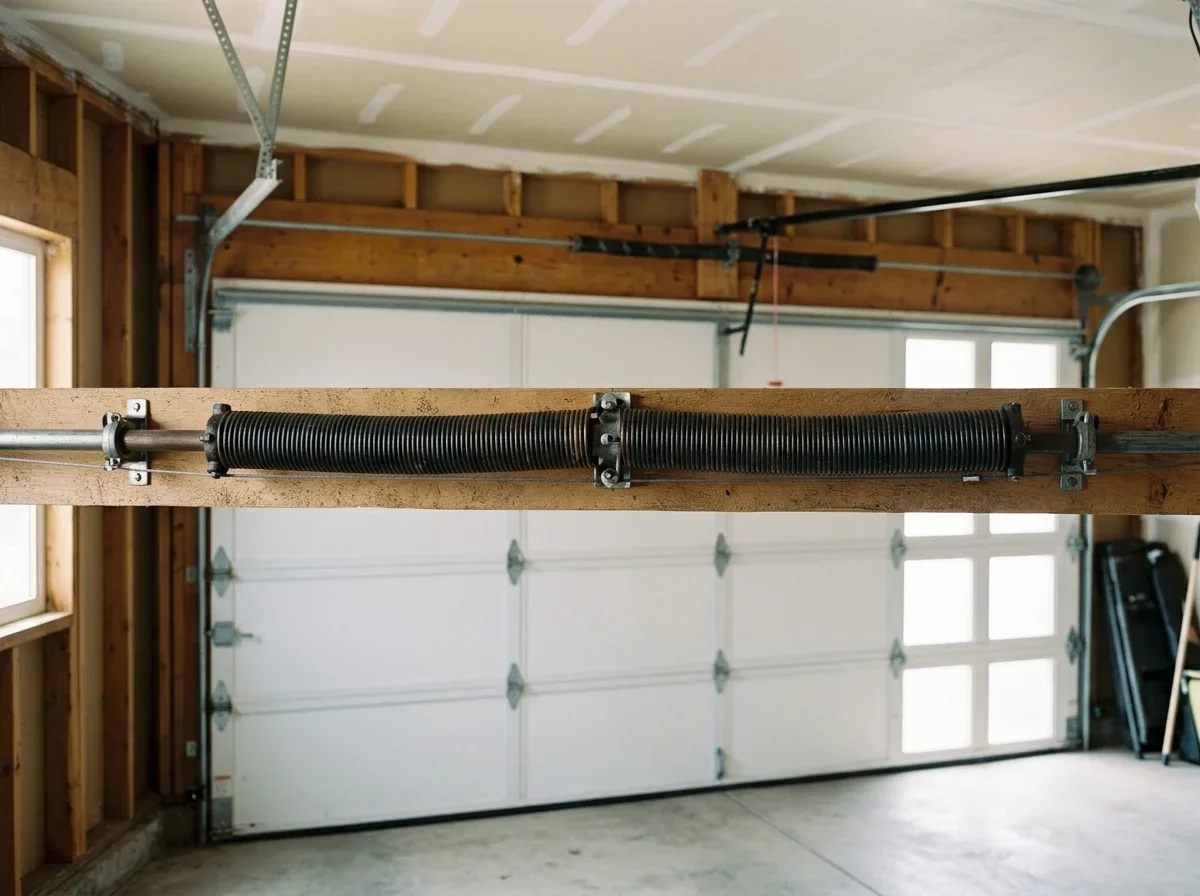
- A visible gap in the coil of a torsion spring above the door
- The opener motor hums or strains while the door barely moves
An opener is not built to lift a door whose spring has failed. The manufacturer warns that weak or broken springs can make a door move unexpectedly.[4]
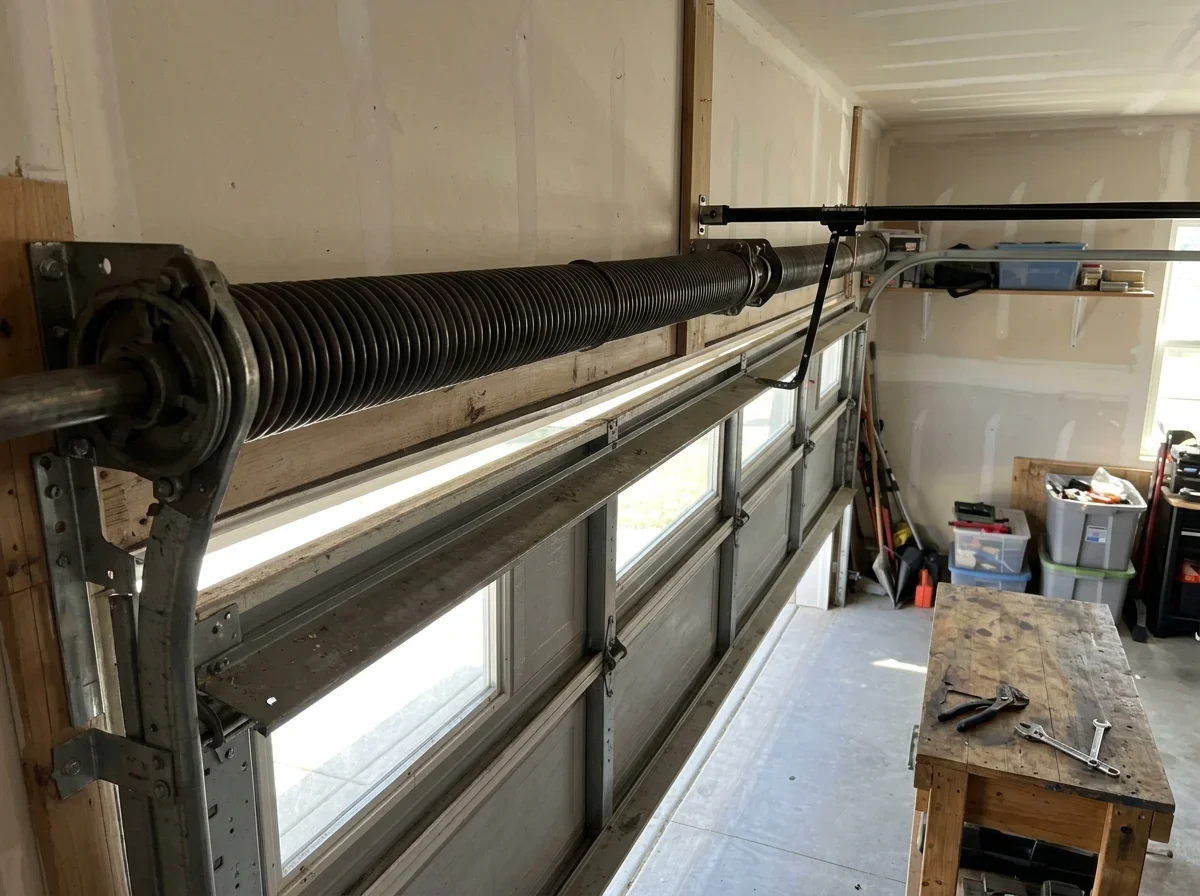
Look from a distance only, with the door fully closed. DASMA recommends inspecting springs visually from inside the garage and leaving the hardware alone.[3]
Not sure which type you have? This guide to torsion vs. extension springs helps you identify your setup.
What Happens When a Garage Door Spring Breaks
Springs counterbalance the door's weight. When one fails, that weight lands on the opener and on anyone trying to lift the door by hand.
Your door may be stuck closed with a car inside. It may also be stuck partly open, which is a security problem.
Forcing the opener can strain it. A door that keeps moving unbalanced can slam, accelerate near the floor, or go out of alignment.[4] If the opener is damaged, see garage door opener repair.
Why Spring Replacement Needs a Trained Technician
A spring holds the door's weight as stored energy. When someone loosens or winds it incorrectly, or when it fails under tension, that energy releases suddenly.
DASMA states that garage door springs can cause injury when they break. It also says extension springs are under high tension when the door is down, and that spring systems should be repaired only by trained professionals.[1]
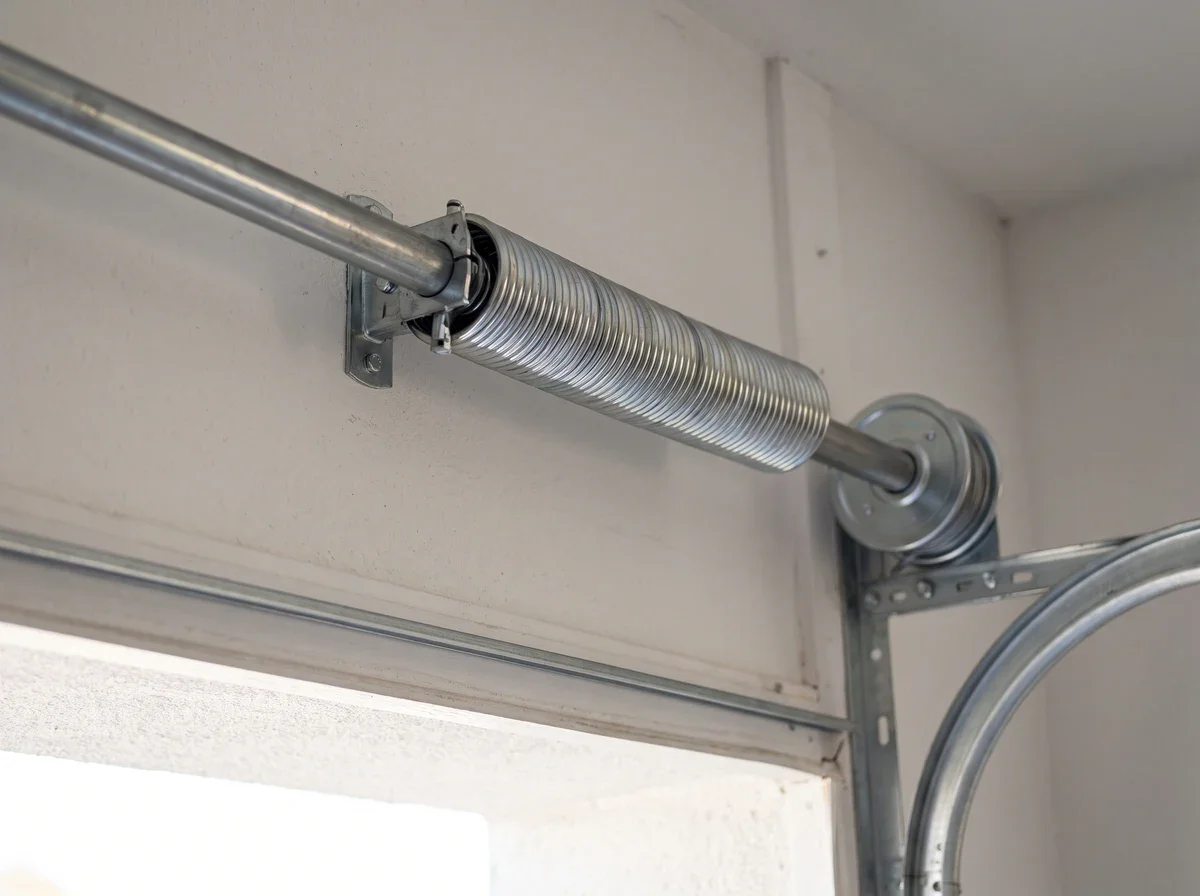
Torsion springs are contained on their shaft, and extension springs should have a safety cable running through them to catch broken parts.[3]
The replacement has to suit your door's weight and height, then be balanced afterward, or the door can be unsafe.
Can you fix it yourself? Not recommended. This page gives no DIY steps on purpose. For what a technician does on a visit, see garage door spring repair and replacement.
Hiring Checks for Arizona
Arizona's Registrar of Contractors (ROC) publishes no garage door class in its residential list (A.A.C. R4-9-103). The class on a license shows the scope of work the company may perform.
- Search the company name or 6-digit license number at roc.az.gov/contractor-search and confirm the license is current.
- Call the number on the license record to confirm the person works for that licensee.
- Compare the license class to the work in the contract.
- Get a written contract. For jobs over $1,000, A.R.S. 32-1158 lists what it must contain, including the license number, work description, total price, and payment terms.
Get a written, itemized quote even for a smaller job. Ask whether it covers one spring or both, cables or drums, labor, parts, and warranty terms.
Checklist
What an itemized quote should cover
0 of 5 ticked
Tick them off as you go. Nothing is saved or sent.
Ask for proof of workers' compensation and general liability separately, since ROC licensing does not require general liability. The ROC's Before You Hire page covers the rest. For pricing, see what spring replacement costs in Phoenix.
Safe Steps While You Wait for Repair
Do:
- Stop using the opener, because it can't lift a door without a working counterbalance.
- Keep kids, pets and vehicles clear, because a heavy door can drop or shift.
- Leave a closed door closed until the technician arrives, because it is more stable than a raised, unsupported one.
- Tell the company your door's state, spring type if known, and whether a car is trapped.
Don't:
- Touch springs, cables, brackets or bolts, because stored energy can turn hardware into a projectile.[1]
- Try to lift the door alone, because its full weight is no longer counterbalanced.
- Pull the emergency release on a door stuck partly open, because the spring no longer holds its weight and it may fall.[4]
If the door is fully closed and a car is trapped, follow your opener manufacturer's instructions for the release. The manufacturer says to operate it only when the door is closed whenever possible.[4]
Pro tip
Learn where your emergency release is before you ever need it, and tell the company whether a car is trapped when you call.
DASMA also expects homeowners to know where the release is.[2]
For stuck-door and after-hours situations, see emergency garage door repair.
Related questions
Questions
- Door & Access Systems Manufacturers Association International (DASMA). "Garage Doors." https://www.dasma.com/safety-tips/garage-doors/. Accessed October 17, 2026.
- Door & Access Systems Manufacturers Association International (DASMA). "Garage Door Safety Guidelines." https://www.dasma.com/wp-content/uploads/2020/10/Garage-door-safety.pdf. Accessed October 17, 2026.
- Door & Access Systems Manufacturers Association International (DASMA). "Technical Data Sheet 167: Garage Door Safety Inspection and Maintenance." https://www.dasma.com/wp-content/uploads/2023/04/TDS167.pdf. Accessed October 17, 2026.
- Raynor. "STANDARD Series 1/2 hp Chain Drive Wi-Fi Garage Door Opener Owner’s Manual." https://raynor.com/wp-content/uploads/literature/8165WRGD_Corporal-II-WiFi_inst.pdf. Accessed October 17, 2026.