How Long Garage Door Springs Last
Garage door springs wear out by use, not by calendar age. Each open-and-close cycle uses up a little of the spring's life, so no single year count is reliable.
Spring life is measured in cycles, and operating conditions change how many a spring delivers.[1]
A cycle is one trip from fully closed to fully open and back to fully closed.[2] DASMA's standard describes garage door springs as designed for a minimum of 10,000 cycles.[2]
That's a floor, and rated cycles vary by spring.
You'll see flat "7 to 10 years" claims all over the web. Treat them as rules of thumb at best.
If you already suspect a problem, see our garage door spring repair and replacement page.
Signs a Spring Is Wearing Out
Springs often fail without warning, but some clues show up first:
- The door feels heavy or lifts unevenly
- The door won't lift at all, or drops when released
- A visible gap in the spring coil
- New noise during operation (our guide to Garage Door Spring Noise: Squeaks, Groans and Bangs covers what each sound can mean)
Don't test a door you suspect is off.
Stored tension is the reason spring work belongs to trained technicians.
Cycle Ratings and How to Turn Them Into Years
You can estimate your own timeline with simple division:
Rated cycles ÷ cycles per day ÷ 365 = estimated years
Here's a labeled illustration, not a promise. A 10,000-cycle spring at 4 cycles a day works out to about 6.8 years. At 10 cycles a day, it's about 2.7 years.
| Rated cycles | Cycles per day | Estimated years |
|---|---|---|
| 10,000 | 4 | About 6.8 |
| 10,000 | 10 | About 2.7 |
Same spring, very different result.
The trick is counting honestly. Every trip out and every return is a full cycle, so one commute is already two cycles a day. Add school runs, deliveries, a workshop, or a garage that doubles as your front door, and the number climbs fast.
A two-driver household in Gilbert or Chandler can look nothing like a retiree whose door rarely moves.
To count your cycles:
- Tally each time the door opens and closes in a normal weekday
- Do the same for a weekend day
- Average them, then plug the result into the formula
If you don't know when your springs were installed, count forward from today and have them inspected. That's common in Phoenix-area homes, where the average house dates to about 1985.
Higher-cycle springs exist. Clopay's guide lists torsion springs typically rated from 10,000 to 20,000 cycles.[3]
If your door gets heavy use, ask your installer for the rated cycle count on the spring they're quoting. For pricing context, see spring replacement cost in Phoenix.
What Shortens Garage Door Spring Life
A spring has to lift the door's weight every cycle, so anything that makes that job harder costs you cycles. DASMA notes that balance depends on how well the springs match the door's weight.[5] Clopay says selection must match the door's weight, height, and track configuration.[4]
That points to several things you can check:
- Heavy use: more cycles per day means fewer years
- An unbalanced door: the spring carries uneven load
- Added weight: insulation or extra panels can change what the spring must lift
- Wrong or undersized springs: a spring that doesn't match the door works harder
- Skipped upkeep: DASMA says lubrication, when the manufacturer requires it, can help maximize spring performance,[1] and Clopay recommends regular lubrication and visual inspections for wear or damage[4]
DASMA also recommends annual inspection and maintenance by a trained door-systems technician.[5]
Pro tip
Ask your installer for the rated cycle count of any spring they quote, then run it through the formula with your own daily cycles.
Our garage door maintenance tune-up page covers balance checks and lubrication. Check your manufacturer's instructions for which springs and products apply.
A worn-out spring is also a good moment to have the whole door checked. Rollers, cables, and friction in the tracks can make a new spring work harder than it should.
Torsion vs Extension Spring Wear Rates
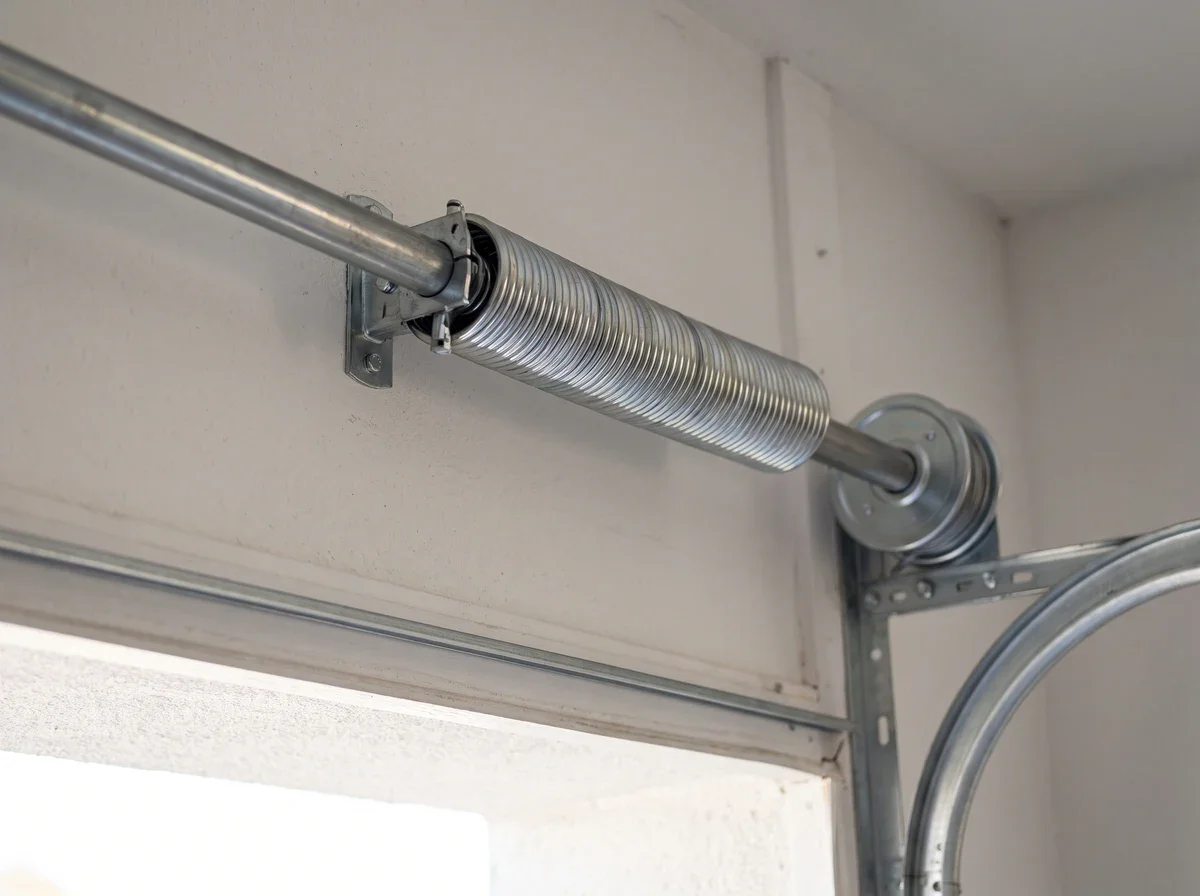
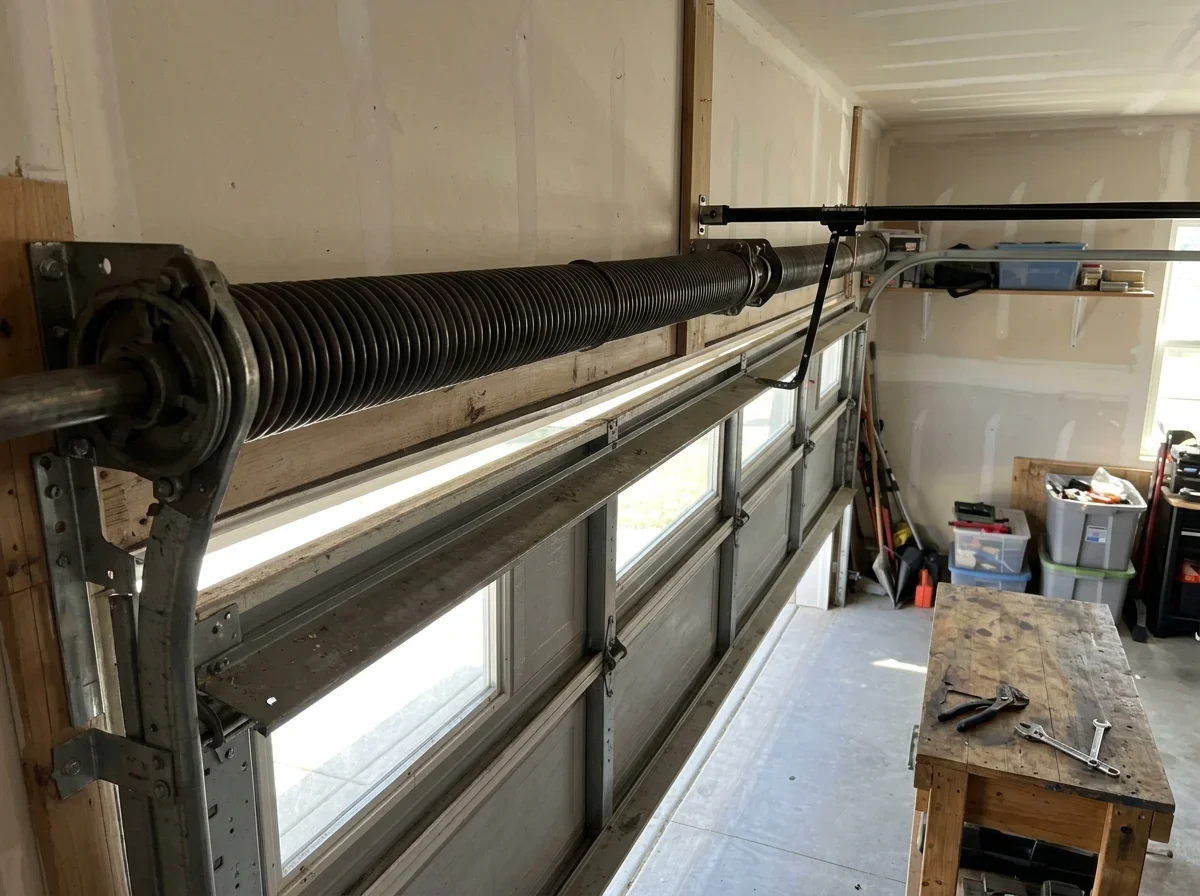
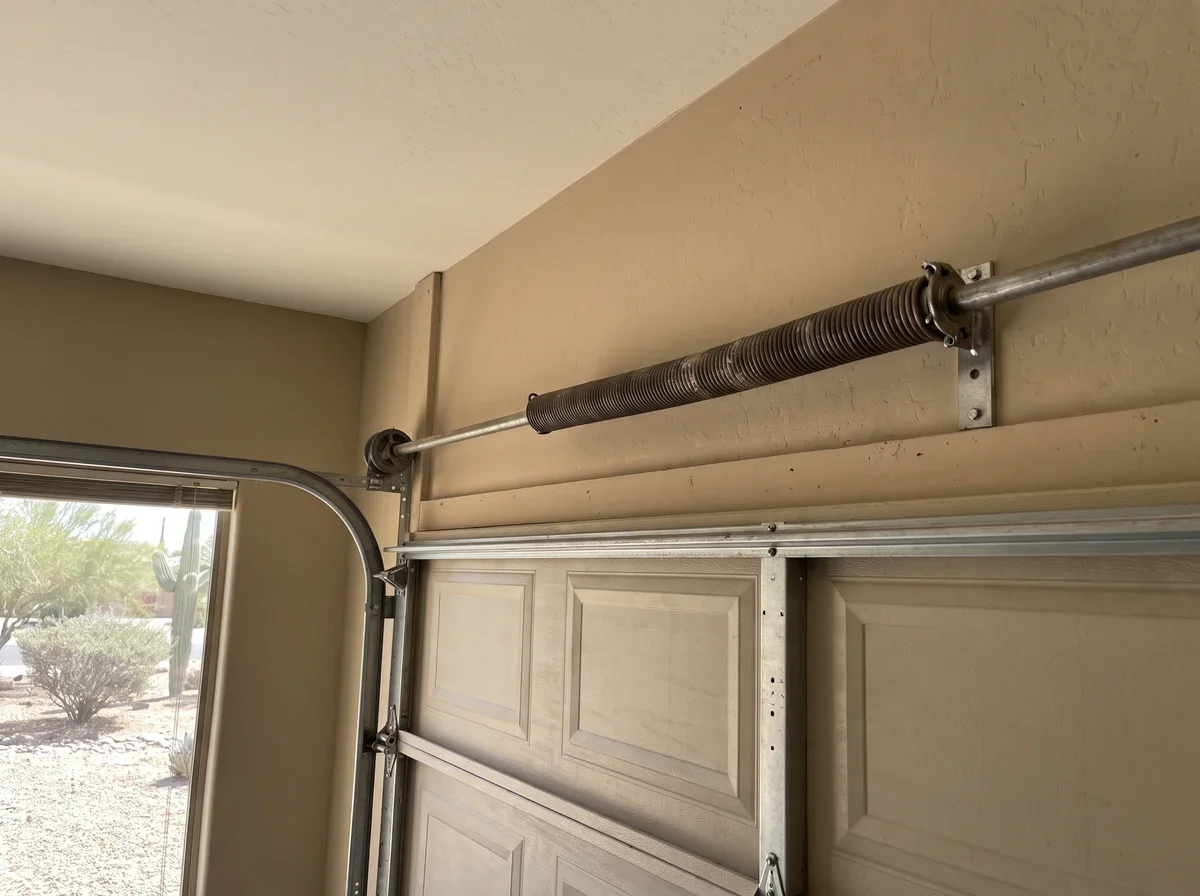
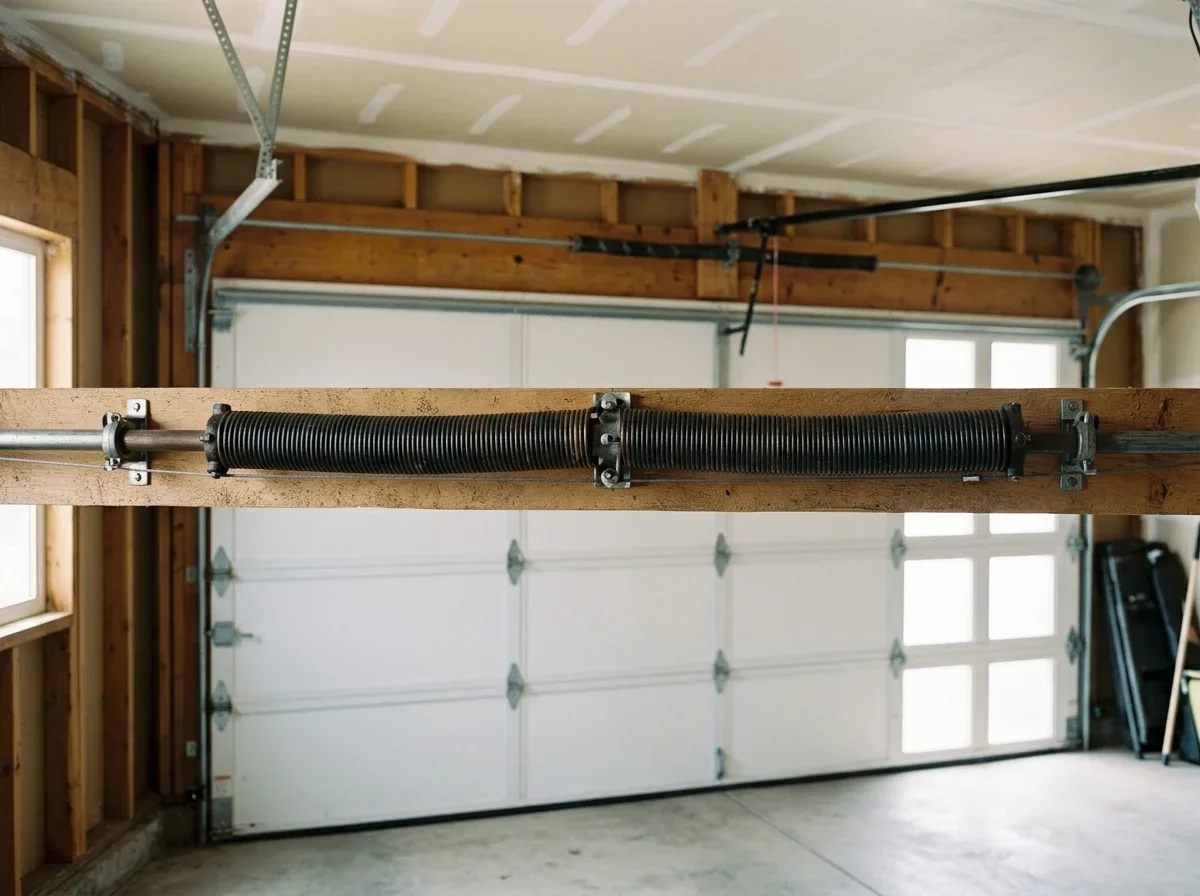
Lifespan depends on the spring type and how it's installed. Torsion springs mount on a bar above the door, while extension springs run along the sides of the tracks.[3]
Rather than quoting a year range for each type, rely on the cycle rating of the spring on your door. Years follow from that rating and how often you use the door, using the formula above.
Not sure which type you have? Our guide to torsion vs. extension springs shows how to tell them apart.
Related questions
Questions
- Door and Access Systems Manufacturers Association (DASMA). "Factors Affecting Spring Cycle Life." https://www.dasma.com/wp-content/uploads/pubs/TechDataSheets/CommercialResidential/TDS190.pdf. Accessed October 17, 2026.
- Door and Access Systems Manufacturers Association (DASMA). "Wind Load Testing - Garage Doors." https://www.dasma.com/wp-content/uploads/2022/03/DASMA-207-2018.pdf. Accessed October 17, 2026.
- Clopay. "Garage Door Components - A Complete Guide." https://www.clopaydoor.com/residential/buyingguide/components-of-door. Accessed October 17, 2026.
- Clopay. "Homeowners Guide to Garage Door Spring System." https://www.clopaydoor.com/residential/buyingguide/garage-door-spring-system. Accessed October 17, 2026.
- Door and Access Systems Manufacturers Association (DASMA). "Garage doors should live a balanced life." https://www.dasma.com/wp-content/uploads/2025/12/TechCorner_Winter2025.pdf. Accessed October 17, 2026.