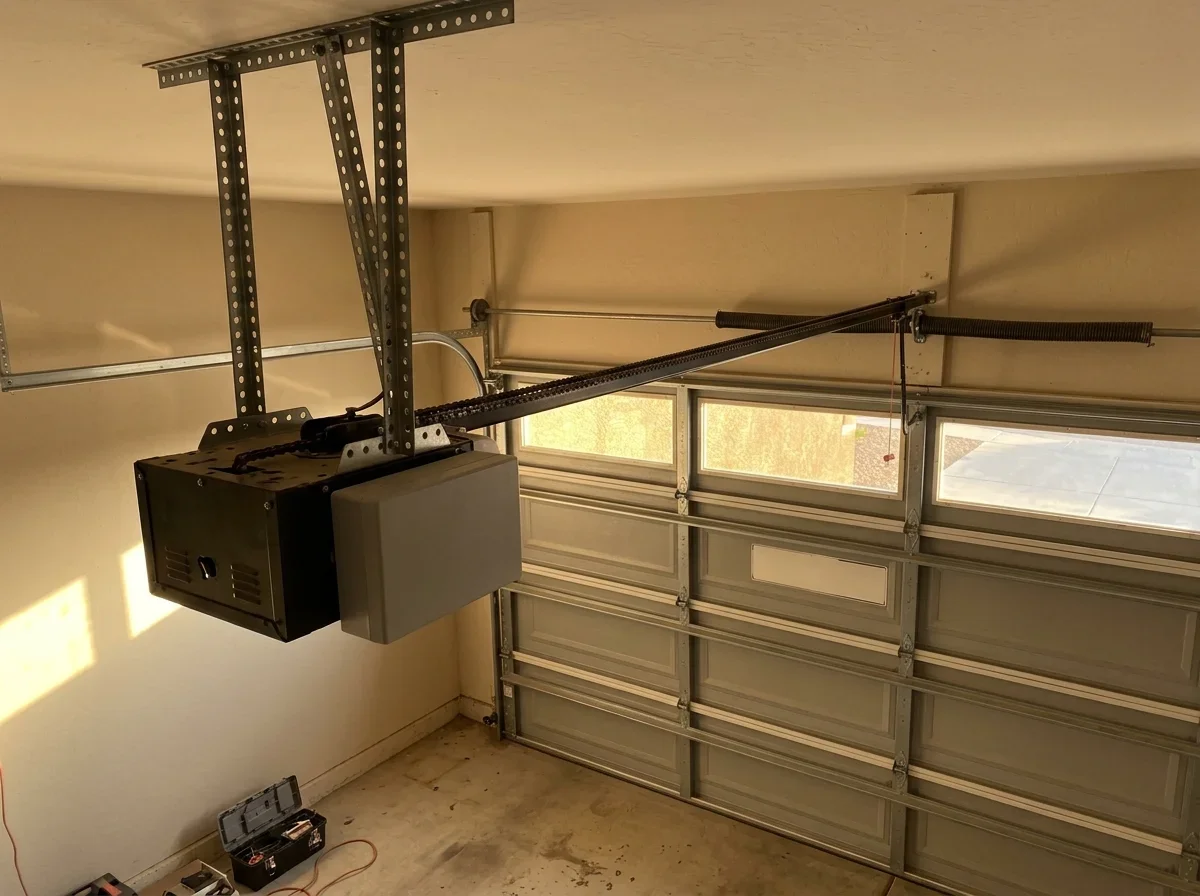
Why a Garage Door Opens and Closes by Itself
Most cases trace back to four things: a stuck remote button, a faulty keypad, a signal from another transmitter, or a wiring fault in the wall control. The door hardware itself is rarely the problem. The opener is receiving a command from somewhere, and your job is to find where.
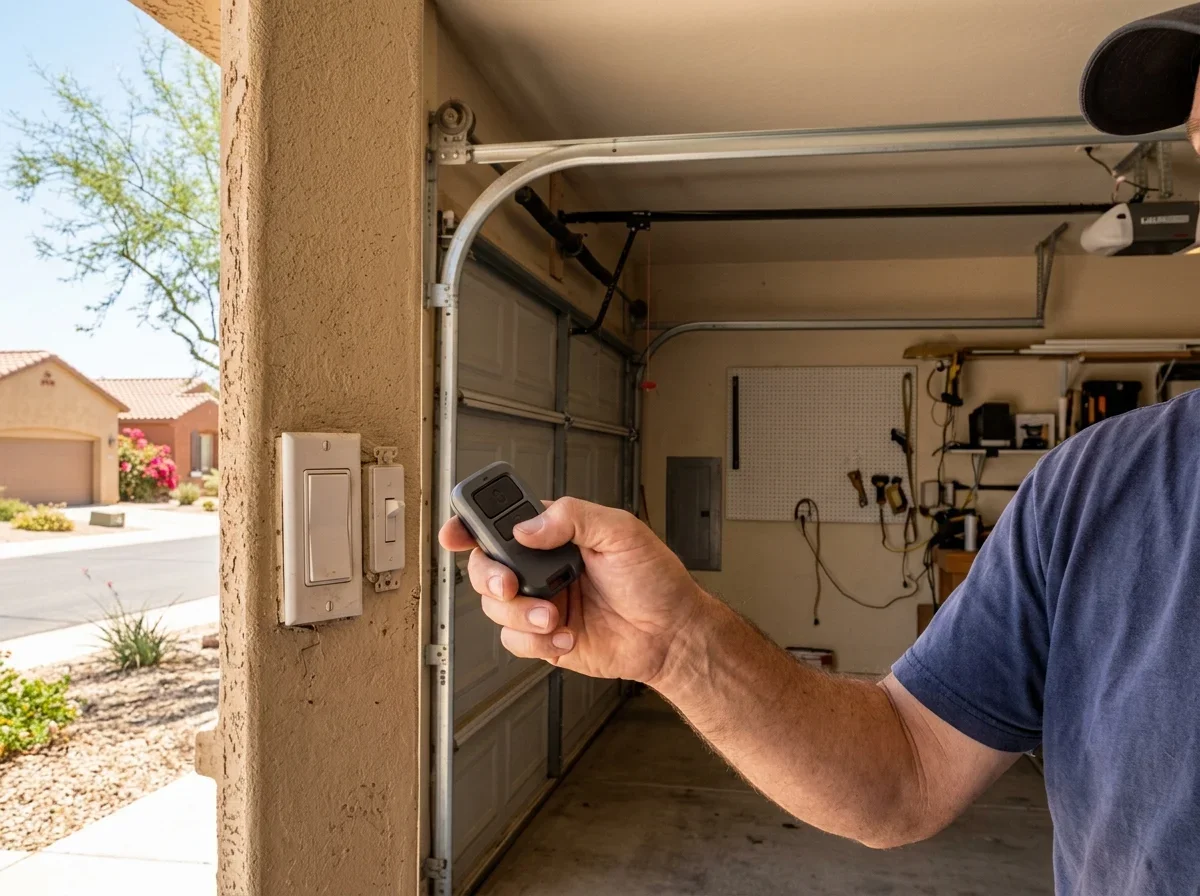
A remote left in a pocket, a bag or a car seat can have a button pressed against something, sending repeated signals.
Wireless keypads with worn keys or moisture inside can also trigger the opener.
The wall control is the other suspect.
Its low-voltage cable can behave like a pressed button if a connection is loose, the insulation is chafed, a staple pierces the wire, or two conductors touch. Both remotes and wall controls can activate the opener. That's why the CPSC advises keeping remotes secured in a vehicle's glove compartment and wall switches out of children's reach.[1]
How to Isolate the Cause
Work from the easiest test to the hardest, and change one thing at a time. The door may only move now and then, so give each step a full day before you decide it made no difference.
Checklist
Isolation steps
0 of 4 ticked
Tick them off as you go. Nothing is saved or sent.
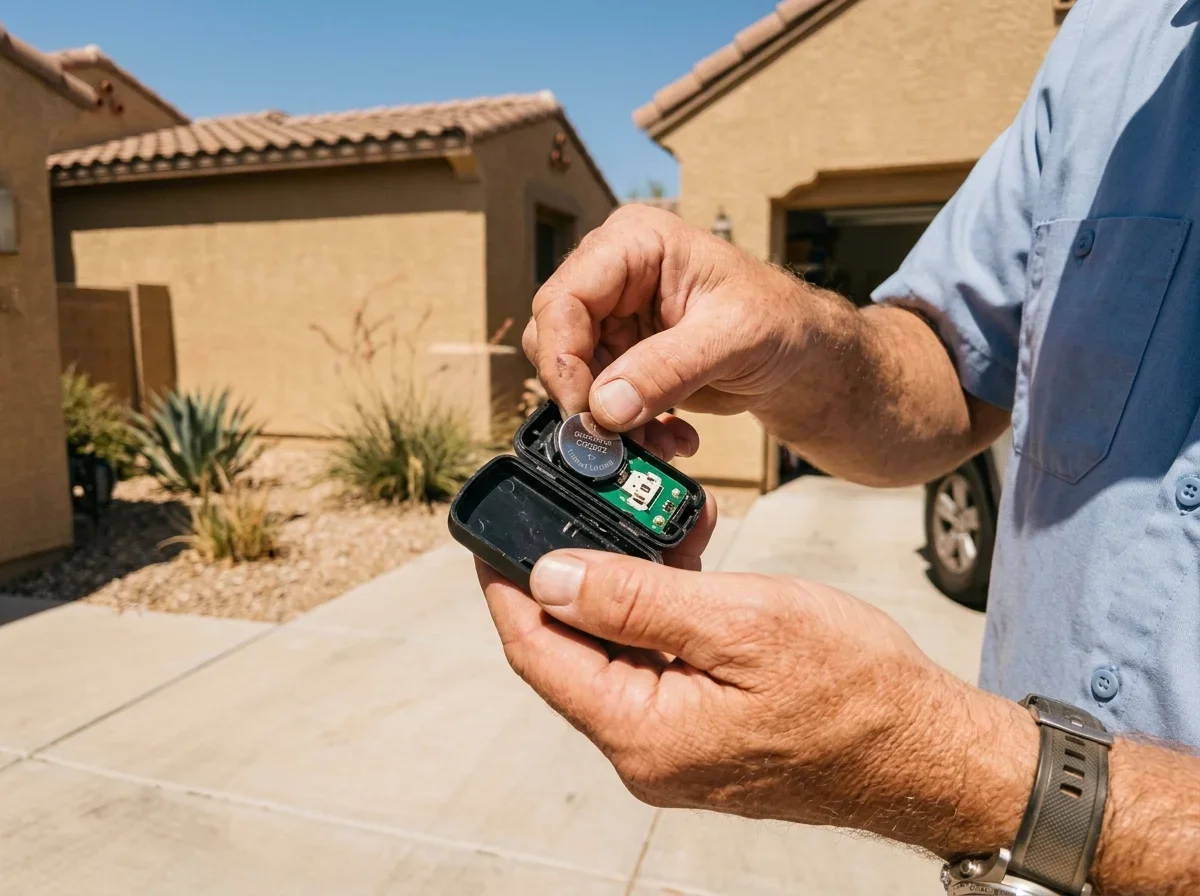
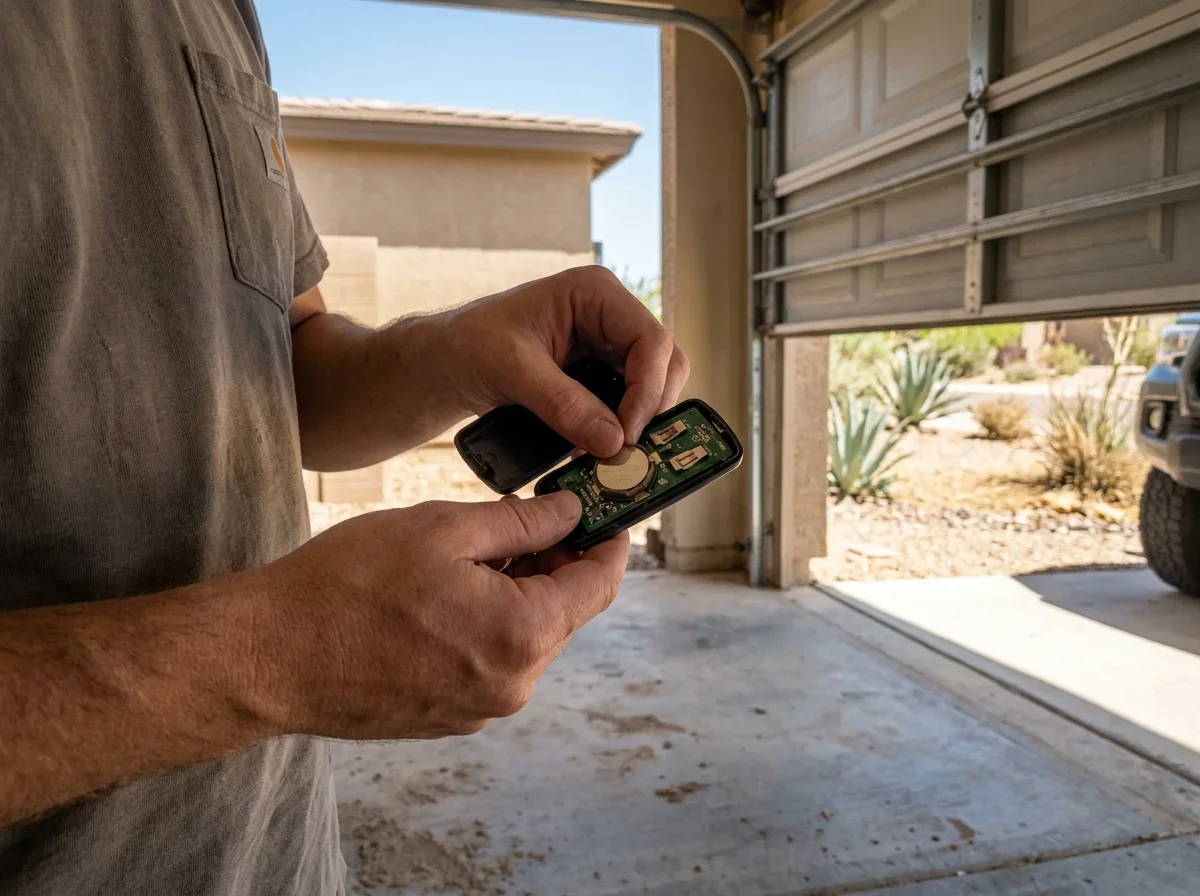
- Remove every battery. Take them out of all handheld remotes, wireless keypads and any transmitter built into a vehicle. If the door stays put, reconnect the devices one at a time until the problem returns.
- Disable the keypad. Take out its battery or cover it separately. A wet or corroded keypad will show itself this way.
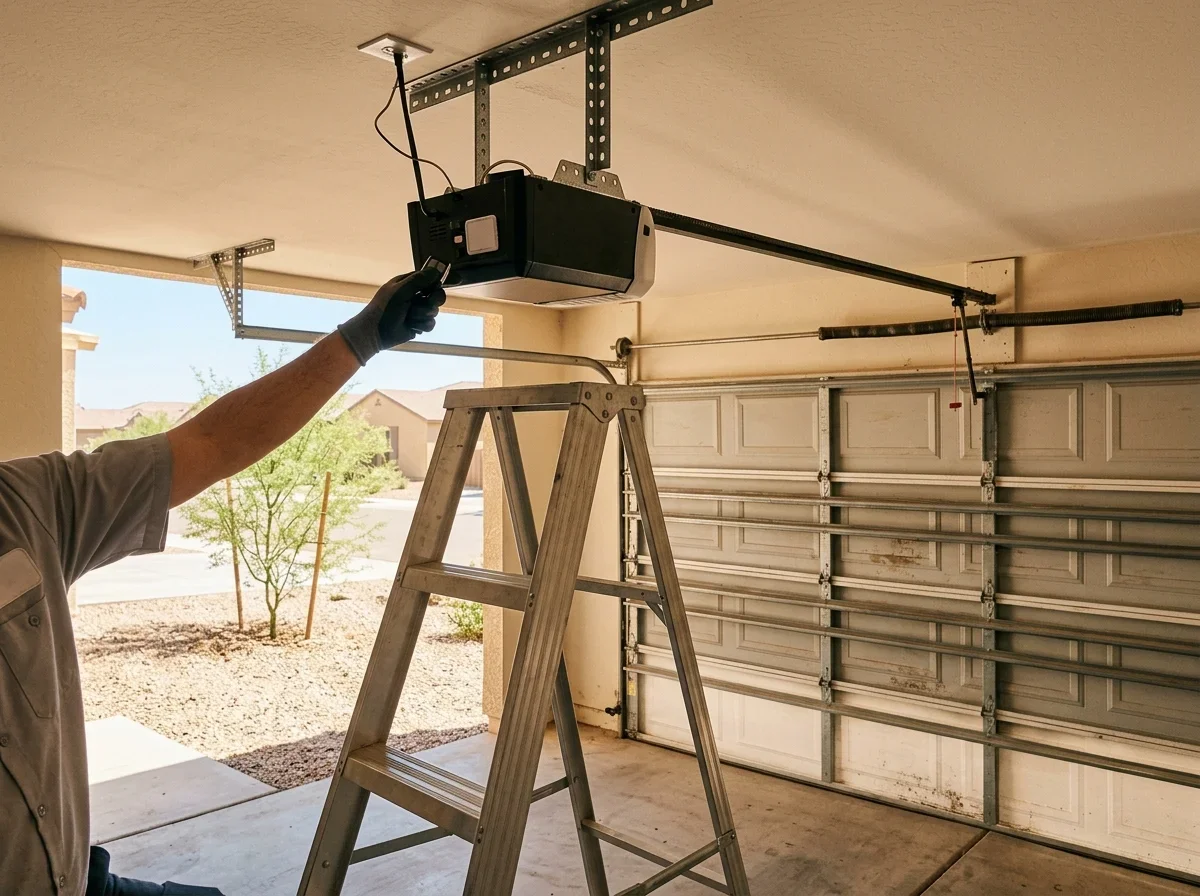
- Disconnect the wall control. Remove its wires from the opener terminals, leaving the safety-sensor wiring connected. If the door stops moving, the switch or its cable is the likely cause. Check for loose screws, pinched sections and damaged insulation along the whole run.
- Clear the codes and reprogram. This helps if a stray signal is possible, particularly with an older opener. Follow the steps in your opener's manual, then re-pair each remote and keypad. Our guide to programming a garage door remote or keypad covers the general process.
Security Concerns and When to Call
Treat random movement as both a safety and a security issue. A door that opens while you're out leaves the house exposed, and one that closes unexpectedly can hit a person or a pet.
If you can't solve it quickly, unplug the opener and use the manual release until it's fixed.
Pro tip
Never bypass the safety sensors to stop random movement. Unplug the opener and use the manual release until the cause is found.
While you're testing, check the reversing feature as well. The CPSC recommends testing it monthly and disengaging the opener if it fails the 2-by-4 test until it's adjusted, repaired or replaced.[2] Federal requirements call for the opener to reverse within two seconds of contacting a 2-inch test block, and for a manual way to detach it from the door.[3]
Never bypass the safety sensors to stop the problem.
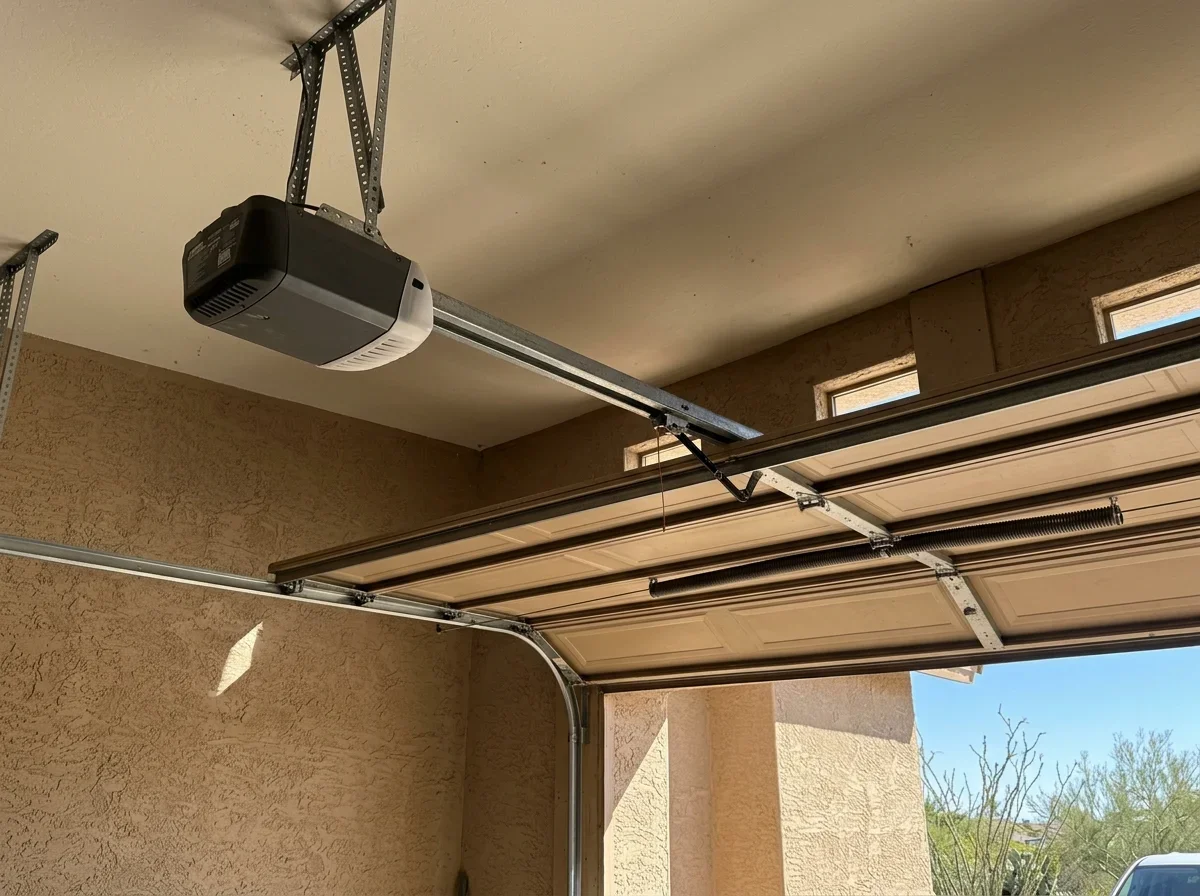
If the door still moves with every transmitter and the wall control disconnected, the receiver or logic board probably needs service. At that point, garage door opener repair from a technician is faster and cheaper than guessing.
If the opener also fails to reverse after you adjust it per the manual, the CPSC advises having a professional inspect it.[4]
Quick answers
Why does my garage door open by itself?
Usually a stuck remote button, a faulty keypad, a signal from another transmitter, or a wiring fault in the wall control.
How do I find the cause?
Remove all batteries, disable the keypad, disconnect the wall control, then reprogram, changing one thing at a time.
How often should I test the reversing feature?
The CPSC recommends testing it monthly.
When should I call a technician?
If the door still moves with every transmitter and the wall control disconnected, or if it fails to reverse after adjustment.
Questions
- U.S. Consumer Product Safety Commission. "CPSC Warns Of Garage Door Accidents." https://www.cpsc.gov/Newsroom/News-Releases/1983/CPSC-Warns-Of-Garage-Door-Accidents. Accessed October 17, 2026.
- U.S. Consumer Product Safety Commission. "Non-Reversing Automatic Garage Door Openers Are a Hazard." https://www.cpsc.gov/s3fs-public/garage.pdf. Accessed October 17, 2026.
- U.S. Consumer Product Safety Commission. "Safety Standard Targets Garage Door Deaths." https://www.cpsc.gov/Newsroom/News-Releases/1991/Safety-Standard-Targets-Garage-Door-Deaths. Accessed October 17, 2026.
- U.S. Consumer Product Safety Commission. "Safety Commission Publishes Final Rules For Automatic Garage Door Openers." https://www.cpsc.gov/Newsroom/News-Releases/1993/Safety-Commission-Publishes-Final-Rules-For-Automatic-Garage-Door-Openers. Accessed October 17, 2026.