How Well Garage Door Insulation Kits Work in Phoenix
Short answer: on an uninsulated steel door, a kit can cut some of the heat passing through the panels. How much depends on your door, how much sun it takes, and how many air leaks surround it.
R-value is a material's resistance to heat flow, so higher means slower transfer. Manufacturers state about R-4.6 at 75°F for one EPS kit[2] and a maximum of R-4.8 for another[5]. Those figures describe the foam, not your door as installed.
Independent Phoenix test data on kits is thin, so treat any promised temperature drop with suspicion. For the cost side of the decision, see what insulation costs in Phoenix.
For a short explainer on the numbers, see Garage Door R-Value for Phoenix Homes.
Door Weight, Openers and Springs With a DIY Kit
Your springs were set for the door's original weight. Added panels, adhesive and tape change that balance, and the opener can end up doing work the springs should do.
One retail kit lists a package weight of 7 pounds[5], which sounds trivial. But weights vary by kit, and your door may already be near its limit.
The balance test
Run this before you buy and again after installation:
- Close the door fully, then pull the opener's emergency release.
- Lift the door by hand to about waist height.
- Let go. A balanced door stays roughly where you left it.
DASMA's opener guide describes a properly balanced door as one that stays partially open around 3 to 4 feet above the floor[1]. If the door drops, shoots upward or feels heavy, the springs are the problem, not the opener.
Step by step
The balance test
Release the opener
Close the door fully, then pull the opener's emergency release.
Lift by hand
Raise the door to about waist height.
Let go
A balanced door stays roughly where you left it.
Never adjust or wind springs yourself. Slow travel, straining, reversing or a dropping door all mean stop.
Look at garage door spring repair and replacement or garage door opener repair before adding weight.
Doors a Kit Can and Can't Fit
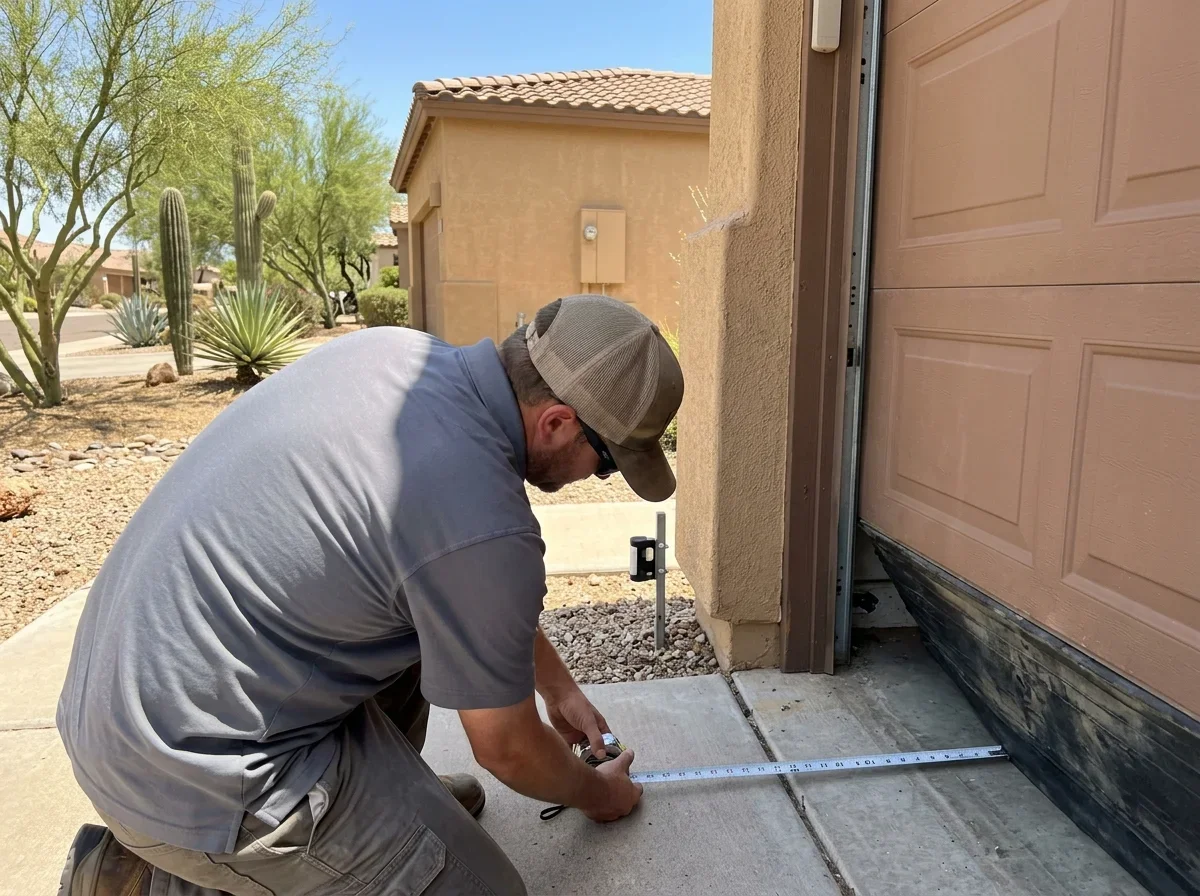
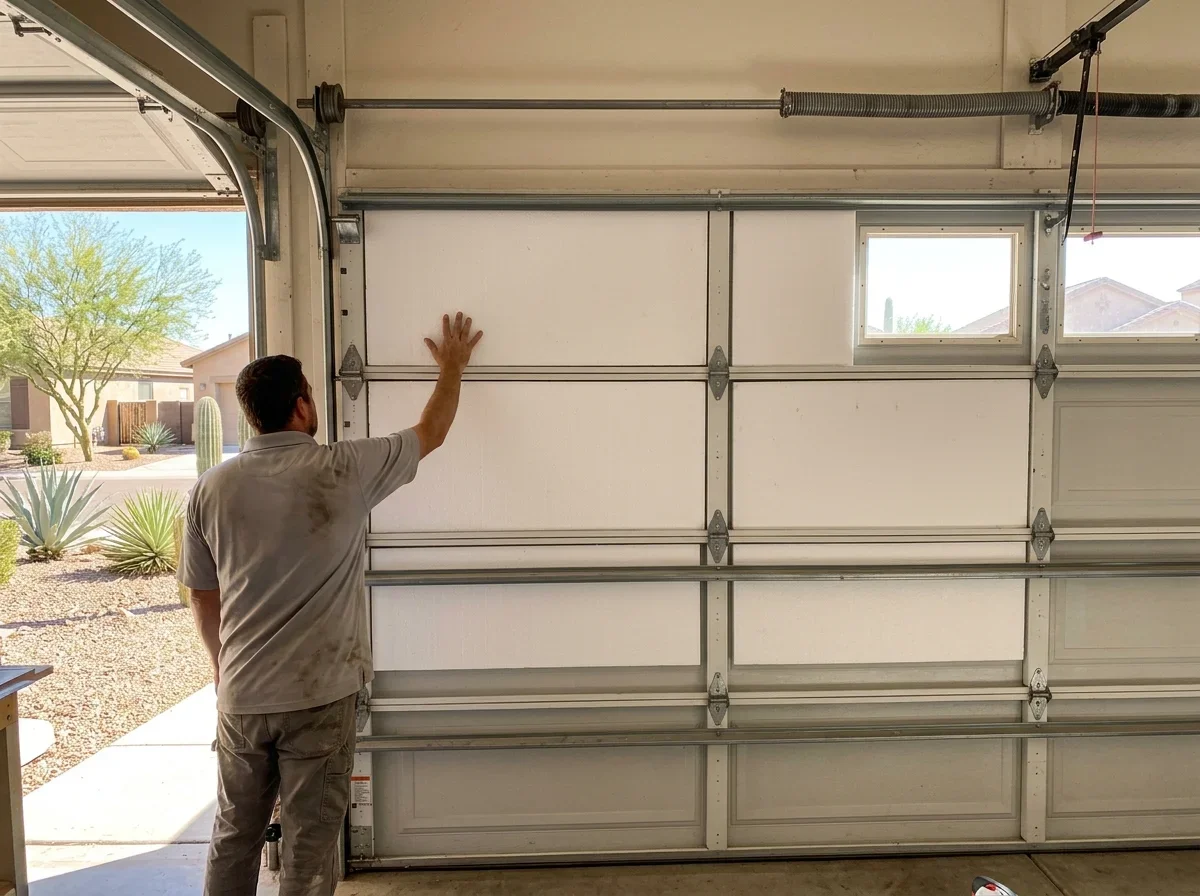
Most kits target uninsulated steel sectional doors with recessed panel channels. Typical kits include eight rigid panels about 20.25 by 54 inches and 1.25 inches thick, made for a single-car 8 or 9 foot door[3][4]. A two-car door generally takes two kits[6].
Use this checklist before ordering:
- Steel sectional door with recessed channels
- Section height and width measured against the kit's panel size
- No windows in the sections you plan to fill
- No deep embossing or shallow panels
- No existing insulation
- Hinges, braces and rollers mapped, with room left at the section joints so the door can still bend
All checked means the kit fits. A few misses means it fits with careful cutting.
Wood, carriage-style or windowed doors usually don't fit. Dented or damaged panels call for garage door panel replacement, and an old, struggling door may be better served by a new insulated door.
Best Material for Insulating a Garage Door
"Best" depends on your door and how much sun it takes. If the door is a sound steel sectional that passes the balance test, a kit is reasonable. If it struggles, fix springs and opener first.
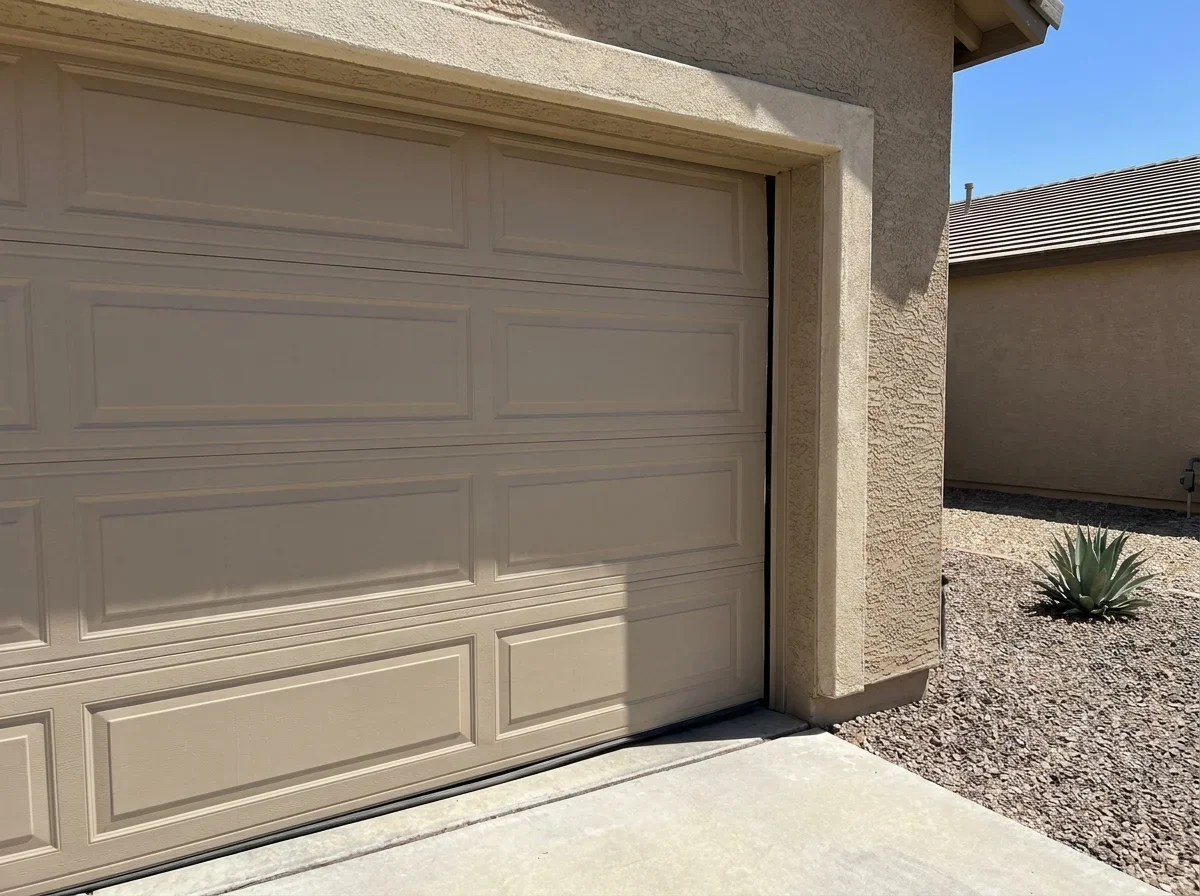
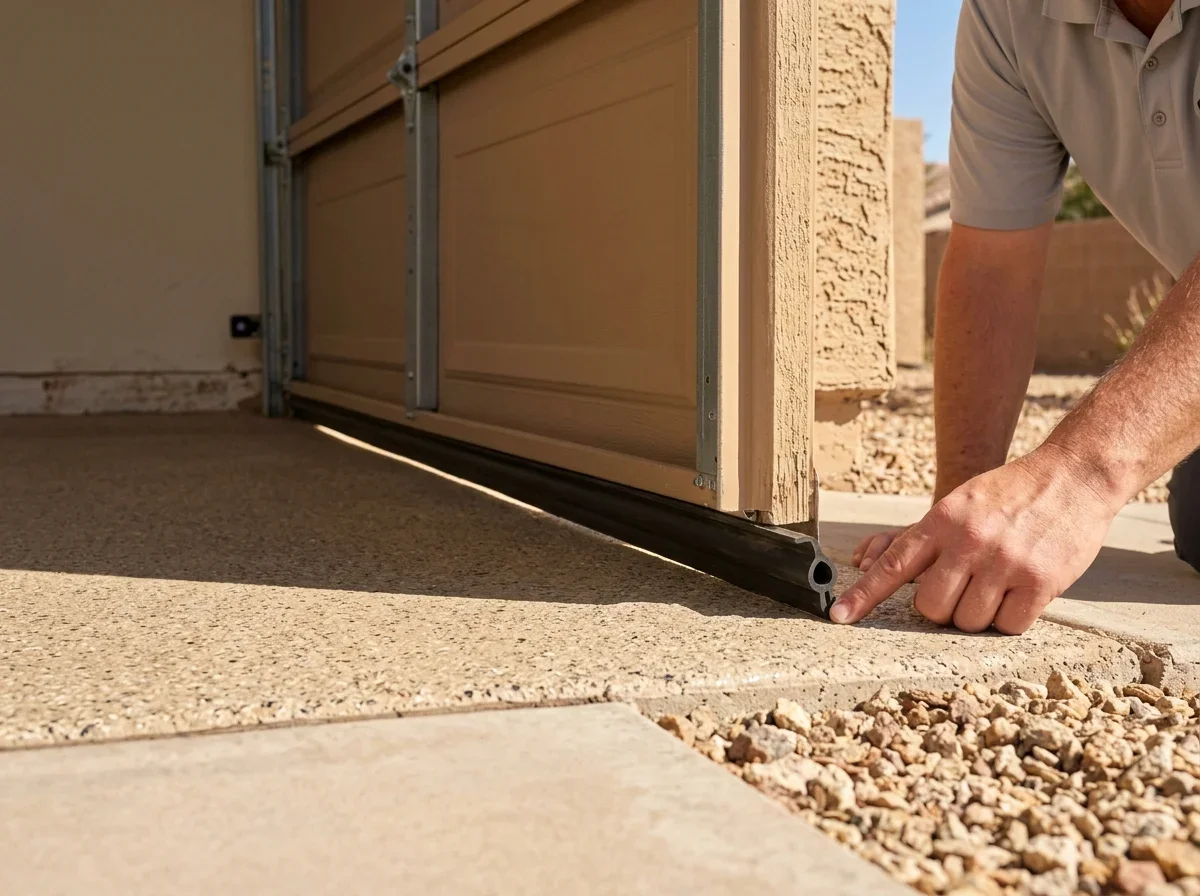
Leaks matter as much as foam. On a sunny day, stand inside the closed garage and look for light along the edges and bottom. Any gap lets hot air and dust in regardless of panel R-value. Worn seals are a job for garage door weatherstripping and seal replacement.
For material detail, see polystyrene vs. polyurethane insulation.
Key takeaways
Stated kit R-values are about R-4.6 and up to R-4.8, for the foam only
Pick a kit only if the door is a sound steel sectional that passes the balance test
Fix springs and opener first if the door struggles
Seal air gaps, since leaks matter as much as foam
| Kit type | Added weight | Fits which doors | Heat behavior | Install difficulty |
|---|---|---|---|---|
| Reflective foil-faced foam | Light; confirm on the spec sheet | Steel sectional doors with recessed panels | Reflective face targets radiant heat; does not replace air sealing | Moderate; panels cut one at a time |
| Rigid EPS (polystyrene) panels | Light per kit; confirm on the spec sheet | Standard steel sectional doors, panel size must match | Bulk insulation with a stated manufacturer R-value | Moderate; cutting around hinges and braces |
| Vinyl-faced batt/fiberglass | Varies by kit; check the label | Steel doors with channels to hold the batts | Bulk insulation; depends on the channels being present | Easier if channels exist, awkward if they don't |
Related questions
Questions
- Door & Access Systems Manufacturers Association International (DASMA). "Automatic Garage Door Opener Safety & Maintenance Guide." https://www.dasma.com/wp-content/uploads/2024/04/Automatic-Garage-Door-Opener-Safety-Maintenance-Guide-trilingual-3-22-24.pdf. Accessed October 17, 2026.
- Cellofoam North America. "Garage Door Insulation Kit." https://www.cellofoam.com/products/building-products/laminated-eps/garage-door-insulation-kit. Accessed October 17, 2026.
- Henry Company. "Henry Garage Door Insulation Kit Technical Data." https://images.thdstatic.com/catalog/pdfImages/8c/8cd71a57-a98b-4488-b37c-77dd55d1419c.pdf. Accessed October 17, 2026.
- Henry Company. "Henry Garage Door Insulation Kit." https://www.henry.com/residential/products/insulation/diy-insulation/garage-door-insulation-kit/. Accessed October 17, 2026.
- Lowe’s. "Insulfoam Garage Door Insulation Kit R-4.8." https://www.lowes.com/pd/Insulfoam-Common-1-25-in-x-1-6875-ft-x-8-ft-Actual-1-25-in-x-1-6875-ft-x-4-5-ft-Garage-Door-Insulation-Kit-1-R-4-8-Faced-Polystyrene-Garage-Door-Foam-Board-Insulation/50244957. Accessed October 17, 2026.
- The Home Depot. "Garage Door Insulation Kit." https://www.homedepot.com/p/Cellofoam-Garage-Door-Insulation-Kit-8-Pieces-Garage-Door-Insulation-Kit-8-pcs/203630159. Accessed October 17, 2026.