Garage Door R-Value Explained
R-value measures resistance to heat flow. A higher number means less heat moves through the material, and it depends on the insulation type and thickness.[4]
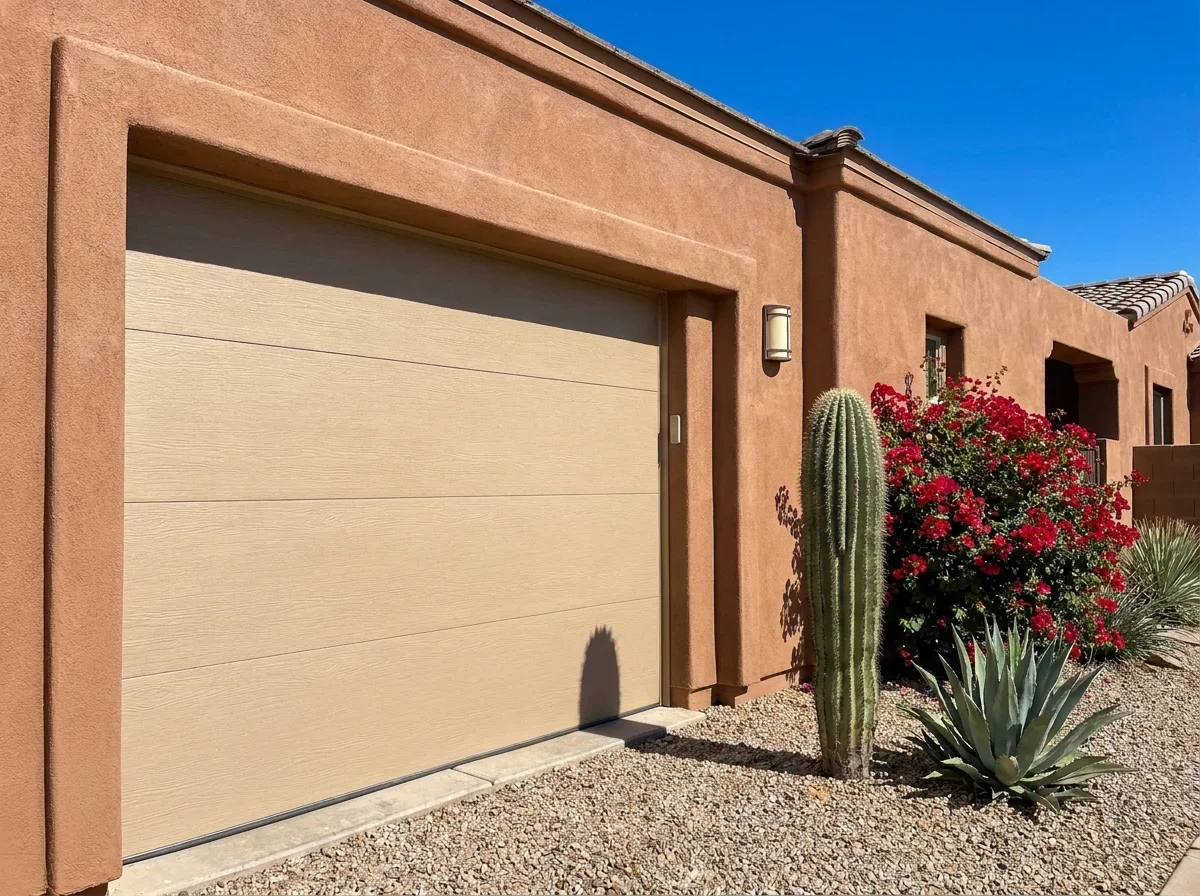
For garage doors, the number gets slippery.
R-value generally describes the insulation in an individual door section, while U-factor measures heat transfer through the complete assembled door.[1] That distinction matters because the finished door includes steel skins, section joints, and seals that the section rating doesn't capture. DASMA notes that R-value may be based on the insulation component or a representative section, and that U-factor is preferable for comparing whole doors.[2]
Side by side
R-value versus U-factor
R-value
- Describes insulation in a section
- Higher number means less heat flow
U-factor
- Covers the complete assembled door
- Better for comparing whole doors
Real installations lose ground too. Voids, gaps, compression, and air movement all cut into the performance a label promises.[3]
Compare labels carefully.
Make sure both products list values from the same test method (ANSI/DASMA 105 is the recognized standard for garage-door thermal performance). Then ask whether the figure is for a section or the whole door.[5]
R-Value Ranges: Kits vs. Insulated Doors
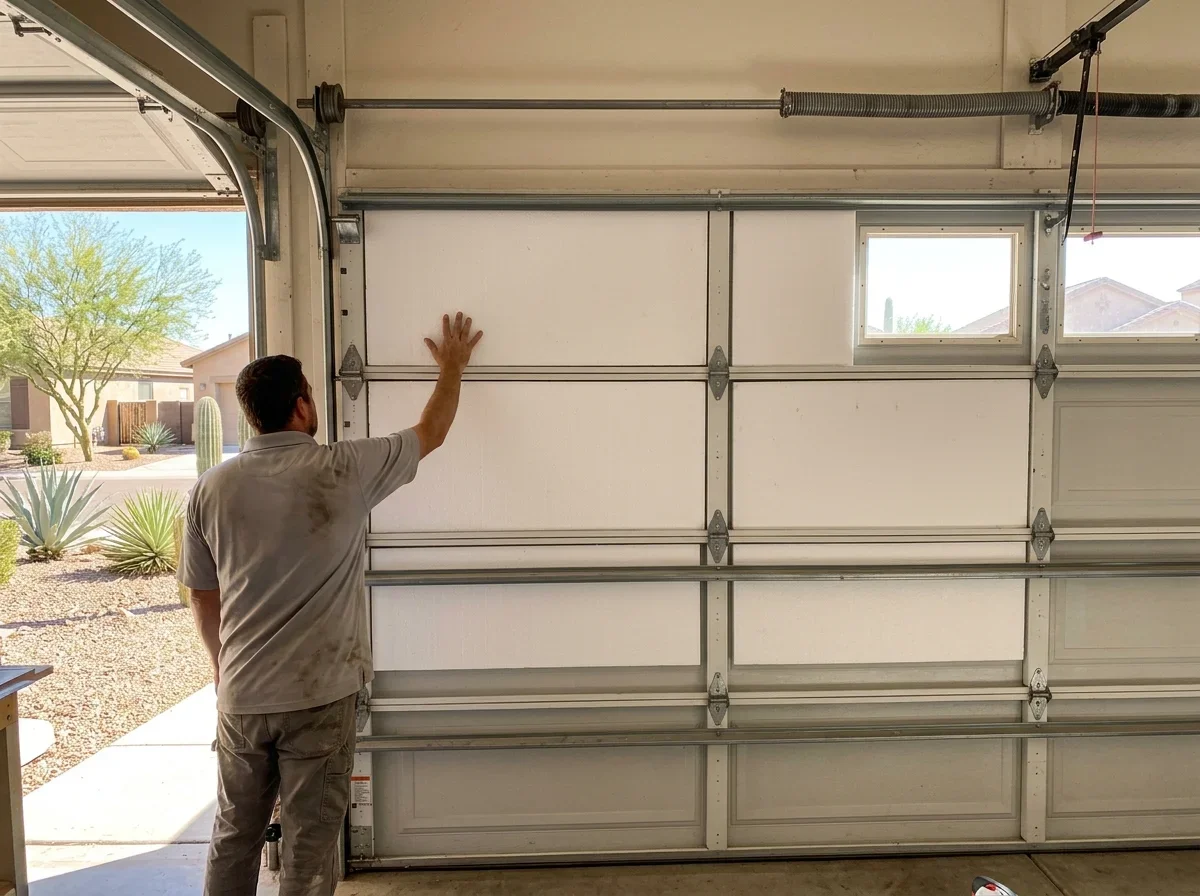
Retrofit kits and factory doors are built differently, so their ratings aren't directly interchangeable. Kits typically come as rigid foam board, reflective foil or bubble material, or batting. Factory doors use polystyrene or polyurethane insulation built into the sections.
| Type | Typical materials |
|---|---|
| Retrofit kit | Rigid foam board, reflective foil or bubble material, or batting |
| Factory door | Polystyrene or polyurethane built into the sections |
Exact ranges vary by product, so check the manufacturer's documentation for the specific model. Read the manufacturer's spec sheet for the specific kit or door, and check how the rating was derived.
R-value is a calculated estimate for a manufactured section, while U-factor is a tested measurement of the entire installed door.[6]
Be skeptical of reflective products. Many work mainly as radiant barriers, and they shouldn't be treated as equivalent to thick foam or polyurethane.
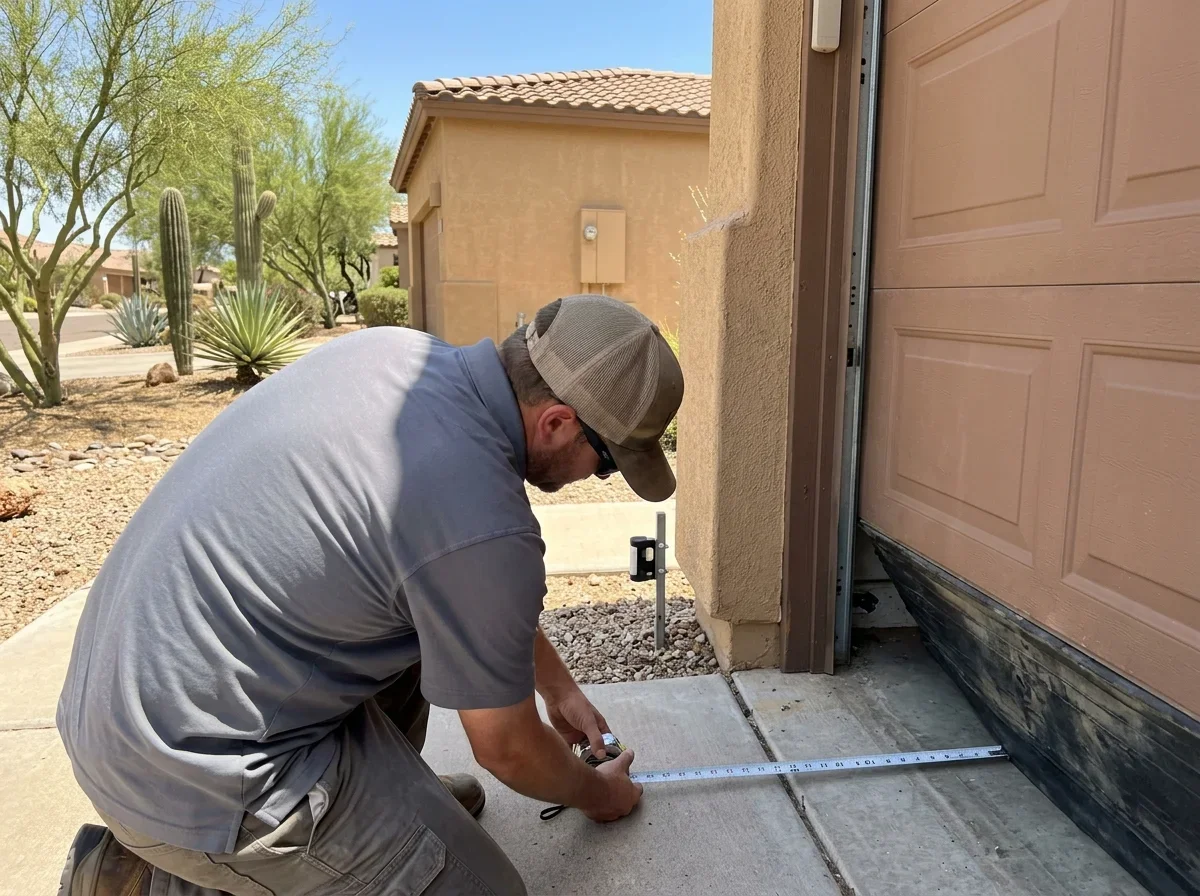
Fit also matters. A panel that is too thin leaves an air space, and one that is too thick can interfere with hinges and hardware. If you're weighing kits, our guide to DIY garage door insulation kits in Phoenix heat covers what holds up in the desert.
Diminishing Returns in the Desert
A very high R-value gives less back than you'd expect once air is moving freely around the door. Insulation slows conductive heat flow, but gaps and air movement reduce its installed performance.[3]
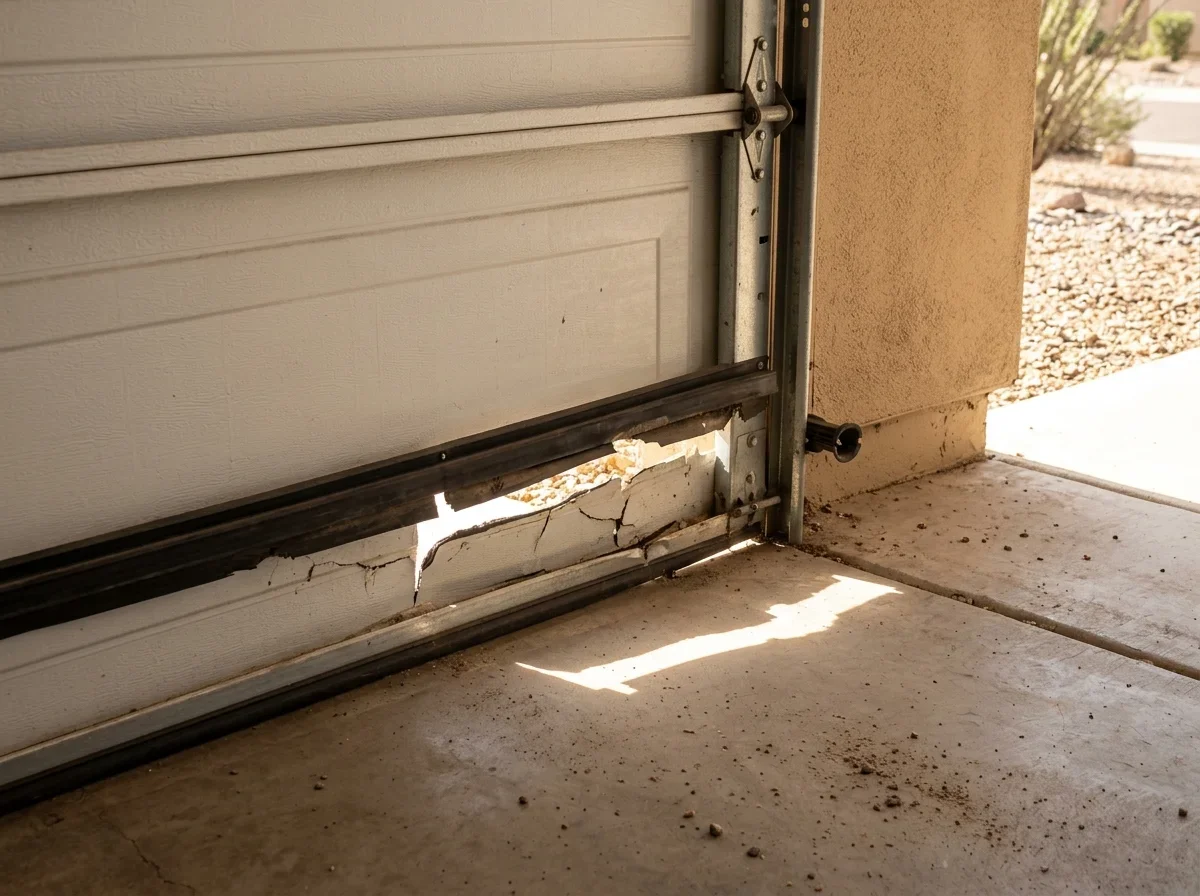
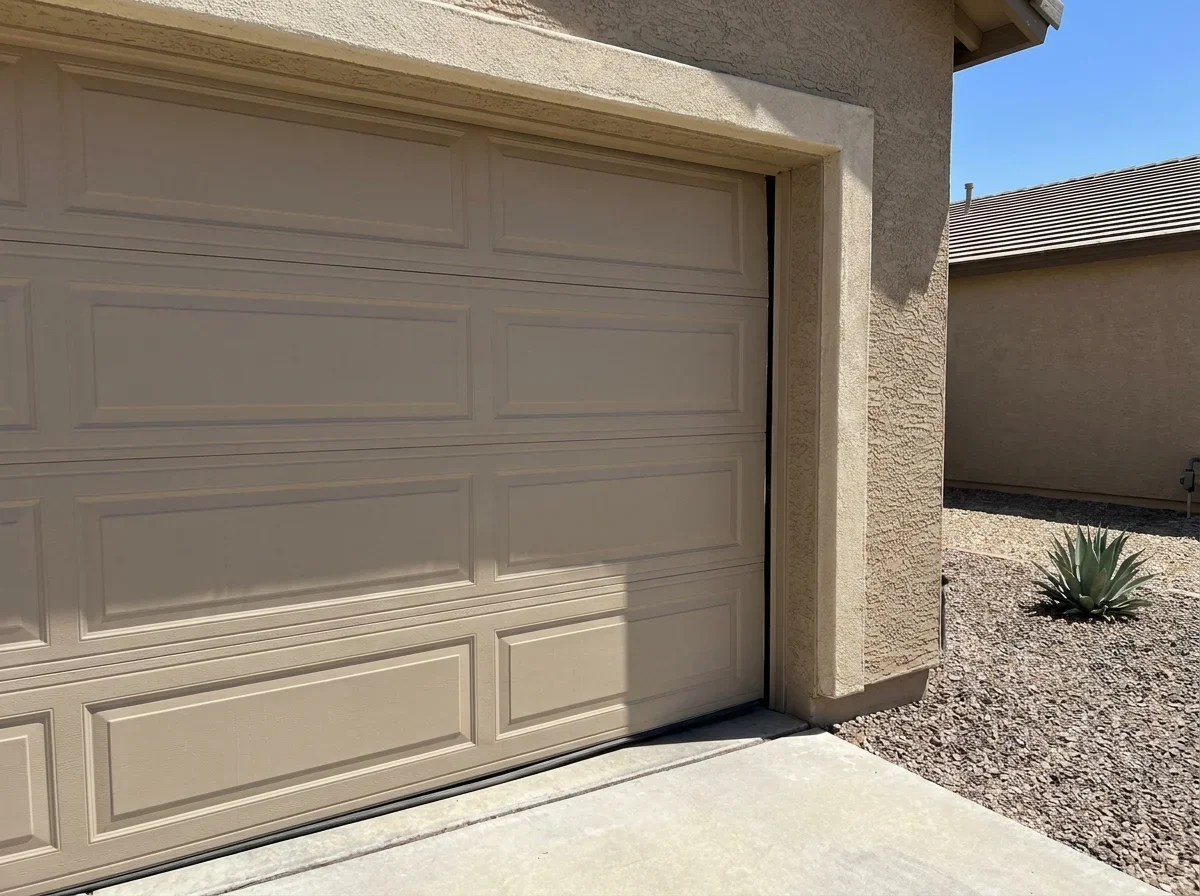
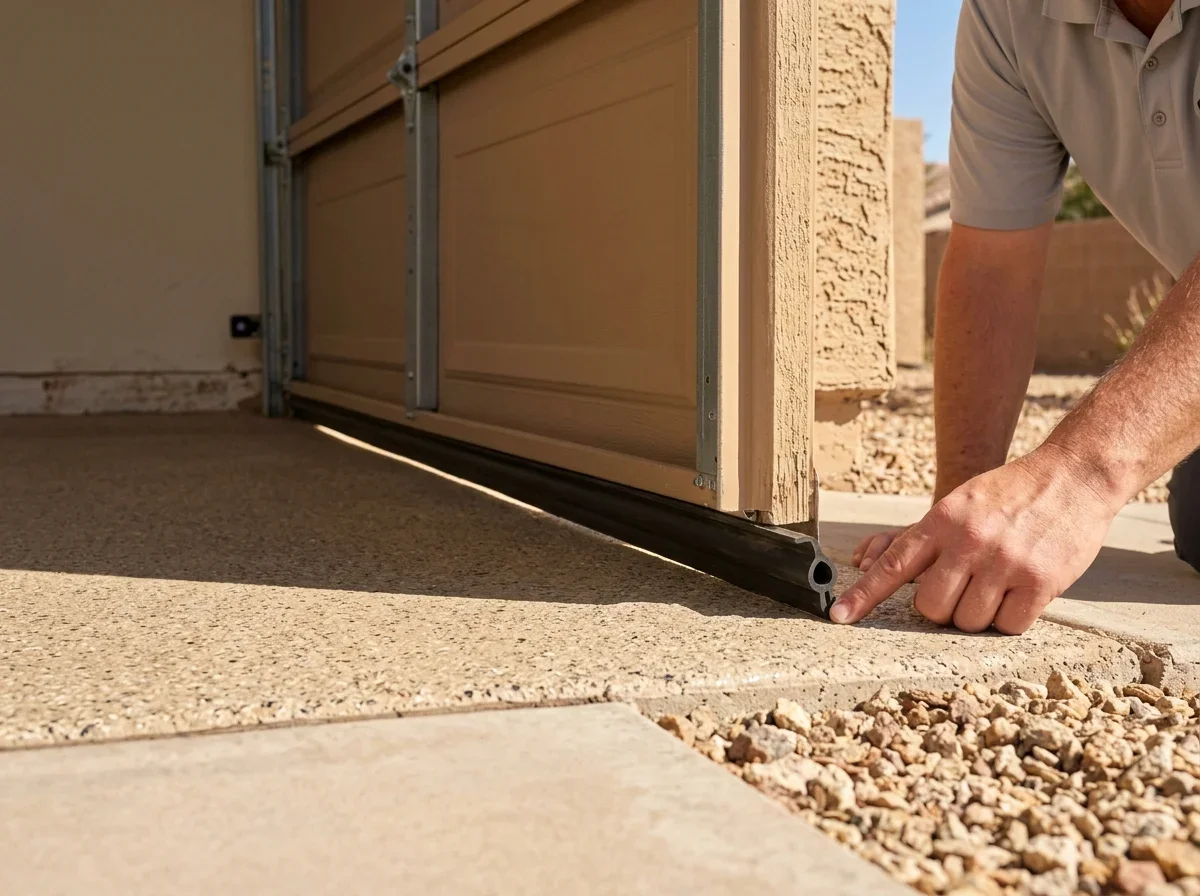
A worn bottom seal or a daylight-visible side gap lets hot air in no matter what the panels are rated.
That makes sealing the low-effort first step. The DOE describes weatherstripping as a simple air-sealing method for movable components such as doors.[4] Replacing the bottom seal, side stops, and header seal is often cheaper than a new door.
Our garage door weatherstripping and seal replacement page explains what that work involves.
Your garage's role changes the math, too. If it's attached or shares a wall with living space, or if you condition it, door R-value matters more.
If it's an unconditioned, detached space, direct sun on a south- or west-facing door and leaks around the perimeter tend to dominate. A moderate rating with tight seals can beat an expensive door that leaks.
Insulating only the door also has limits when the ceiling and walls stay bare.
If you add a kit, check the door's balance afterward by disconnecting the opener and lifting it by hand. A door that no longer stays put needs its springs evaluated.
Pro tip
After adding a kit, disconnect the opener and lift the door by hand to check its balance.
Questions
- Door and Access Systems Manufacturers Association International (DASMA). "U-factor and R-value for Residential and Commercial Garage Doors." https://www.dasma.com/wp-content/uploads/2022/09/TDS163..pdf. Accessed October 17, 2026.
- Door and Access Systems Manufacturers Association International (DASMA). "DASMA Guidelines for Publication of Thermal Performance Values." https://www.dasma.com/wp-content/uploads/pubs/Brochures/ThermalPerfWebGuidelines.pdf. Accessed October 17, 2026.
- U.S. Department of Energy. "Building Envelope Building Science Intro: Heat Flow." https://bsesc.energy.gov/energy-basics/building-envelope-building-science-intro-heat-flow. Accessed October 17, 2026.
- U.S. Department of Energy. "Energy-Efficient Home Improvement Credit: Insulation and Air-Sealing Essentials." https://www.energy.gov/cmei/buildings/articles/energy-efficient-home-improvement-credit-insulation-and-air-sealing. Accessed October 17, 2026.
- Door and Access Systems Manufacturers Association International (DASMA). "Garage Door Thermal Performance Ratings That You Can Trust." https://www.dasma.com/wp-content/uploads/2023/04/DASMA-Energy-Rating-Message-4-23.pdf. Accessed October 17, 2026.
- Door and Access Systems Manufacturers Association International (DASMA). "DASMA Thermal Performance Verification Program." https://www.dasma.com/wp-content/uploads/2023/02/ThermalPerformanceVerificationProgram_Summer2022_v2.pdf. Accessed October 17, 2026.