Polystyrene vs. Polyurethane Garage Door Insulation Differences
Polyurethane is the better fit for a new door. Polystyrene is the practical choice for adding insulation to a door you already own.
Polystyrene is rigid foam, sold as expanded (EPS) or extruded (XPS) board or as molded panels. Polyurethane starts as a liquid that expands and hardens. Manufacturers name these as the two main insulation materials in overhead doors.[4]
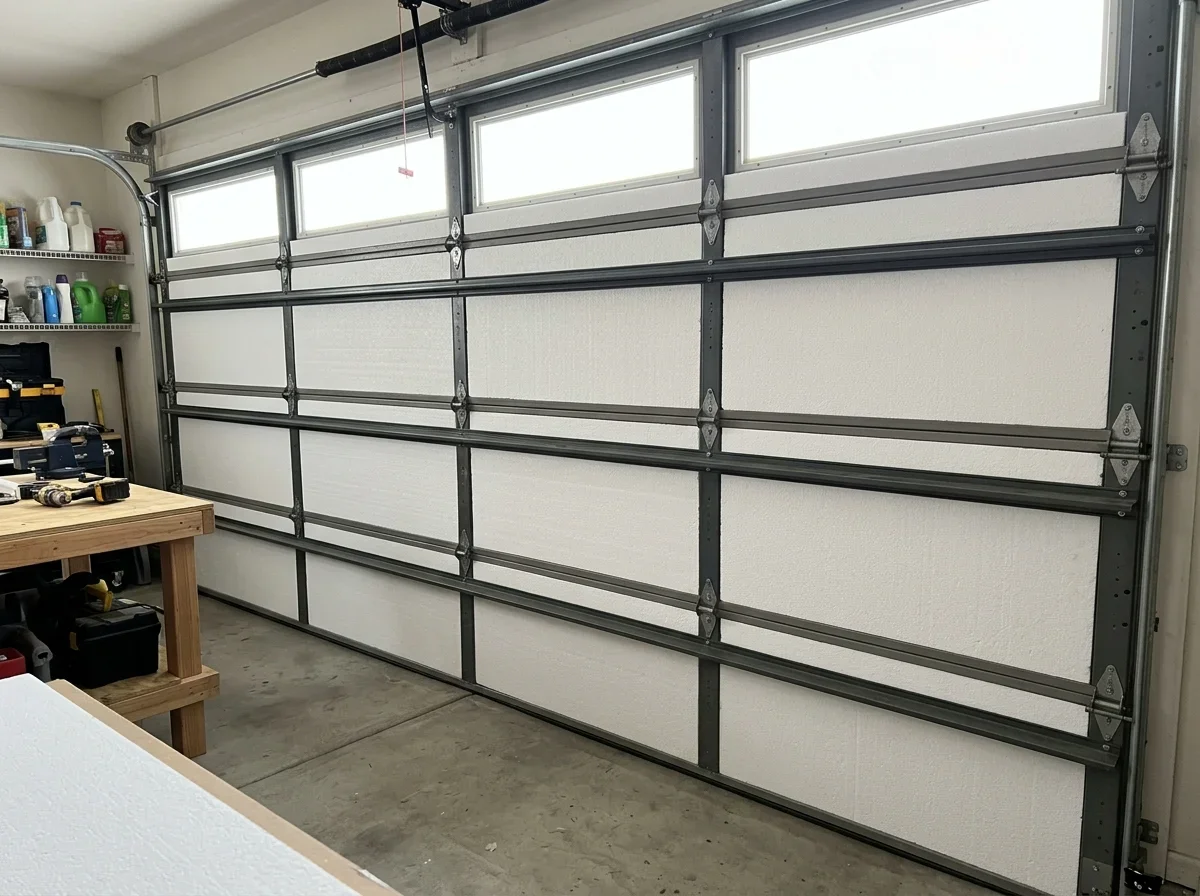
"Foam garage door insulation" can mean either, so check whether the listing is a kit or a complete door.
How Each Foam Is Built Into the Door
Polystyrene comes as cut boards or panels that sit inside the door's steel sections, usually glued or held by retainers. Garaga contrasts its injected sections with polystyrene, commonly called white Styrofoam.[3] This is the material in most DIY garage door insulation kits. Because panels are fitted piece by piece, small gaps can remain at edges and between sections.
Polyurethane is injected between the steel skins, fills the available space, and bonds to the steel as it hardens.[3] That bond is why a foamed-in-place section tends to feel stiffer than one with a loose board inside.
Side by side
How each foam is built into the door
Polystyrene
- Cut boards or molded panels
- Glued or held by retainers
- Small gaps can remain at edges
Polyurethane
- Injected between the steel skins
- Fills the available space
- Bonds to the steel as it hardens
Which Foam Holds Up Better in a Hot Phoenix Garage
DASMA-based guidance lists typical k-factors of 0.235 to 0.265 for expanded polystyrene and 0.13 to 0.18 for polyurethane. A lower k-factor resists heat flow better, so polyurethane generally insulates more per inch.[1]
Garaga gives typical ranges of R-3.5 to R-5 per inch for polystyrene and R-6 to R-8 per inch for polyurethane.[4]
Price range
Typical R-value per inch
| Item | Low | High |
|---|---|---|
| Polystyrene | 3.5 R-value per inch | 5 R-value per inch |
| Polyurethane | 6 R-value per inch | 8 R-value per inch |
Compare whole doors, not foam names. A reported R-value describes only the insulation in one section, while DASMA's Thermal Performance Rating, based on the ANSI/DASMA 105 test, represents the installed door assembly.[2]
Pro tip
Compare whole doors by their assembly rating, not by the foam name or a single section's R-value.
Neither foam will turn an unconditioned garage into a cool room. Polyurethane makes more sense when the garage shares a wall or ceiling with living space.
Seals matter as much as foam. A worn bottom seal lets dust and hot air straight past good foam, so look at garage door weatherstripping and seal replacement alongside any insulation decision.
Weight, Thickness and Noise Compared
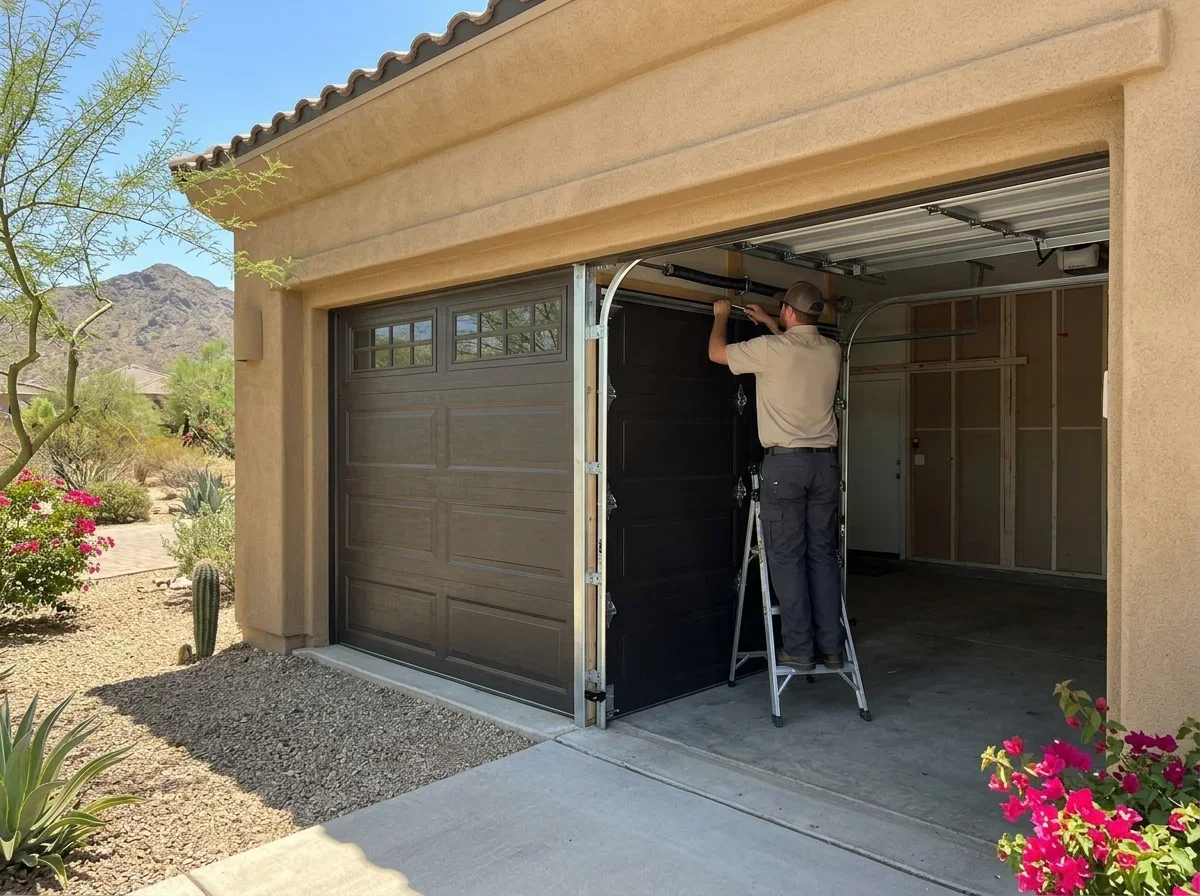
Foam adds weight, and the door's springs are set to a specific weight. After any retrofit, the springs need rechecking so the door stays balanced, and the opener's force and travel limits should be reset. Spring work is a technician job, so see garage door spring repair and replacement.
Because polyurethane insulates more per inch, a thinner section can match a thicker polystyrene one.[4] The Garage Door Insulation Thickness Guide covers it.
Noise is murkier. Bonded foam makes a section more rigid, which can reduce rattle, but no single "percent quieter" figure is established.
Table: Polystyrene vs. polyurethane at a glance
| Polystyrene (EPS/XPS) | Polyurethane | |
|---|---|---|
| How it is installed | Cut boards or molded panels fitted inside sections, glued or held by retainers | Injected between steel skins at the factory, expands and hardens |
| Insulating value per inch | Lower; typical k-factor 0.235 to 0.265 for EPS[1] | Higher; typical k-factor 0.13 to 0.18[1] |
| Effect on door weight | Adds weight when retrofitted; recheck balance | Built into a factory door that is balanced for its weight |
| Door stiffness and strength | Separate piece; less structural bonding | Bonds to steel skins and stiffens the section |
| Fits existing door (retrofit) | Yes, the usual kit material | No, comes with a new door |
| Typical use | Add-on kits, budget doors, detached or storage garages | Factory-insulated sectional doors, attached garages |
| Heat and moisture behavior | Gaps can leave weak points | Fills cavities more completely |
Replacement, Permits and Licensing
Choosing polyurethane usually means a new door.
Arizona generally requires a contractor license for work of $1,000 or more in labor and materials, or work that needs a permit. Confirm on the ROC contractor search that the classification on record matches your contract.
Not every city lists garage door replacement as a permit item, so check with your local permit desk. Ask your building department, and ask your contractor who pulls any permit. Our garage door installation and replacement page covers the process in more detail.
Quick answers
Which insulates better, polystyrene or polyurethane?
Polyurethane generally insulates more per inch, with typical ranges of R-6 to R-8 per inch versus R-3.5 to R-5 for polystyrene.
Can I add polyurethane to a door I already own?
Usually not. Polyurethane is injected at the factory, so it typically means a new door, while polystyrene is the usual retrofit kit material.
Do I need to check anything after adding foam to a door?
Yes. Foam adds weight, so the springs need rechecking and the opener's force and travel limits should be reset.
Related questions
Questions
- Amarr. "R-Value and U-Factor As Applied To A Residential or Commercial Garage Door." https://advantageoverhead.amarr.com/content/dam/amarr/com/us/en/documents/common/Tds163-Garage-Door-R-Value.pdf. Accessed October 17, 2026.
- Door and Access Systems Manufacturers Association (DASMA). "Garage Door Thermal Performance Ratings That You Can Trust." https://www.dasma.com/wp-content/uploads/2023/04/DASMA-Energy-Rating-Message-4-23.pdf. Accessed October 17, 2026.
- Garaga. "How is a polyurethane-injected section of a Garaga door made?." https://www.garaga.com/information/faq/insulatedgaragedoors. Accessed October 17, 2026.
- Garaga. "Understanding Commercial & Industrial Overhead Doors." https://www.garaga.com/information/faq/understanding-commercial-overhead-doors. Accessed October 17, 2026.