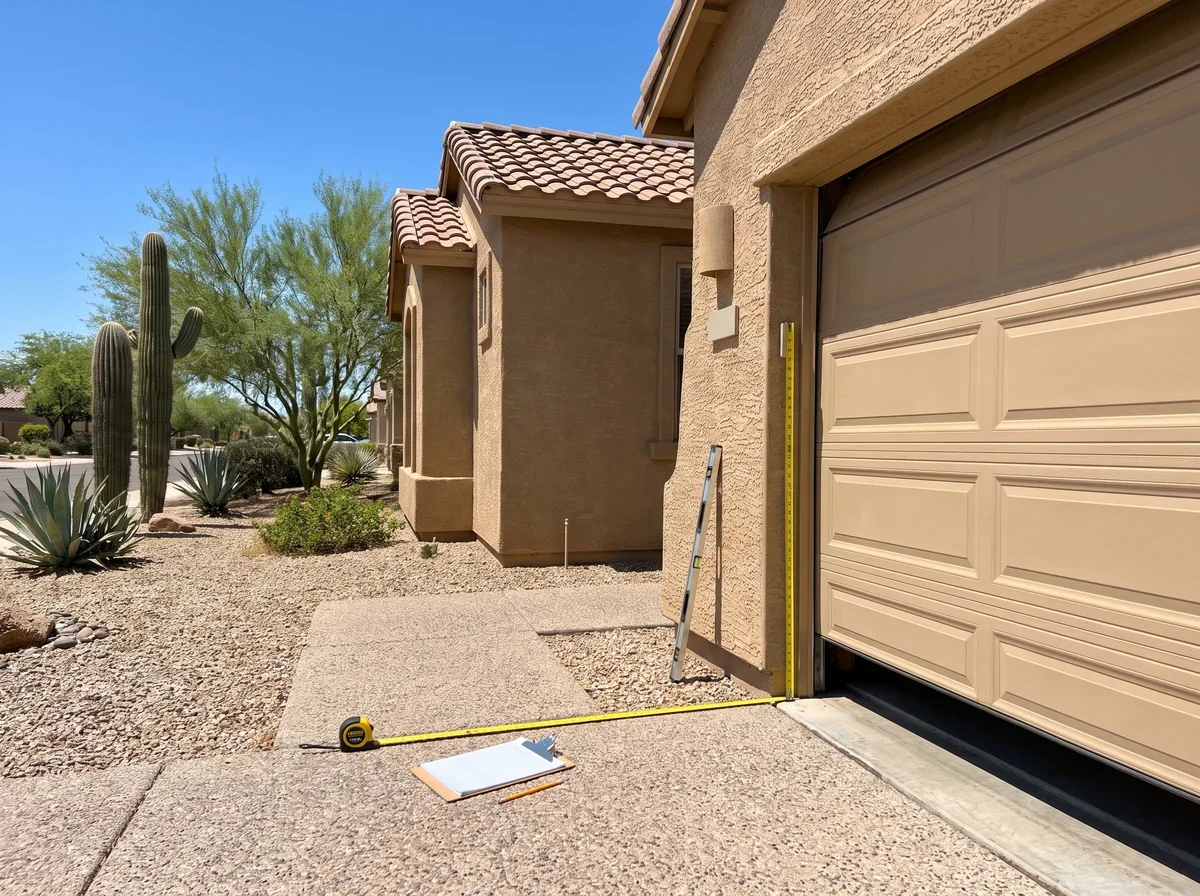
What a Garage Door Wind Rating Is
A garage door wind rating is a tested design pressure. It describes how much force the door and its hardware were built to resist. It appears on a permanent label on the door, not as a speed.
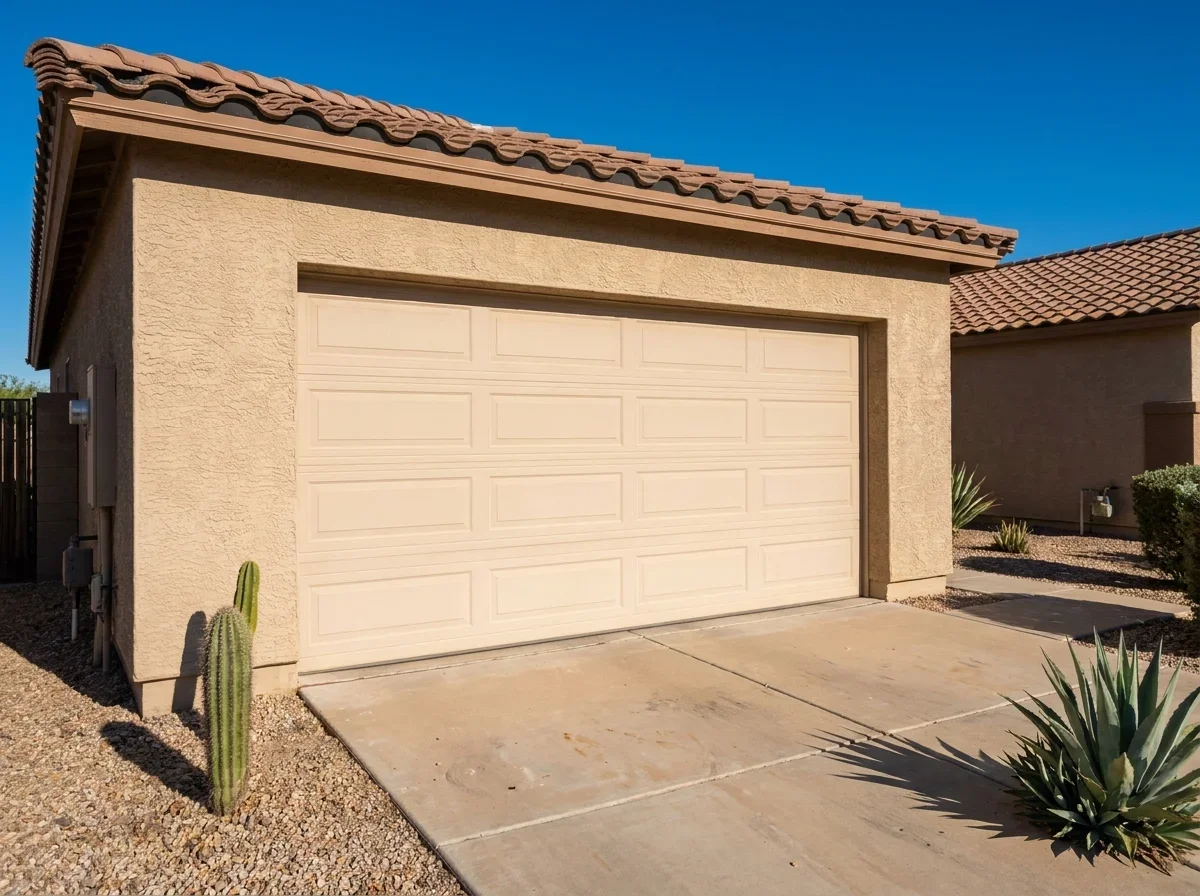
The label should list positive pressure (wind pushing inward) and negative pressure (wind pulling outward), the model, installation instructions, and the test standard used.[1] Under the International Residential Code (IRC), a garage door counts as a component that needs documented design load performance. The wind-load framework sits in Section R301.[3]
Search results are full of "hurricane-rated" doors. That's a sales phrase.
As an Arizona buyer, look for the psf numbers instead.
Why PSF Matters More Than MPH
DASMA, the industry association for door manufacturers, states that the code calls for design pressure in psf on the label, not an mph claim.[1] Ratings follow IRC Table R301.2.1(1). The garage-door values in that table can be as low as 10 psf.[1]
An installer's mph claim can't be checked against anything your building official uses. A psf label can.
Pressure also depends on more than wind speed. Door size, ultimate design wind speed, and other building conditions all feed into the result.[2]
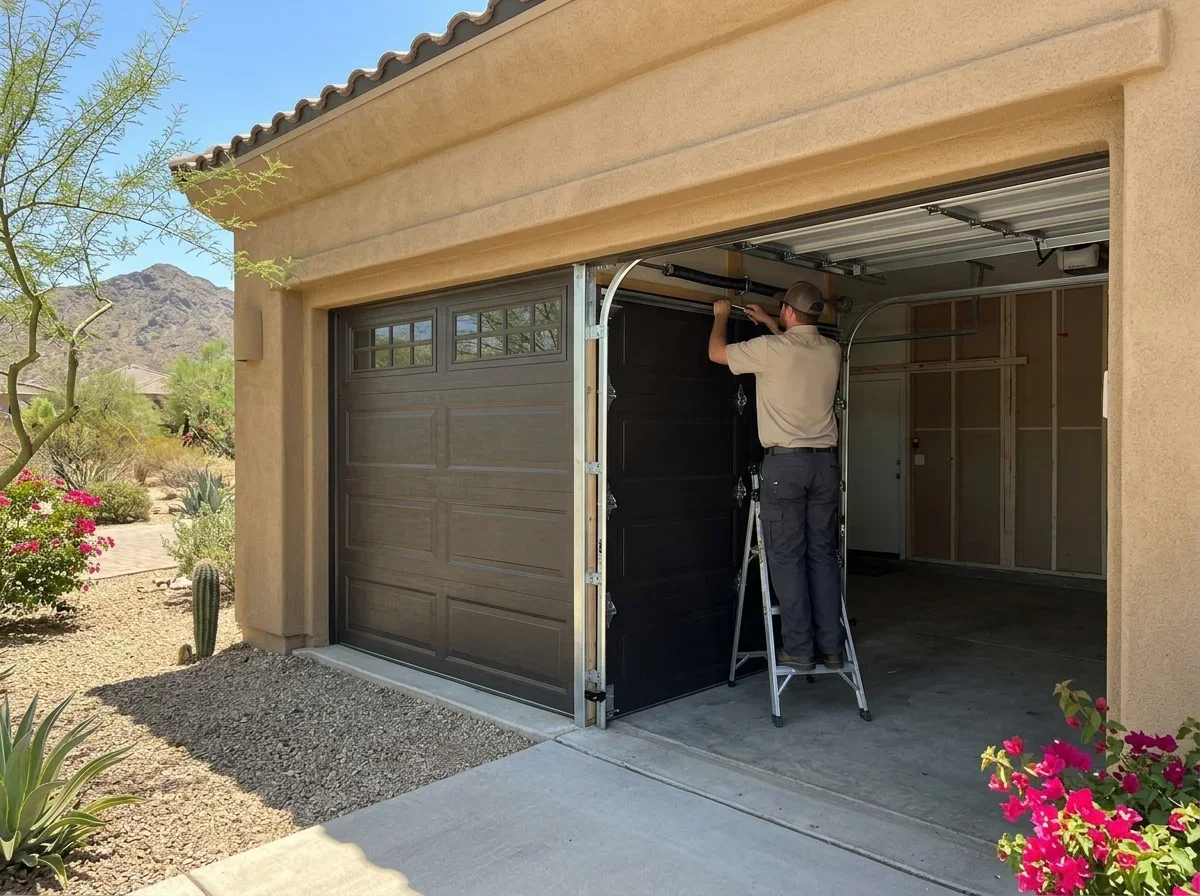
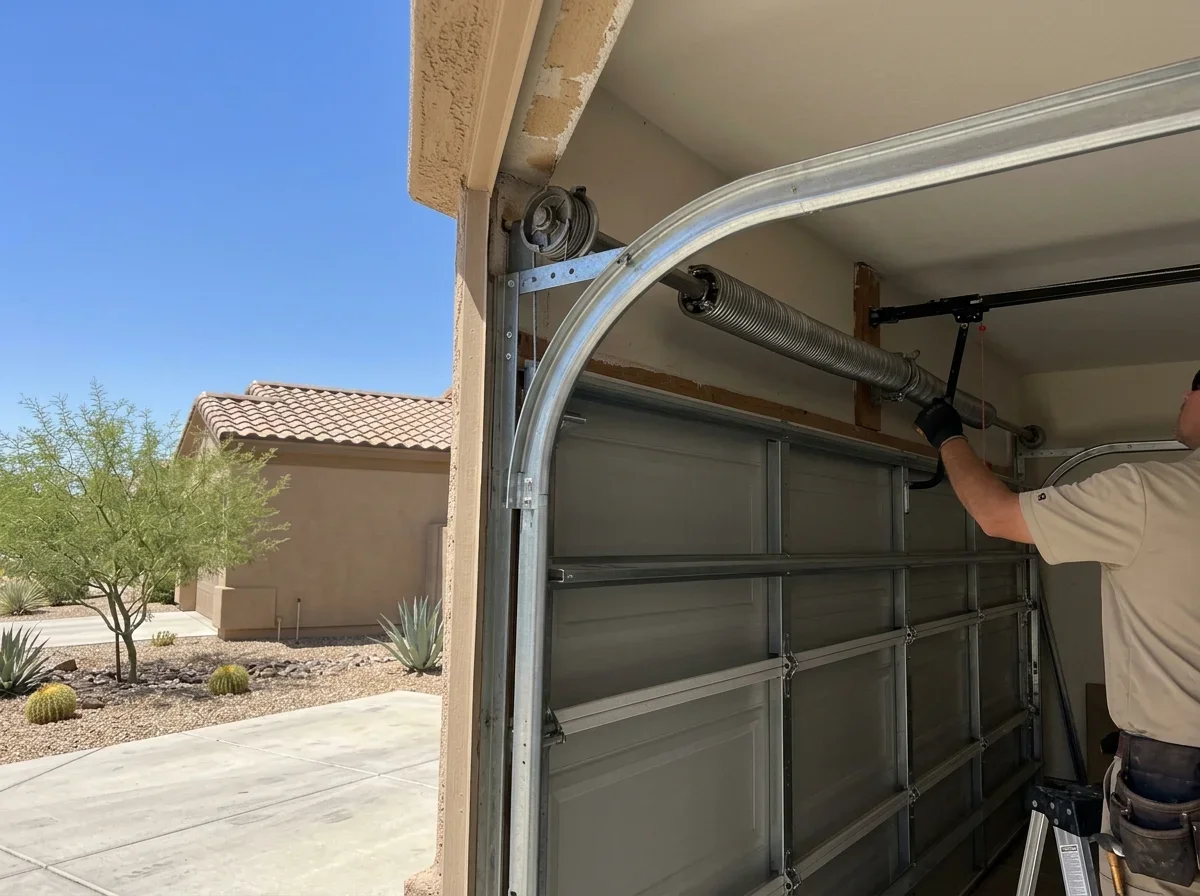
Wide doors deserve extra attention, since a 16-foot opening catches far more wind than a single-car door. And a rating applies to the complete tested assembly: panels, struts, tracks, rollers, and fasteners.
Pairing a good panel with weak tracks or poor anchoring undermines the number on the label.
Design Wind Speed for Phoenix and Nearby Cities
Your city does publish a speed. Phoenix's amendment to the 2024 IRC sets a design wind speed of 105 mph, and its 2018 amendment set 115 mph. Which edition governs your permit depends on when it's filed, so confirm that with the city.
| Phoenix IRC amendment | Design wind speed |
|---|---|
| 2024 IRC | 105 mph |
| 2018 IRC | 115 mph |
Think of that speed as an input, not the door's rating. The design wind speed feeds the tables that produce the psf your door must meet, and the local building official has the final say.[2]
That gap explains why a homeowner hears "105 mph" from the city and "psf" from the manufacturer. They describe the same problem in different units.
Arizona has no single statewide residential wind-load rule. Mesa, Scottsdale, Chandler, Gilbert, and Glendale each adopt their own code editions and amendments, so don't assume a neighboring city's number applies to your address.
Ask your own building department.
Wind-Rated Garage Door Requirements in Arizona
Whether you need a wind-rated door depends on your city's adopted code and whether your replacement triggers a permit. Don't rely on an installer's answer alone.
The hazard is real. Haboob dust storms hit the metro area, including an August 25, 2025 event, and monsoon gusts are strongest on open lots and newer outskirts developments.
A door that fails lets wind into the garage, which raises internal pressure and can damage the roof or walls.[4]
Scottsdale's code, Section 105.1, requires permits to replace building components, with an exemption for ordinary repair. Whether a like-for-like door swap counts as a replacement or a repair is a question for the permit desk. Use this script:
"Replacing a residential garage door at [address] is a project many homeowners plan in advance. What adopted code and design wind speed apply, is a permit required, and what positive and negative design pressures in psf must the door meet?"
Get the answer in writing. Then have your installer put the required +psf and -psf values on the quote, along with the model's engineering documentation.
Checklist
Put on the quote
0 of 6 ticked
Tick them off as you go. Nothing is saved or sent.
Ask whether existing tracks and framing need reinforcement, too. Our page on garage door installation and replacement covers what the job involves, and it's worth checking HOA approval for a new garage door before you order.
Related questions
Questions
- Door & Access Systems Manufacturers Association (DASMA). "The International Residential Code and Wind Load Labels." https://www.dasma.com/wp-content/uploads/2025/01/TDS-1502.pdf. Accessed October 17, 2026.
- Door & Access Systems Manufacturers Association (DASMA). "Garage Door Wind Load Guide: The 2021 and 2024 International Residential Codes." https://www.dasma.com/wp-content/uploads/2025/08/TDS-155aa-.pdf. Accessed October 17, 2026.
- Door & Access Systems Manufacturers Association (DASMA). "Garage Doors and the New International Building Code." https://www.dasma.com/garage-doors-and-the-new-international-building-code/. Accessed October 17, 2026.
- Door & Access Systems Manufacturers Association (DASMA). "Garage Door and Commercial Door Wind Load Guide." https://www.dasma.com/wp-content/uploads/2022/09/TDS155k.pdf. Accessed October 17, 2026.