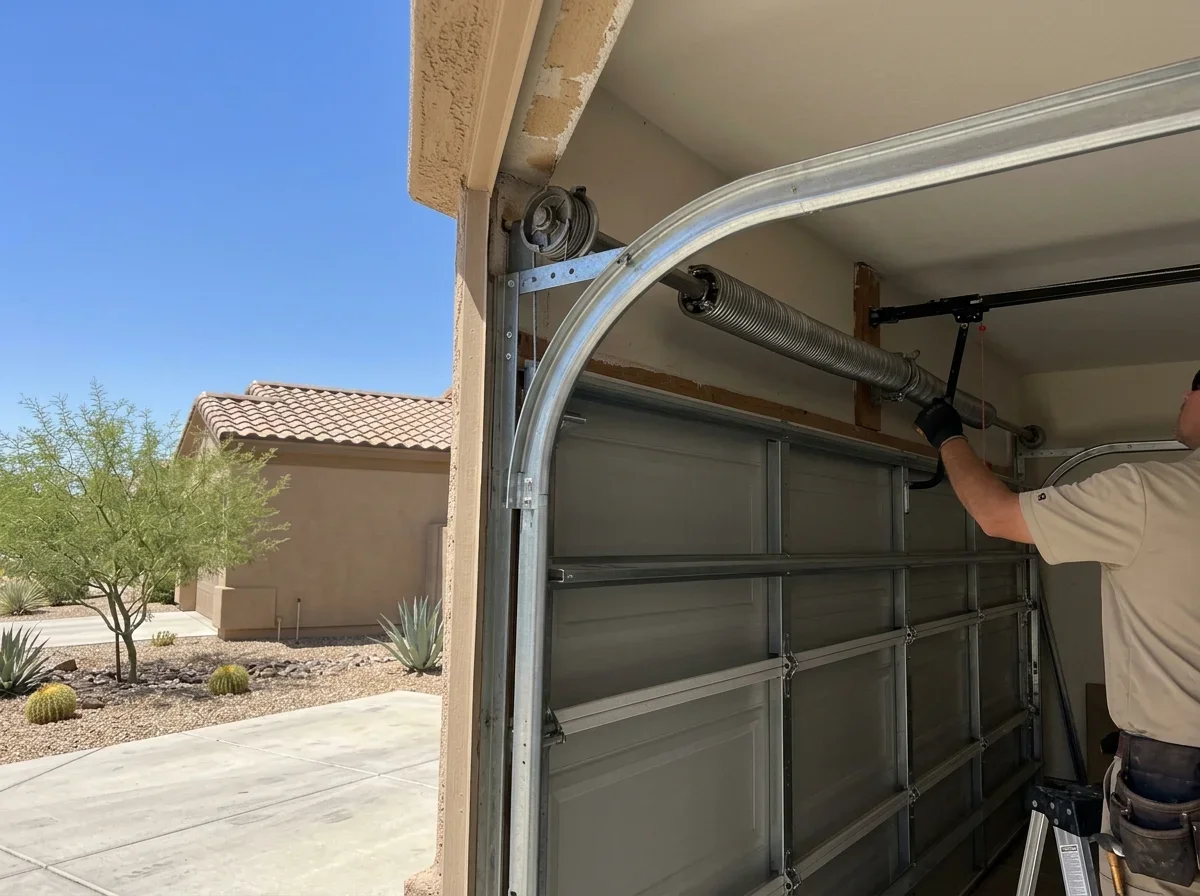
What Happens Before Installation Day
Everything starts with measurements. The installer checks the opening width and height, the headroom above the door, and the side room on each jamb, then orders a door to match.
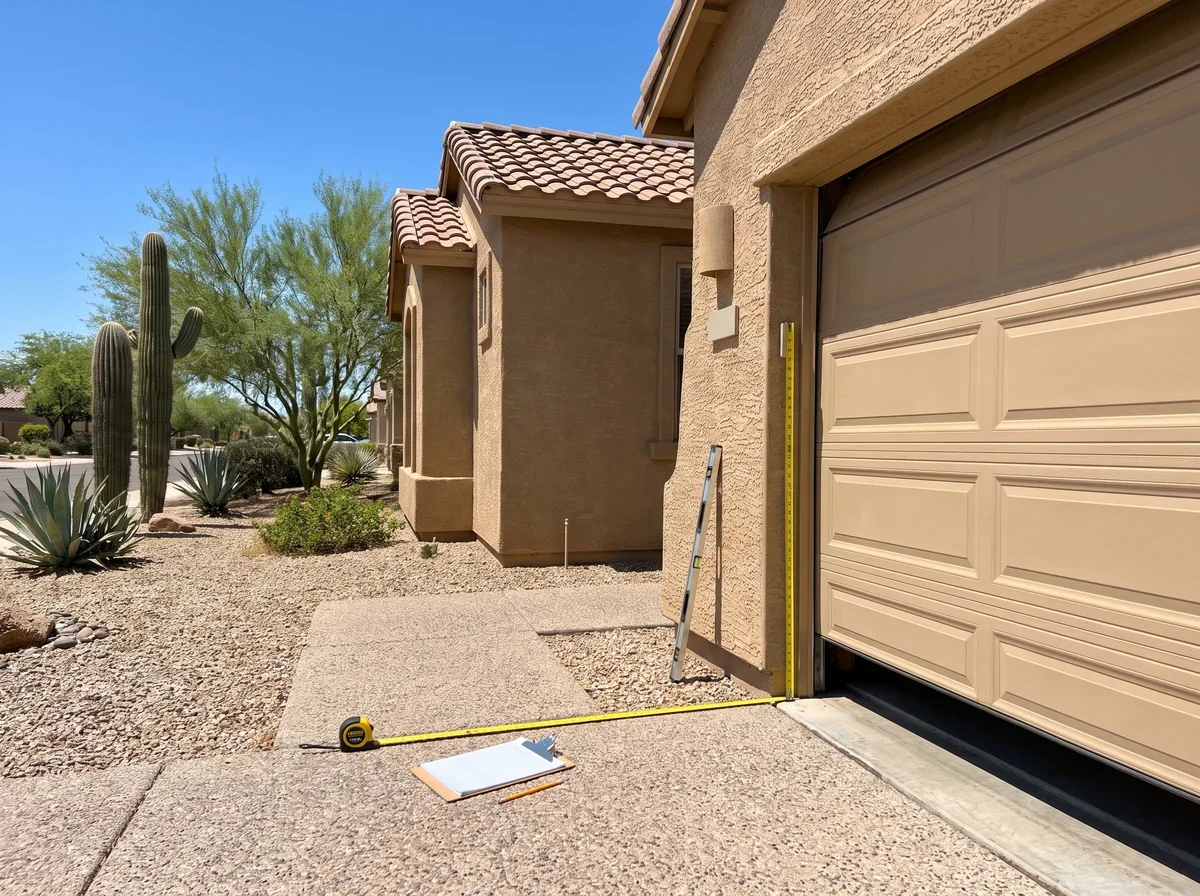
A wrong number here means the wrong door arrives. Ask to see the written order and compare size, color, insulation level, window layout and hardware before work begins.
Wind rating deserves a look too. Compare the psf (pounds per square foot) design pressure on the door's label rather than relying on mph claims. The local building authority has the final say on what your door must meet.[2][3]
Pro tip
Compare the psf design pressure on the door's label with your written order before work begins.
Ask the installer whether your city requires a permit and who pulls it. Rules differ across the metro, so read whether you need a permit to replace a garage door in Phoenix for Phoenix, Scottsdale, Mesa and Chandler.
If you live in an HOA, check your community documents about approval before anything is ordered.
How Long Garage Door Installation Takes
Ask for a start-to-finish estimate in writing, along with the crew size and arrival window. The scope of the job sets the clock.
Several things stretch the day:
- An opener swap or new mounting hardware
- Header or framing repairs found once the old door comes off
- Insulated or custom doors with more sections and parts
- Spring work, including replacing worn components
Scope also drives price, which the Phoenix cost guide breaks down.
Garage Door Installation Steps
Clear the vehicles, storage and fragile items from the garage and driveway first, and make sure power is accessible if the opener is part of the job.
Then the work generally goes in this order:
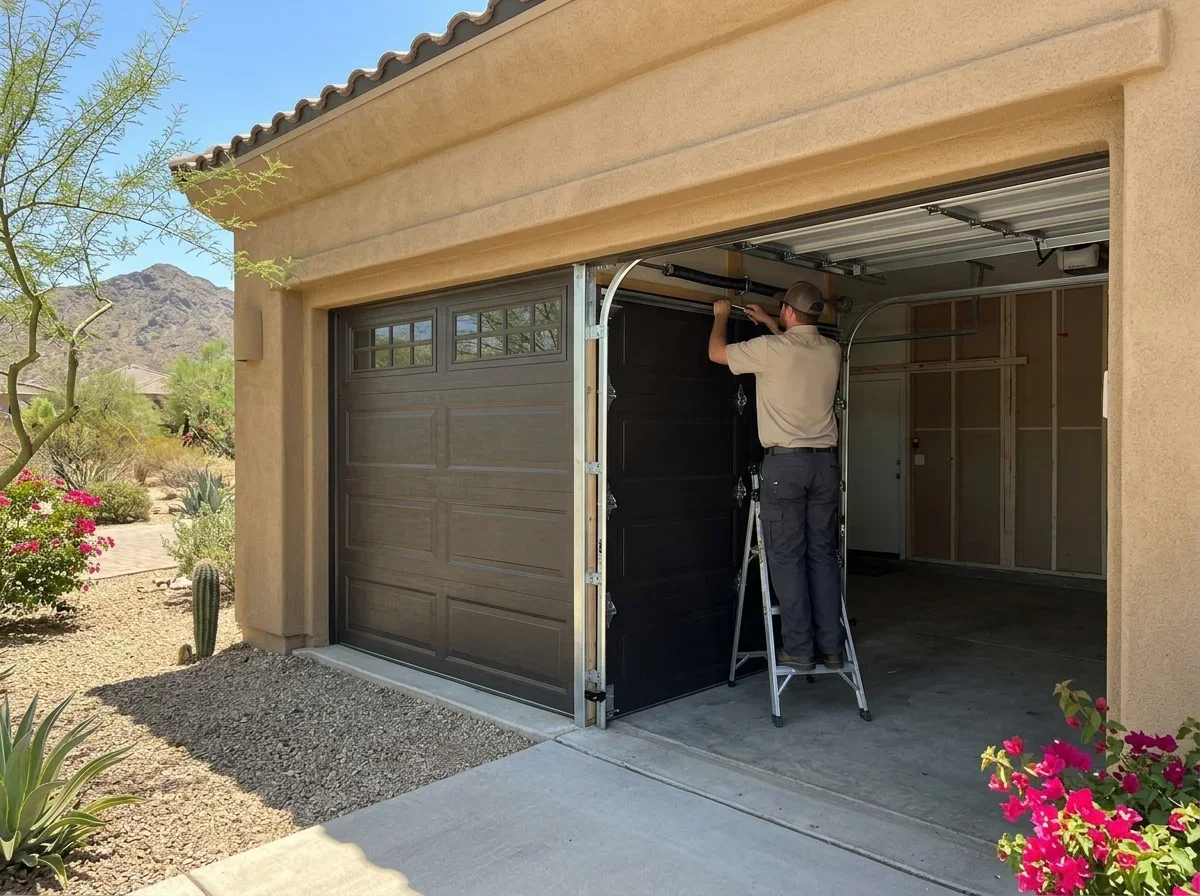
- Remove the old door and springs.
- Check the jambs and header for level, plumb and square.
- Set the vertical and horizontal track.
- Hang the panels, bottom section first.
- Install springs and cables.
- Add hardware and weatherstripping.
Spring removal
The old torsion spring is under serious tension and is the main hazard of the job. Leave it to trained technicians, and see garage door spring repair for how that work is handled.
Opener and sensors
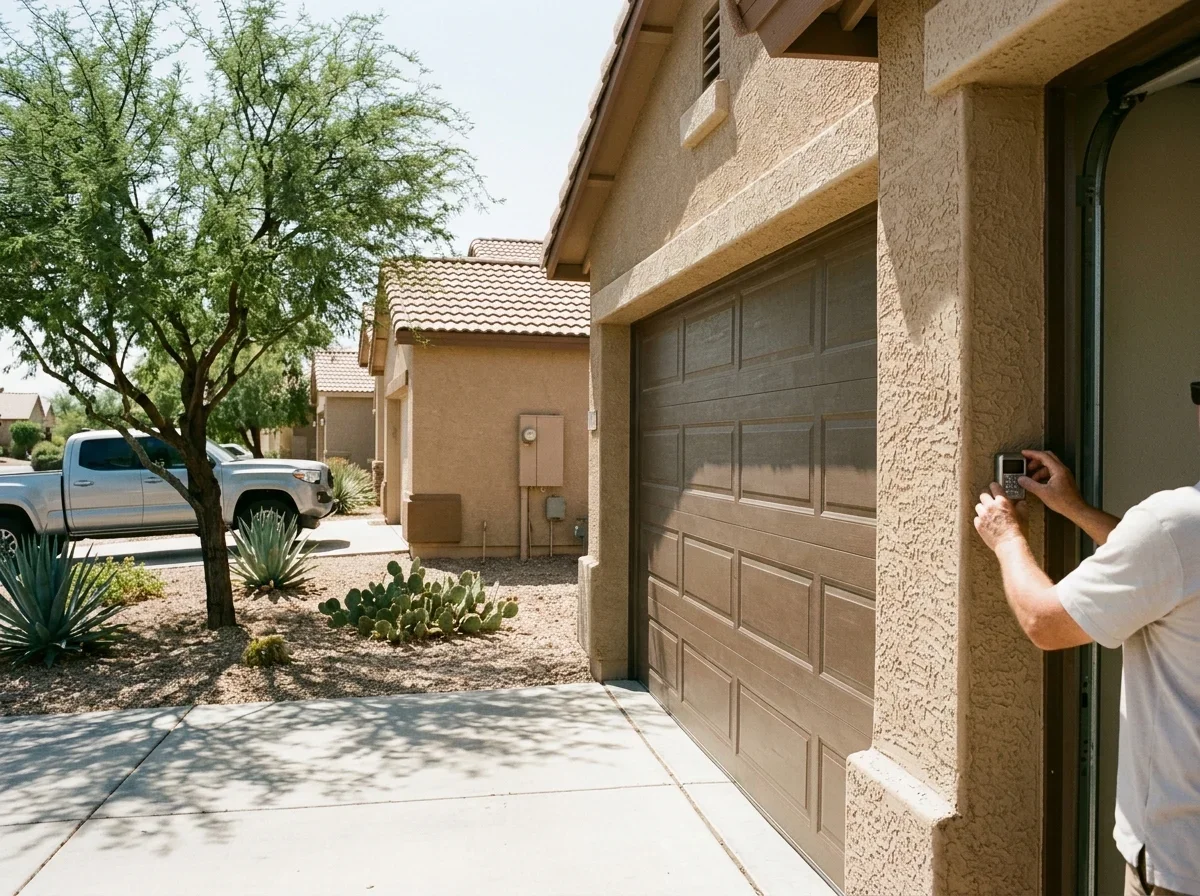
If an opener is included, the crew mounts it, sets travel limits and force, and aligns the safety sensors. Ask who handles any wiring.
What you should see: tracks that are plumb and level, even gaps between sections, secure brackets and no scraping.
Step by step
Installation order
Remove old door
The old door and springs come out.
Check the opening
Jambs and header are checked for level, plumb and square.
Set the track
Vertical and horizontal track go in.
Hang the panels
Panels go up, bottom section first.
Springs and cables
Springs and cables are installed.
Hardware and seals
Hardware and weatherstripping are added.
Dust matters here. A haboob dust wall can reach 10,000 feet high, and one crossed metro Phoenix on Aug. 25, 2025.[4] Tight seals and well-fitted tracks help keep dust out.
How Installers Test Balance and Safety
A properly counterbalanced door needs very little force to move by hand. DASMA's standard says no more than the larger of 5% of the door's weight or 10 pounds of force should be needed to open it manually from the closed position.[1]
In practice, have the crew disconnect the opener and lift the door halfway. It should stay put, not drop or shoot upward.
Then ask them to run the rest of the tests while you watch:
- Auto-reverse: the door should reverse when it meets an object in its path.
- Sensor beam: waving an object through the beam should stop or reverse the door.
- Manual release: have the installer demonstrate it, then try it yourself.
- Remotes and wall control: confirm each one works, including any keypad.
Cycle the door several times before you sign off.
| Test | What you should see |
|---|---|
| Auto-reverse | Door reverses when it meets an object in its path |
| Sensor beam | Waving an object through the beam stops or reverses the door |
| Manual release | Installer demonstrates it, then you try it |
| Remotes and wall control | Each one works, including any keypad |
Before You Pay: Your Installation-Day Checklist
A moving door isn't proof of good work, so run through these before the final payment:
- Look up the license at roc.az.gov/contractor-search by company name or six-digit number. Confirm it is current and that the class covers the work.
- Confirm the person is with that licensee. Call the number on the ROC record.
- Ask for a workers' comp certificate, and separately for general liability proof, since the ROC doesn't require it.
- Check the contract against A.R.S. 32-1158. For jobs over $1,000 it should show the license number, dates, work description, total price, deposit and payment schedule.
- Read the psf label on the installed door and compare it with the contract.
- Collect the paperwork: invoices, manuals, warranty terms and any permit or inspection information.
- Know your cancellation right. If the sale happened at your home through door-to-door solicitation, Arizona generally provides a three-day cancellation period.
Verifying the license first also matters if something goes wrong. The Residential Contractors' Recovery Fund can pay up to $30,000 per claimant to owner-occupants, but only if the contractor was properly licensed when the contract was signed.
Key takeaways
Look up the contractor's license before you pay
Check the contract against A.R.S. 32-1158 for jobs over $1,000
Read the psf label on the installed door
The Recovery Fund can pay up to $30,000 per claimant if the contractor was licensed
For the full scope of work, see garage door installation and replacement.
Quick answers
How should a properly balanced door behave?
With the opener disconnected and the door lifted halfway, it should stay put, not drop or shoot upward.
Who should handle the old spring?
Trained technicians. The old torsion spring is under serious tension and is the main hazard of the job.
Can I cancel after a door-to-door sale?
If the sale happened at your home through door-to-door solicitation, Arizona generally provides a three-day cancellation period.
Questions
- Door & Access Systems Manufacturers Association International (DASMA). "Wind Load Testing – Garage Doors." https://www.dasma.com/wp-content/uploads/pubs/Standards/DASMA-115-Web.pdf. Accessed October 17, 2026.
- Door & Access Systems Manufacturers Association International (DASMA). "Garage Door and Commercial Door Wind Load Guide." https://www.dasma.com/wp-content/uploads/2020/06/TDS155l-2000200320062009-International-Building-Codes-IBC.pdf. Accessed October 17, 2026.
- Door & Access Systems Manufacturers Association International (DASMA). "Garage Door Wind Load Guide." https://www.dasma.com/wp-content/uploads/2024/01/TDS152.pdf. Accessed October 17, 2026.
- Arizona Registrar of Contractors. "ROC Statute & Rule Book (09/24/2022)." https://roc.az.gov/sites/default/files/2022-11/ROC%20Statute%20&%20Rule%20Book%20-%2009242022.pdf. Accessed October 17, 2026.