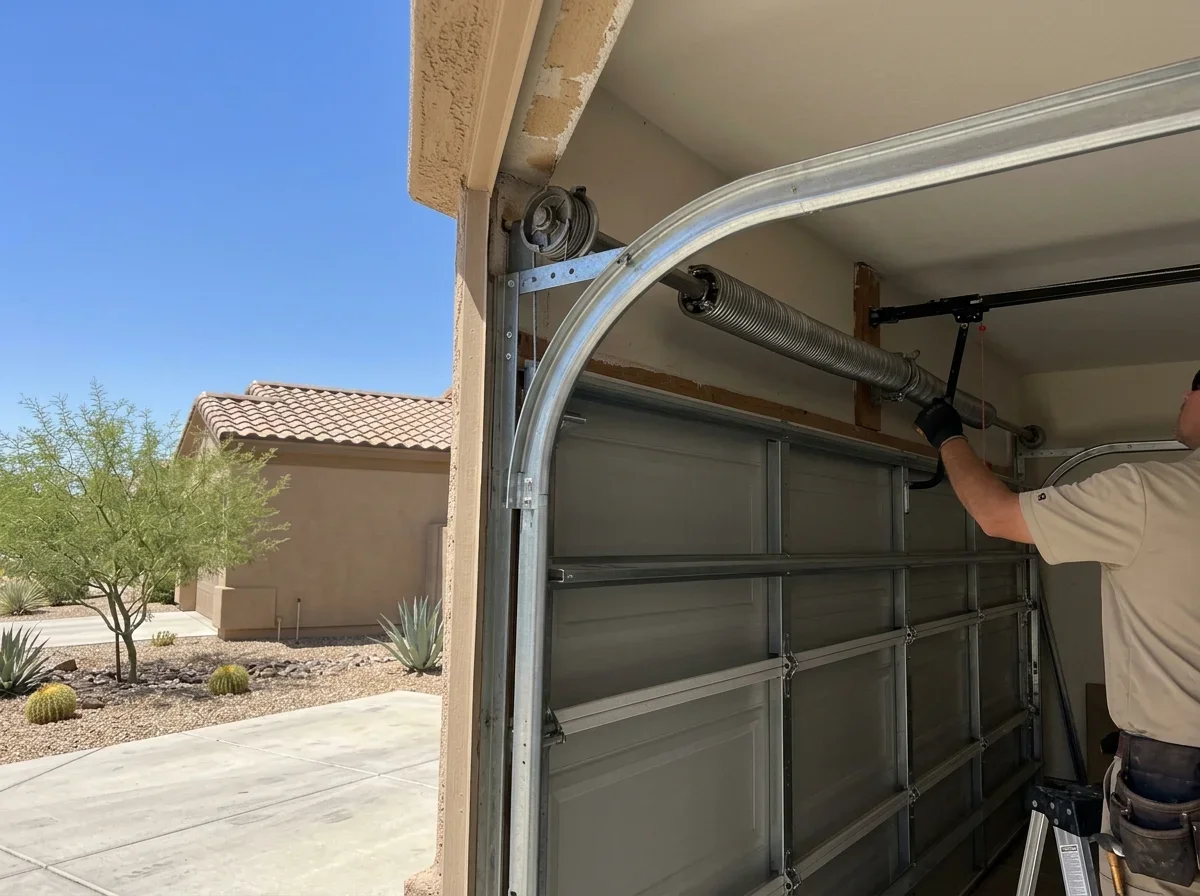
Garage Door Insulation Thickness
Thickness alone does not set performance. R-value depends on both insulation thickness and the material's thermal conductivity. On doors where thickness varies across a section, the section's rating has to account for each thickness rather than one number.[1]
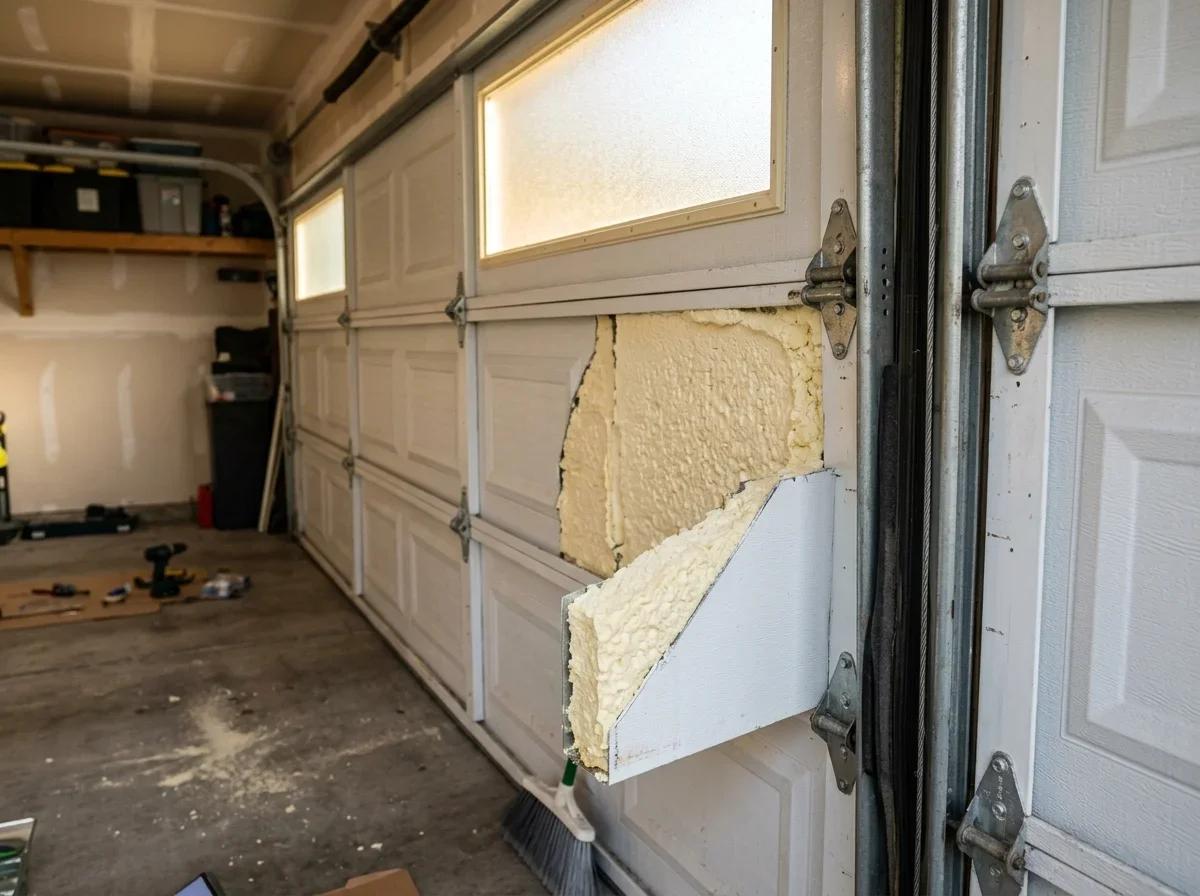
Material and how completely it fills the section matter just as much.
That also explains why no single recommended thickness can be verified. The right level depends on your climate and how you use the space. Attached or conditioned garages generally call for higher R-values than detached storage garages.[3] Door section thickness also varies by model, and available insulation levels vary with it.[2]
In Phoenix, where summer highs reach about 106°F, prioritize material and cavity fill over chasing inches.
A thicker insert that leaves gaps can lose to a thinner one that fills the section.
Polystyrene vs. Polyurethane at the Same Thickness
The two materials arrive in the door differently. Polystyrene is supplied as rigid board cut to fit inside a section. Polyurethane is injected between the steel skins and expands to fill the cavity.[4]
Polyurethane provides roughly twice the thermal resistance per inch of polystyrene, according to one dealer guide that cites a 2 3/8-inch polyurethane construction rated R-16.[4]
Board inserts can leave pockets around the section's ribs and hardware, so the installed result may fall short of the material's rating. Foamed-in-place polyurethane avoids most of that. It also bonds to the skins, which stiffens the section.[3]
| Material | How installed | Sourced example |
|---|---|---|
| Polystyrene | Rigid board cut to fit the section | 1.25-inch laminate panel, rated R-4.8 (tested kit spec) |
| Polyurethane | Injected between skins, expands to fill | 2 3/8-inch construction, rated R-16[4] |
Both figures are manufacturer-style ratings for specific products. Compare the tested R-value on the spec sheet, and ask whether the number covers the whole door or only the center of the panel.
Pro tip
Compare the tested R-value on the spec sheet, and ask whether it covers the whole door or only the center of the panel.
Wall and attic batts sold by thickness carry a different kind of rating. They won't fit a door section anyway.
For a deeper side-by-side, see polystyrene vs. polyurethane garage door insulation.
What Fits Inside a Standard Door Section
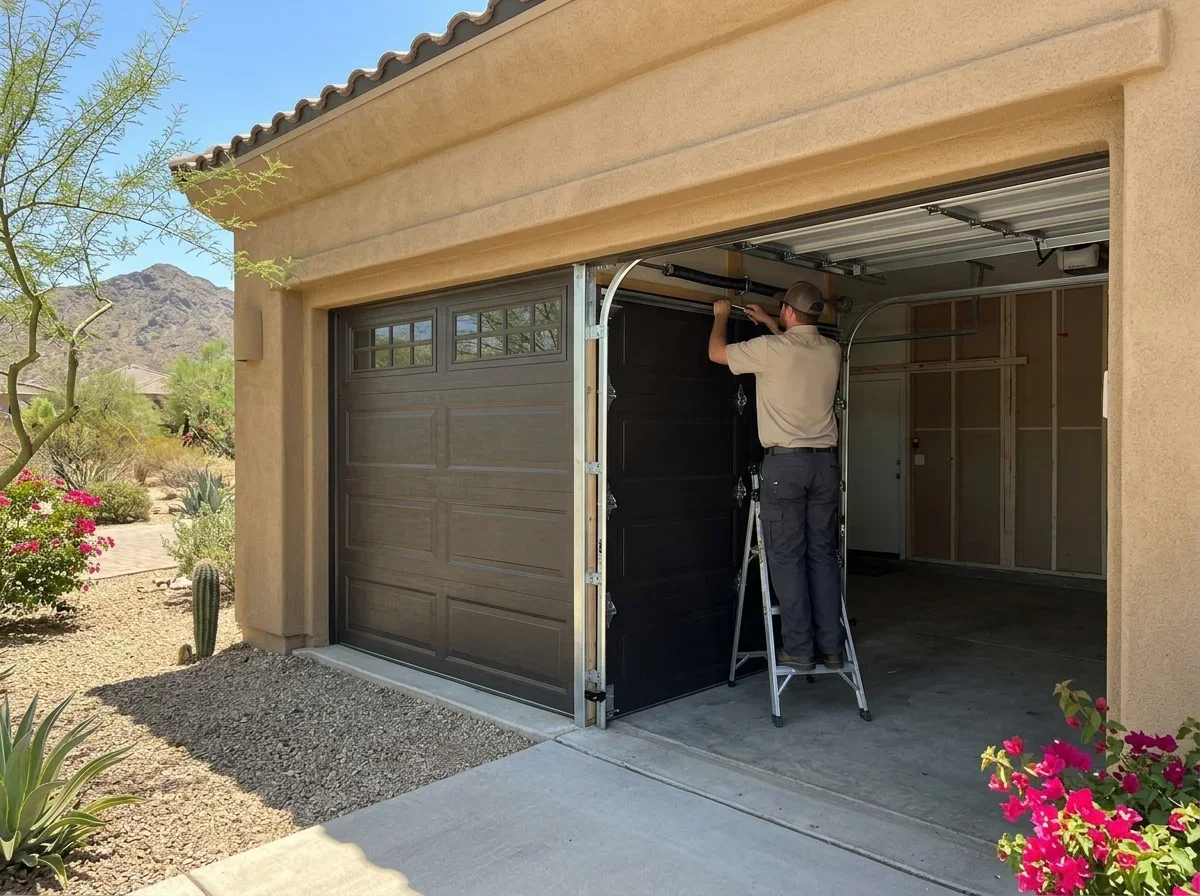
Sections have limited depth, and insulation kits must be chosen for your specific door design and section dimensions.[3] A thick panel can press against hinges, rollers, or struts, or fail to seat behind the interior skin.
Measure each section's height and width rather than assuming a kit will fit.
Before you buy, check these in order:
- Read the door's label or manual to identify its construction: single-layer steel, polystyrene-backed, or foamed sandwich.
- Measure the cavity depth and compare it with the kit's stated panel thickness.
- Confirm the door is uninsulated. Add-on kits make sense mainly for uninsulated metal doors, which are common in Phoenix-area homes built decades ago.
- Check the adhesive or clip manufacturer's rated temperature range, since a closed garage gets very hot.
Weight matters too. Added insulation changes the load on the springs, so test the door's balance afterward.
If it feels heavier or won't stay open partway, have a trained technician adjust the springs rather than doing it yourself (see spring repair and replacement). DASMA safety guidance applies here, so confirm specifics with the door's manufacturer.
Air leaks can undo good insulation, so inspect the bottom and side seals too (see weatherstripping and seal replacement).
If your door is old or badly worn, garage door installation and replacement may be the better route. For cost context, read is garage door insulation worth it.
Quick answers
Does thicker insulation always mean a higher R-value?
No. R-value depends on both thickness and the material's thermal conductivity, plus how completely the insulation fills the section.
Which material gives more R-value per inch?
Polyurethane provides roughly twice the thermal resistance per inch of polystyrene, according to one dealer guide.
Do I need to check the springs after adding insulation?
Yes. Added insulation changes the load on the springs, so test the door's balance and have a trained technician adjust them if needed.
Questions
- Door & Access Systems Manufacturers Association International (DASMA). "U-factor and R-value for Residential and Commercial Garage Doors." https://www.dasma.com/wp-content/uploads/2022/09/TDS163..pdf. Accessed October 17, 2026.
- Lowe’s. "Find the Best Garage Door for Your Home." https://www.lowes.com/n/buying-guide/garage-door-buying-guide. Accessed October 17, 2026.
- Lowe’s. "How to Insulate Garage Doors." https://www.lowes.com/n/how-to/how-to-insulate-garage-doors. Accessed October 17, 2026.
- Protech Garage Doors. "Insulated Garage Doors: R-Value in Ottawa Winters." https://protechgarage.ca/guides/insulated-garage-doors/. Accessed October 17, 2026.