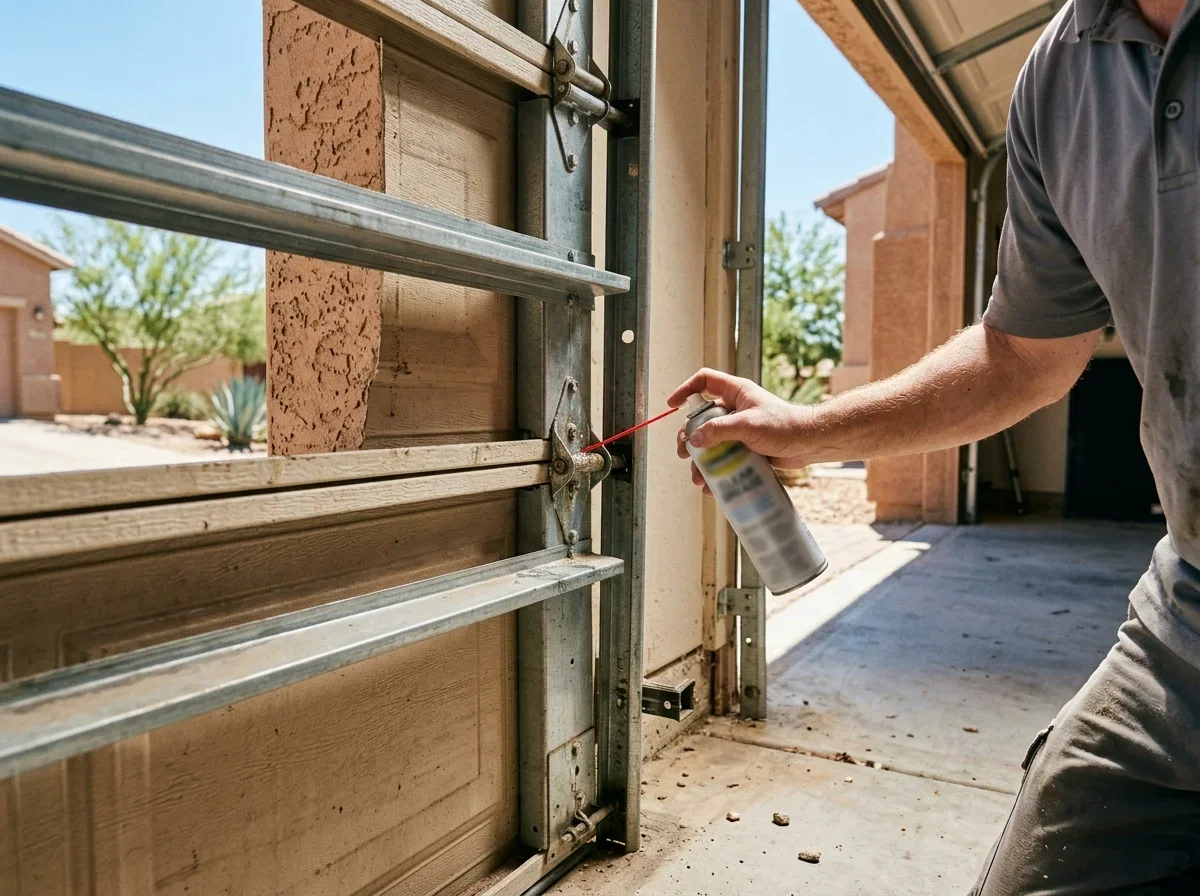
Where to Lubricate a Squeaky Garage Door
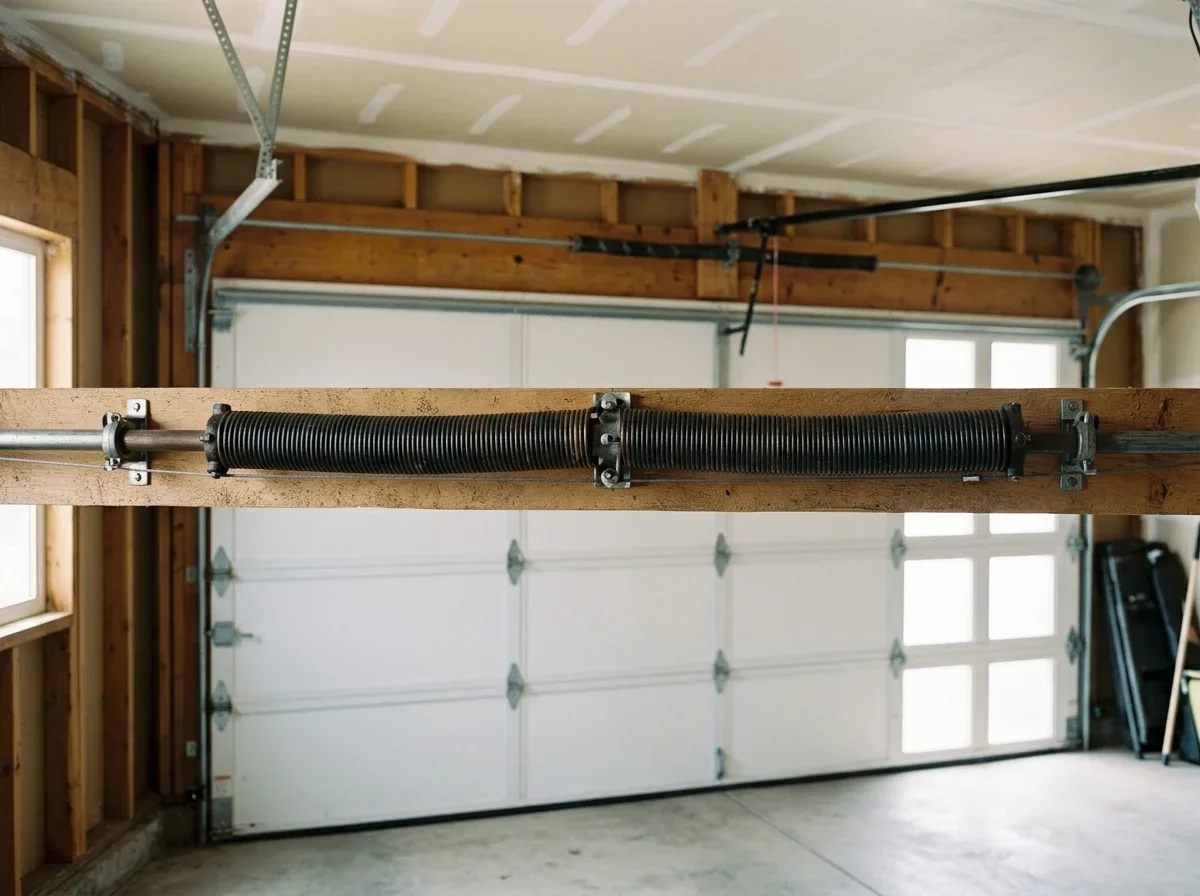
Lubricate the hinge pivots, the roller stems and the spring coil, then listen to see which spot was making the noise. DASMA recommends a garage-door spray lubricant when noise occurs, and says to call a professional if it persists.[1]
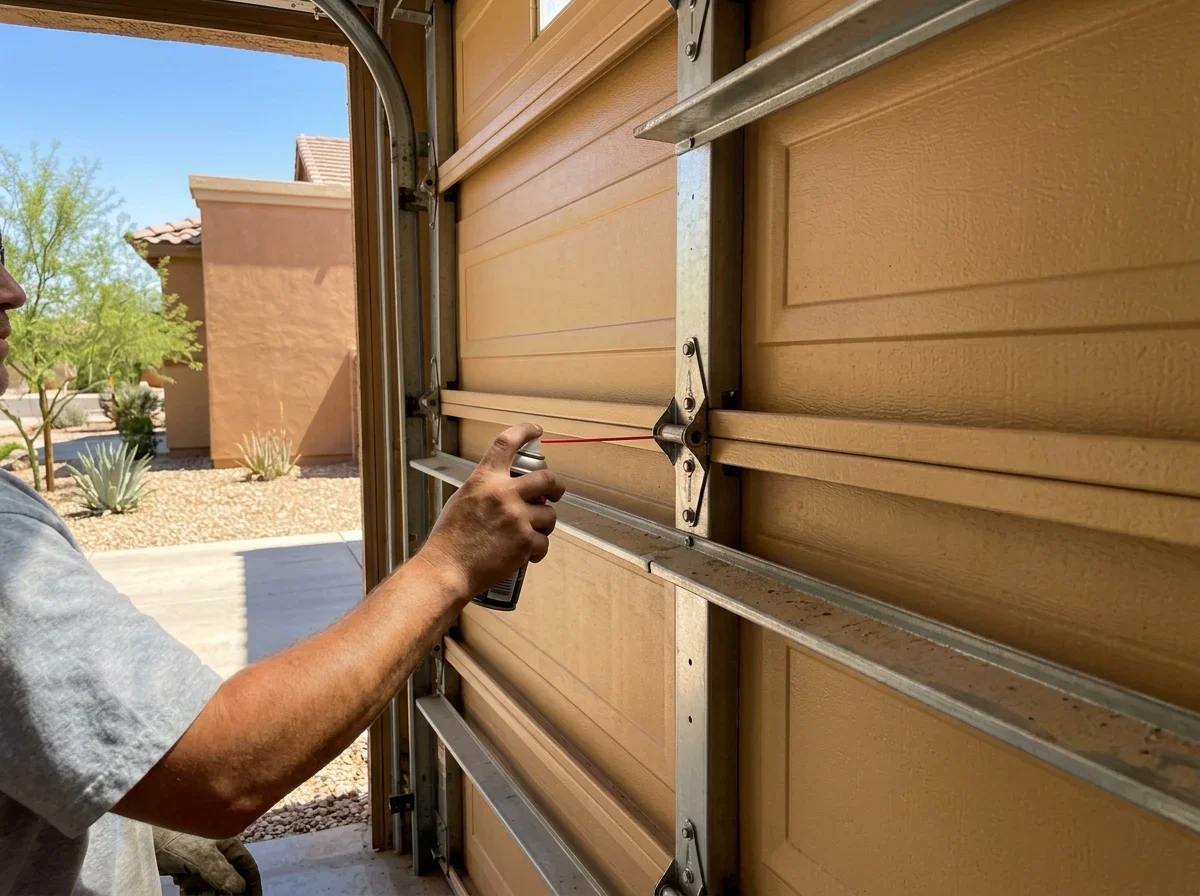
Disconnect the opener, close the door, and lift it slowly by hand, listening at each section. Sound travels through the panels and track, so the noise can seem to come from the wrong place.
The location points to the cause:
- Rollers squeal as the door travels along the track.
- Hinges chirp at each panel joint as the door bends around the curve.
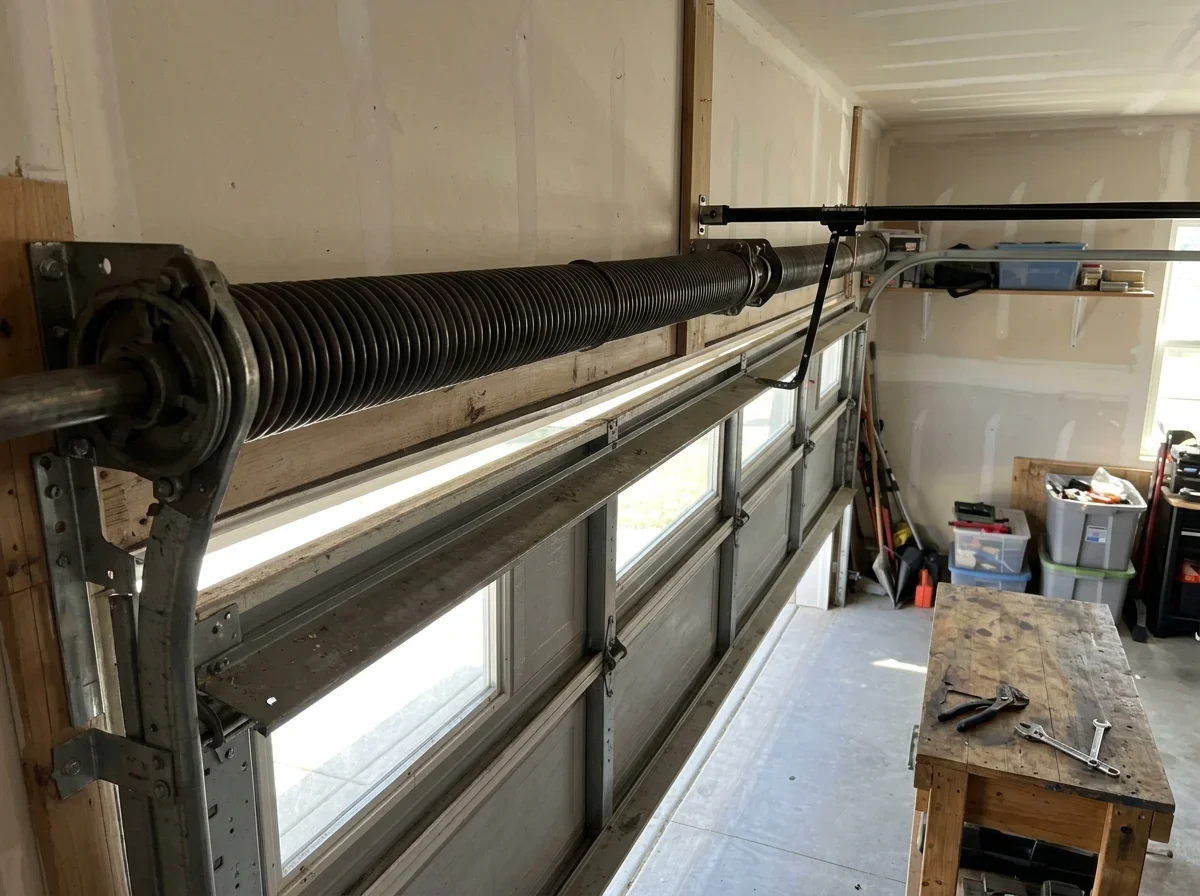
- Springs groan or squeal overhead as the door moves.
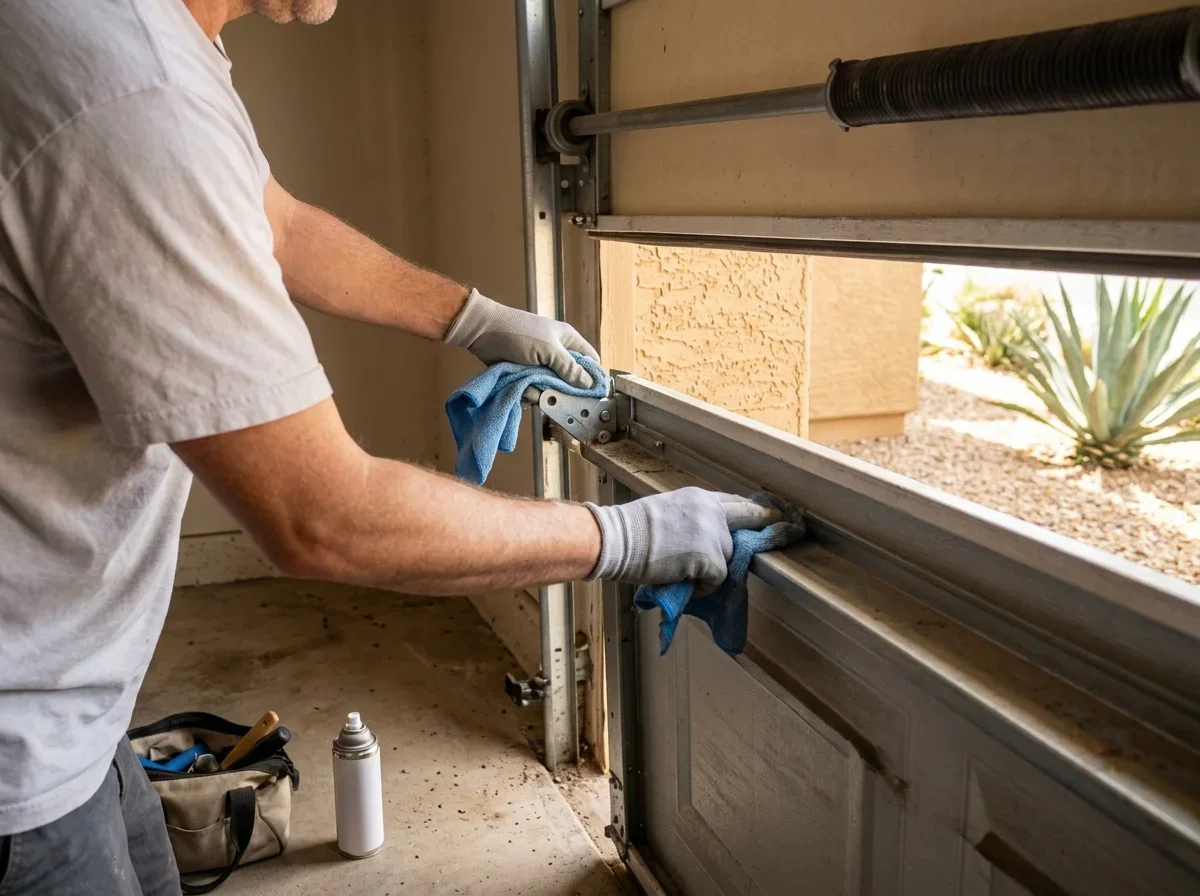
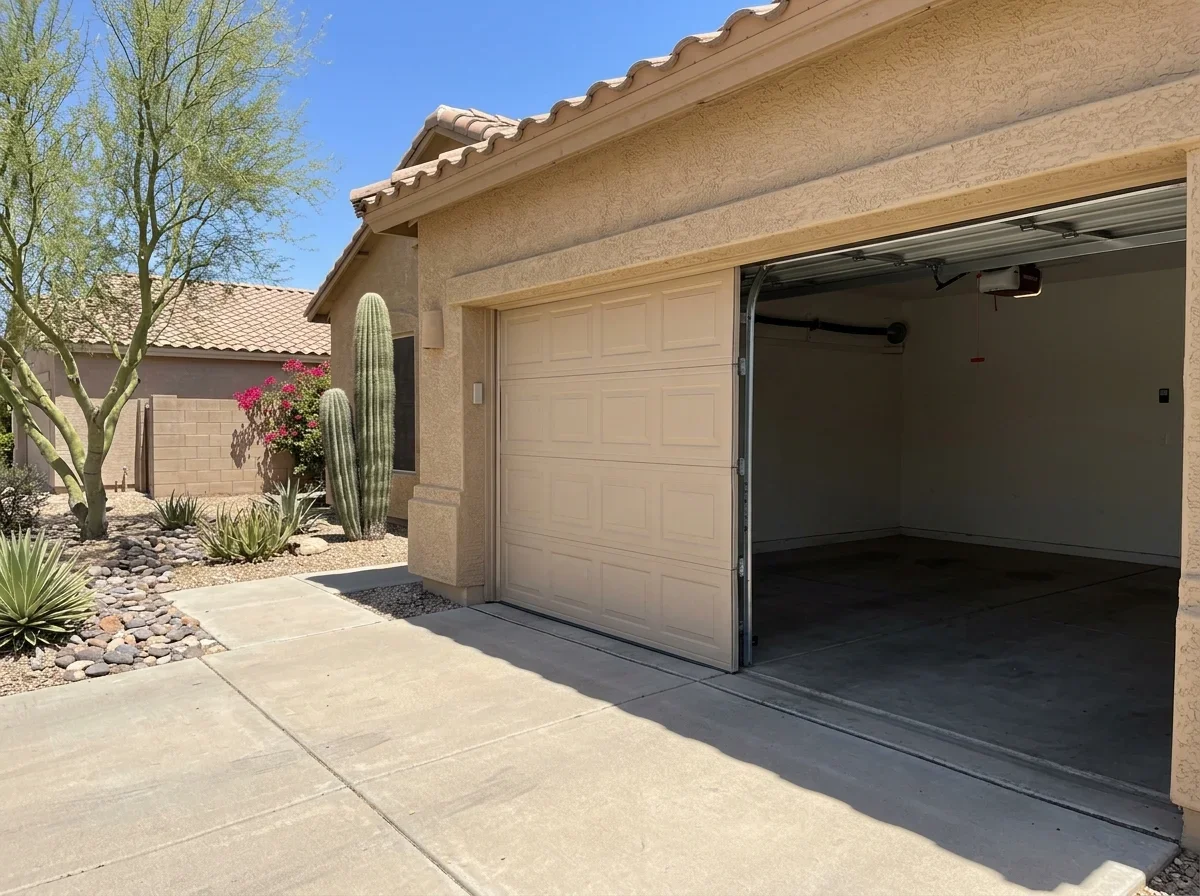
Wipe off old grime before you spray, or the fresh lubricant just traps dust. That matters in the Phoenix area, where haboob dust settles on every moving part.
Use a small amount, cycle the door a few times, then wipe away the excess.
When a Squeak Means Worn Parts
Lubricant quiets friction, but it cannot put back metal that has worn away. DASMA advises checking hinges, rollers, springs and panels for wear or damage.[2] If the squeak is still there after you have treated the right spots, a part is likely worn.
Rollers are the usual offenders. One that wobbles, has a flat spot, grinds, or scrapes instead of turning freely needs replacing, not more spray.
Hinges tell their own story. Cracks, loose mounting, or a panel that sags near a joint all point to wear.
A squeak paired with dragging, jerking, or a door that feels heavy suggests a mechanical problem, not routine upkeep. At that point, a garage door maintenance and tune-up is the better move, since a technician can check each part and replace what has failed.
Our Phoenix garage door maintenance checklist covers what to inspect through the year.
What to Leave Alone and When to Call a Pro
Manufacturers say hinges, rollers, springs and panels may need periodic lubrication, but they point you to the owner's manual for which parts and how.[4]
Keep lubricant off the inside of the track. Apply it at the roller axle or hub, not the wheel's outer surface.
Pro tip
Apply lubricant at the roller axle or hub, and keep it off the inside of the track.
Opener drive systems have their own rules. A belt or chain may call for a different product, or none, so follow the opener manufacturer's instructions.[2]
DASMA warns that garage door springs are under extreme tension and that only trained technicians should adjust or repair them.[3] Its guidance also says not to adjust springs, cables or bottom brackets yourself.[2]
Stop and call someone if the door is crooked, hard to lift, has loose cables, or if a spring looks broken.
Ask for an itemized written quote, and verify any contractor at roc.az.gov.
Questions
- Door & Access Systems Manufacturers Association International (DASMA). "Garage Door Systems." https://www.dasma.com/safety-tips/garage-door-systems/. Accessed October 17, 2026.
- Door & Access Systems Manufacturers Association International (DASMA). "Automatic Garage Door Opener Safety & Maintenance Guide." https://www.dasma.com/wp-content/uploads/2024/04/Automatic-Garage-Door-Opener-Safety-Maintenance-Guide-trilingual-3-22-24.pdf. Accessed October 17, 2026.
- Door & Access Systems Manufacturers Association International (DASMA). "Building Occupant – Checking A Garage Door For Damage." https://www.dasma.com/wp-content/uploads/pubs/TechDataSheets/CommercialResidential/TDS174.pdf. Accessed October 17, 2026.
- LiftMaster. "8500W Wall Mount Wi-Fi Garage Door Opener Installation Manual." https://partner.liftmaster.com/medias/8500W-114a4961.pdf. Accessed October 17, 2026.