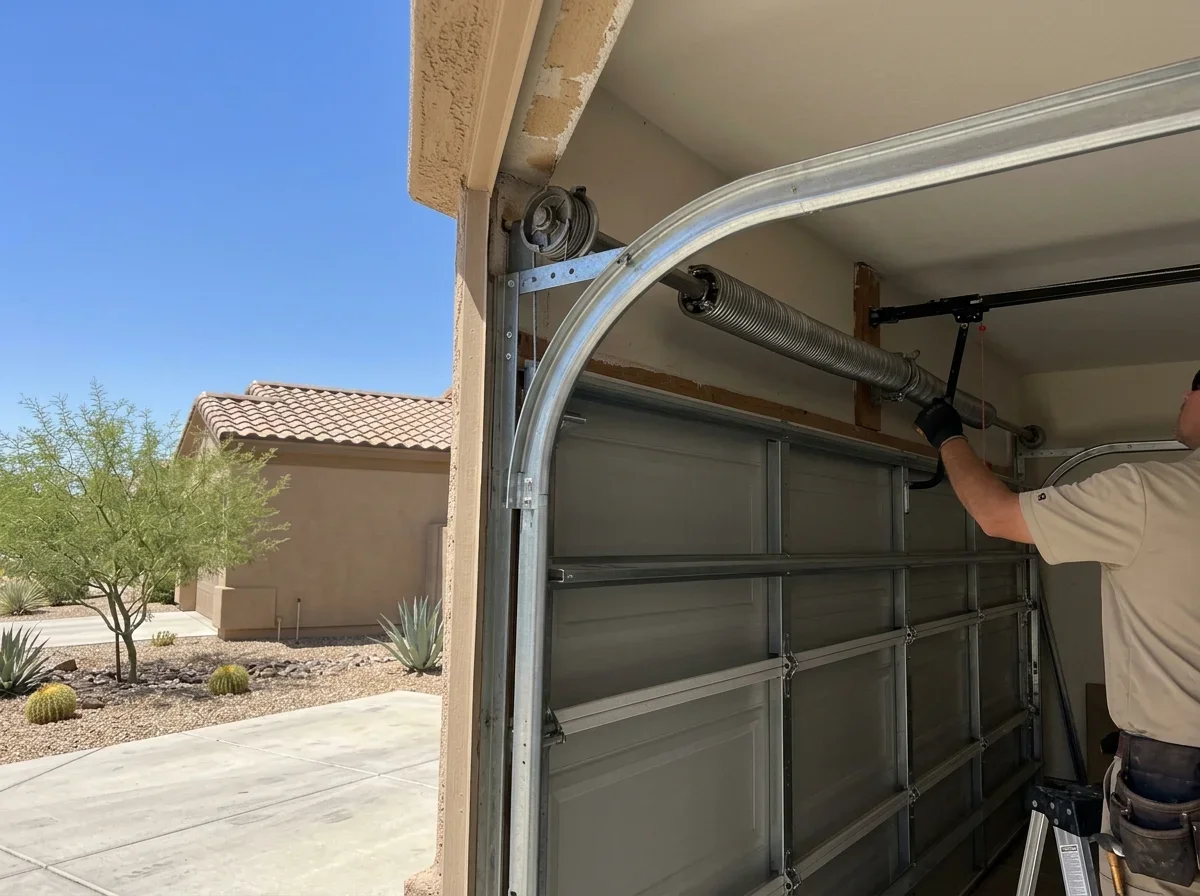
Keeping a Garage Cool in Arizona
No single fix does the whole job. Reduce the heat entering through the door, the gaps and the roof first, then add ventilation to push out whatever still gets in.
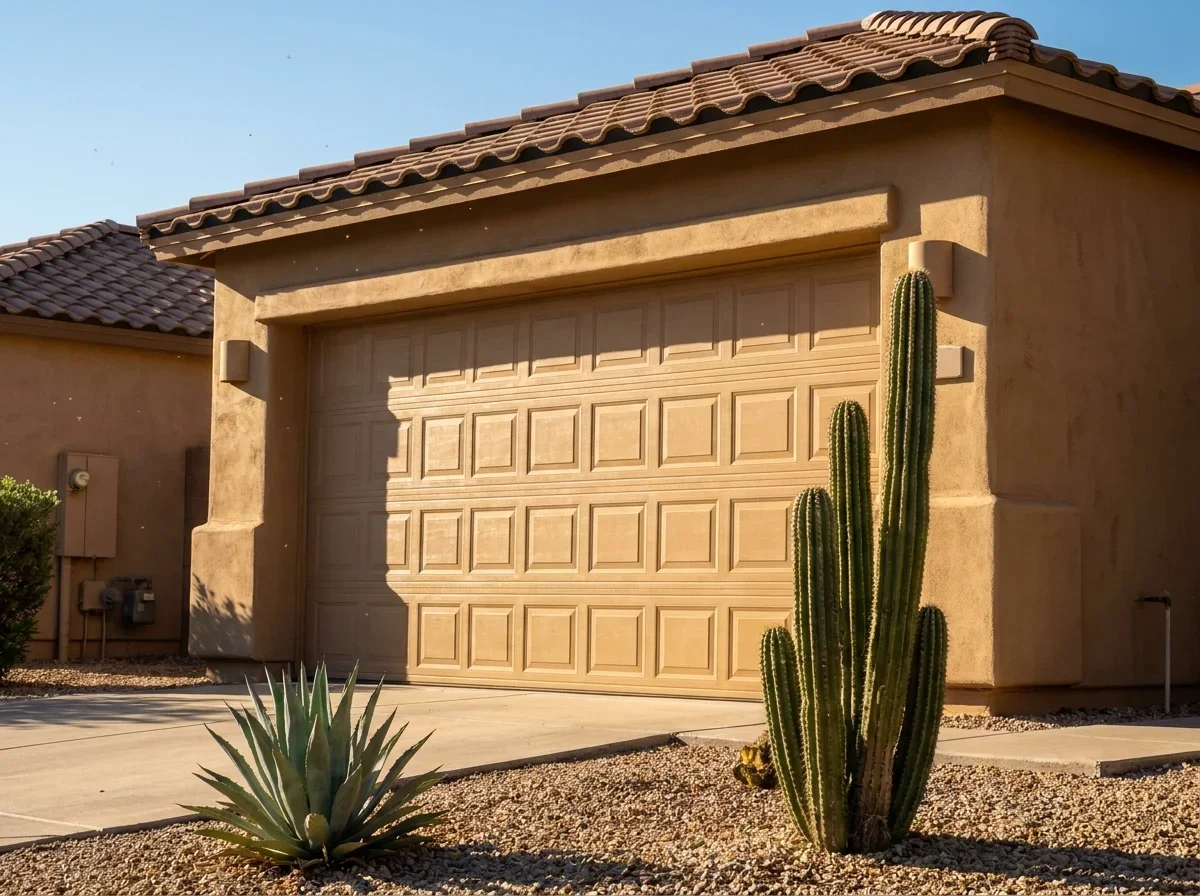
The ranking below follows how heat moves into a building, not measured Phoenix garage temperatures. Phoenix sits in a hot-dry climate (IECC Zone 2B/3B) with summer highs around 106°F. The Department of Energy's Phoenix-area home case studies pair air sealing with controlled ventilation rather than relying on either alone.[4]
A simple order of operations works for most homes:
- Seal visible gaps first (cheap, doable in an afternoon).
- Decide whether the door itself needs insulation or replacement.
- Deal with the ceiling or attic above the garage.
- Add ventilation.
- Consider mechanical cooling only after the rest is done.
Door Insulation, Seals and Air Leaks
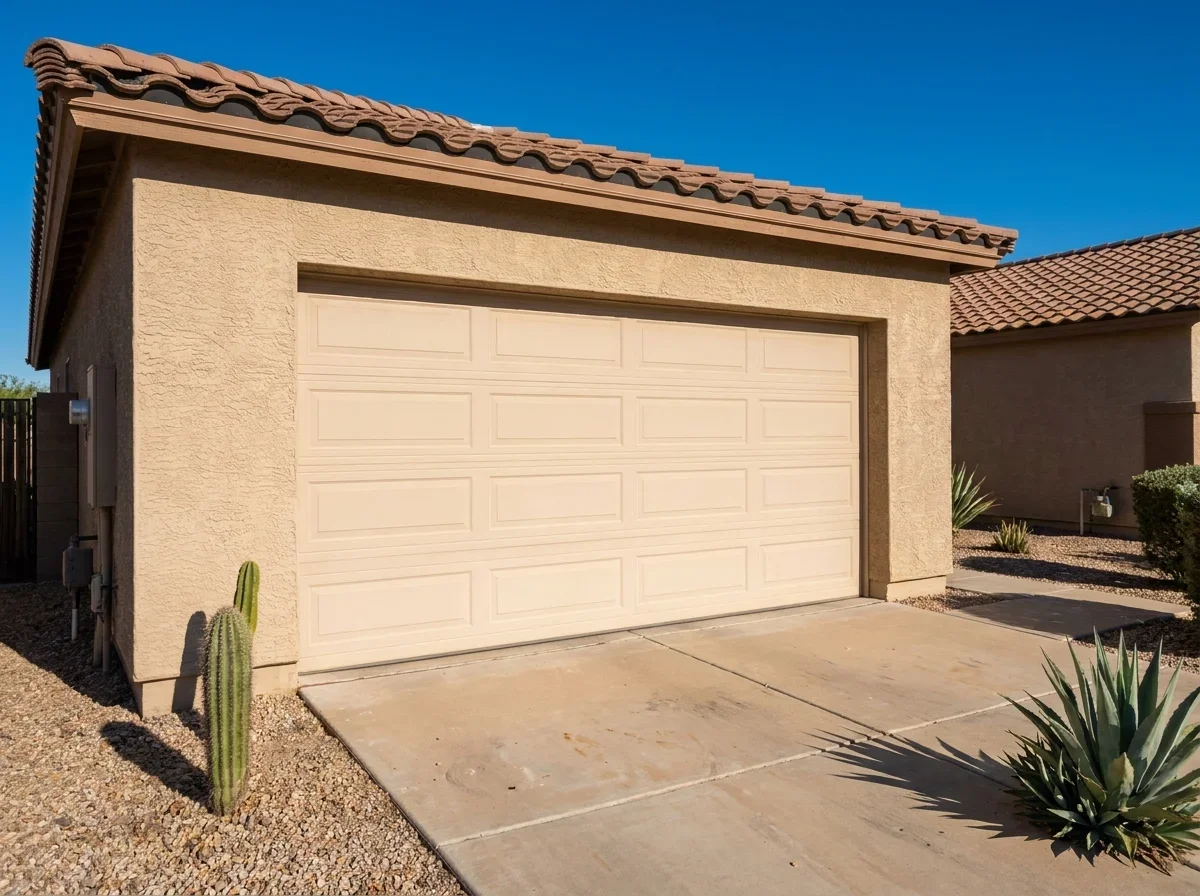
The door is usually the largest single surface in a garage, and a west- or south-facing one takes direct afternoon sun. An uninsulated metal door passes that heat straight inside.
Insulation slows the transfer, and its resistance is measured as R-value. Our garage door R-value guide explains what the numbers mean. The cost guide on whether insulation is worth it covers the tradeoffs for Phoenix homes.
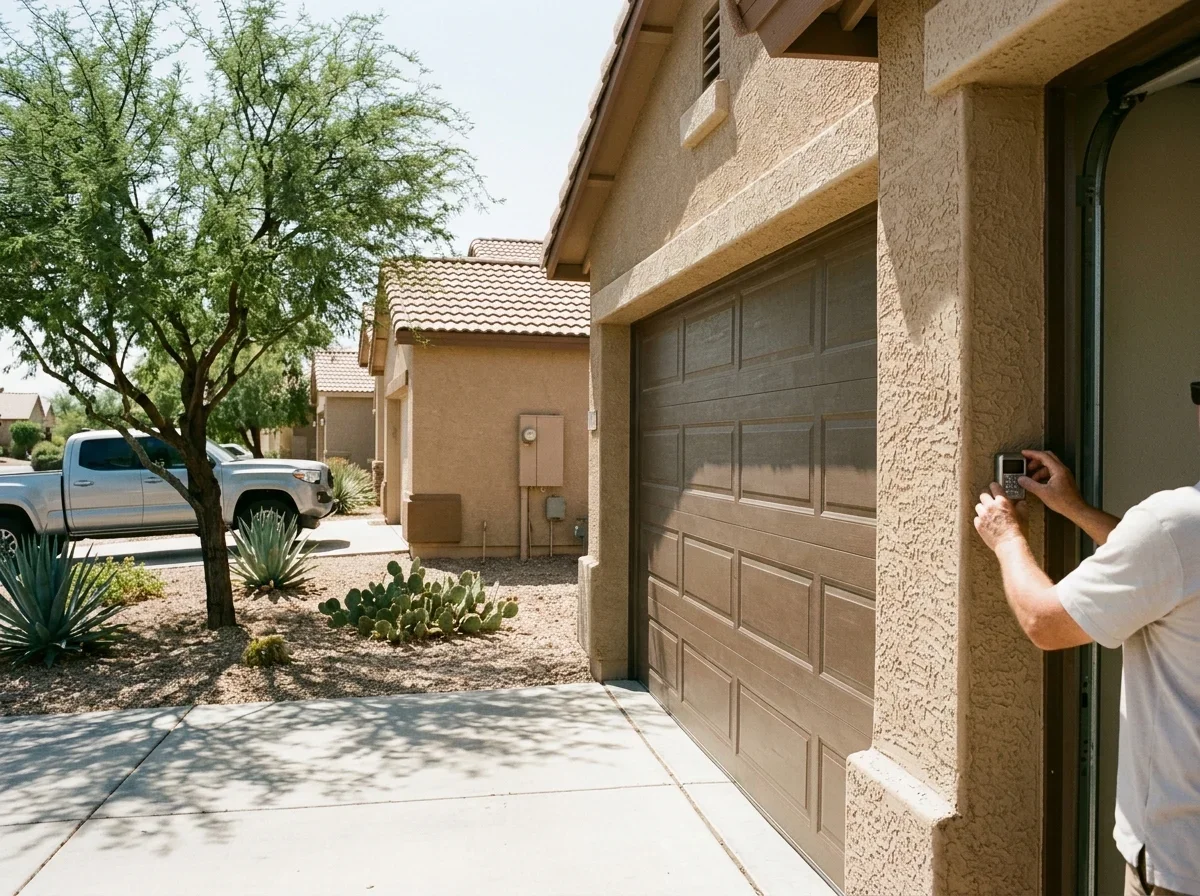
Start with a free diagnostic. Close the door on a sunny day, turn off the garage lights and look for daylight along the bottom, sides and top. Visible light means air is getting through, and the fix may be a seal rather than a new door.
Bottom Seals and Weatherstripping
Gaps let in hot air, and they also let in dust. NOAA reports that one to three large dust storms move into the Phoenix area in a typical year.[1] Haboobs can push walls of dust up to 10,000 feet high with winds reaching 60 mph.[2]
If your seals are worn, see how to replace a garage door bottom seal or review seal replacement costs.
Sealing does little against radiant heat coming through the door or roof. Don't block existing vent paths without a planned airflow replacement.
| Fix | Effort | What it addresses |
|---|---|---|
| Seal gaps | Cheap, an afternoon | Hot air and dust |
| Door insulation or replacement | Larger upgrade | Heat through the door |
| Ceiling or attic | Spray foam option | Heat from the roof and shared wall |
| Ventilation | Low intake, high exhaust | Heat that still gets in |
Venting, Shade and Other Add-Ons
Once heat entry is under control, ventilation clears out what remains. The most effective setup gives air a complete path: a low intake and a high exhaust that vents outdoors.
A fan that only stirs the air makes the garage feel less stagnant, but it does not remove heat. Run ventilation after sunset and keep the door closed during the hottest hours.
Pro tip
Run ventilation after sunset and keep the door closed during the hottest hours, so you flush out heat instead of pulling more in.
The DOE case studies from the Phoenix area use mechanical ventilation on a schedule, including an energy-recovery ventilator that runs 20 minutes each hour.[4]
Insulating the Ceiling and Shared Walls
If your garage is attached, the shared wall and the ceiling under living space affect garage comfort and your home's cooling load.
The DOE describes spray foam as providing both insulation and air sealing at wall cavities and the underside of the roof.[3] Treating only the door leaves those heat paths open.
Shade and Door Color
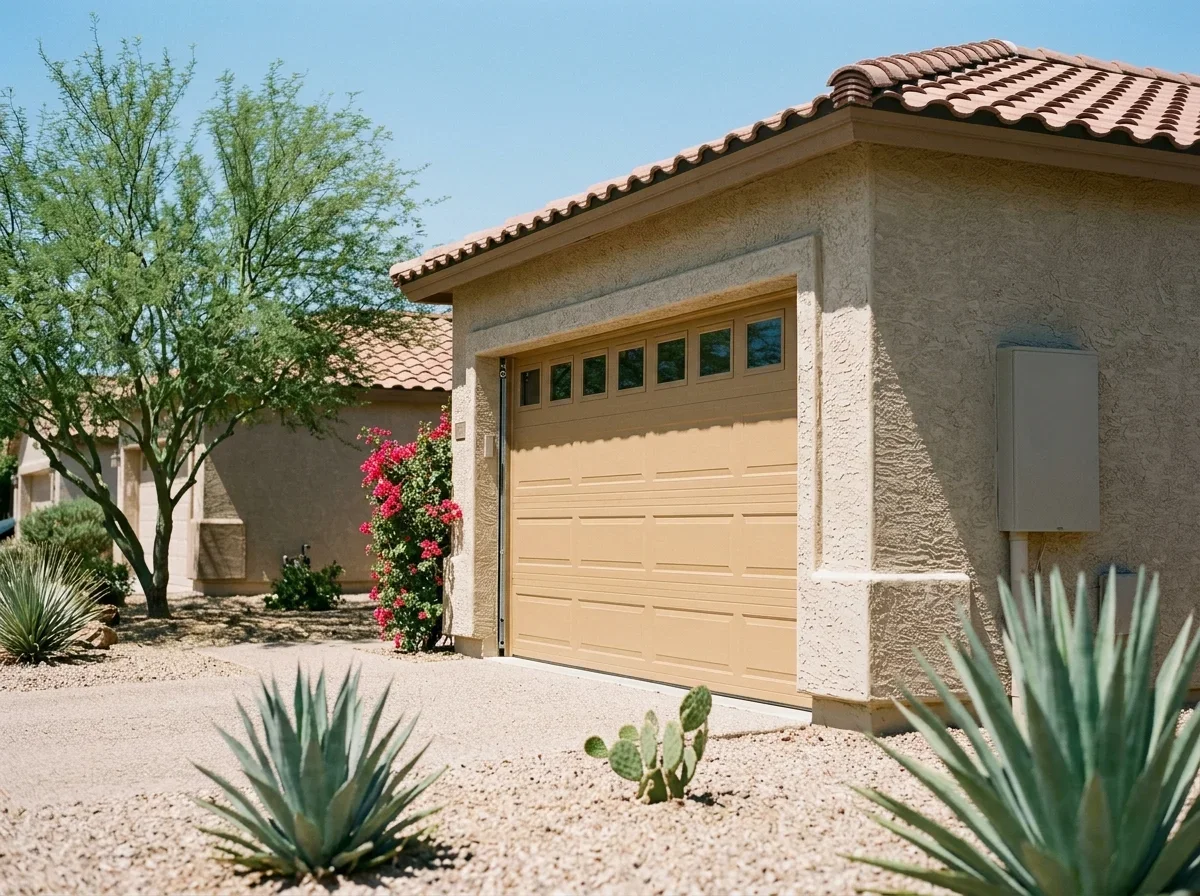
Shade stops solar heat before it reaches the door. Trees, awnings or shade screens on west- and south-facing exposures help most, and a lighter door color reflects more sun.
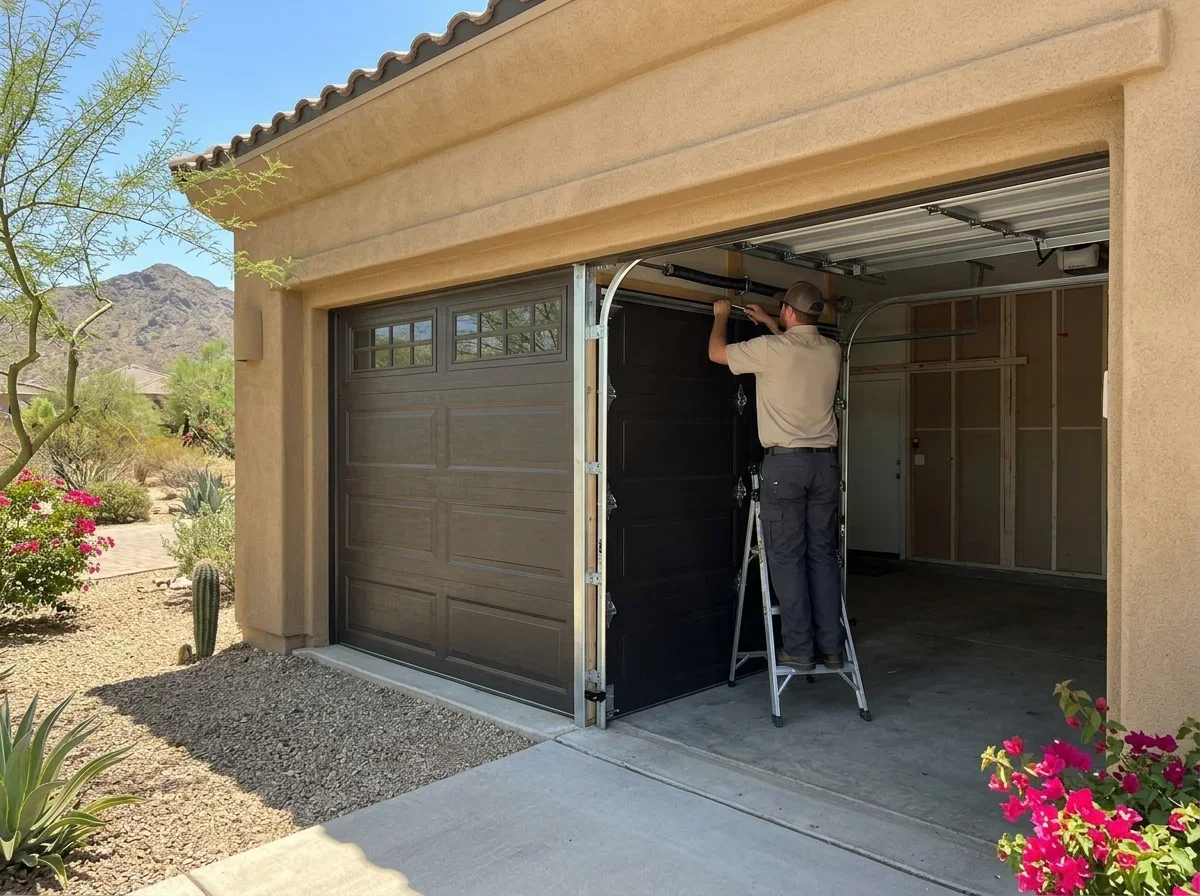
If your door is the weak point, a garage door installation with proper insulation is the biggest single upgrade.
In Arizona, work of $1,000 or more generally requires an ROC-licensed contractor. Check the license at roc.az.gov and confirm the class on the record covers your job. Ask your city whether a permit applies, using our Phoenix permit guide as a starting point.
Questions
- National Oceanic and Atmospheric Administration. "Haboobs: Phenomena with the Unusual Name Is No Joke." https://www.noaa.gov/stories/haboobs-phenomena-with-unusual-name-is-no-joke. Accessed October 17, 2026.
- NPR. "A Haboob Covered Central Arizona in Dust. But What Exactly Is It?." https://www.npr.org/2025/08/26/nx-s1-5518308/haboob-explained-phoenix-arizona. Accessed October 17, 2026.
- U.S. Department of Energy. "Mandalay Homes, Pronghorn Ranch, Prescott Valley, AZ." https://www.energy.gov/documents/doezehmandalay09-19-14pdf. Accessed October 17, 2026.
- U.S. Department of Energy. "Mandalay Home Inc., Pronghorn Ranch, Phoenix, AZ." https://www.energy.gov/sites/prod/files/2014/09/f18/DOE_ZEH_Mandalay_080614.pdf. Accessed October 17, 2026.