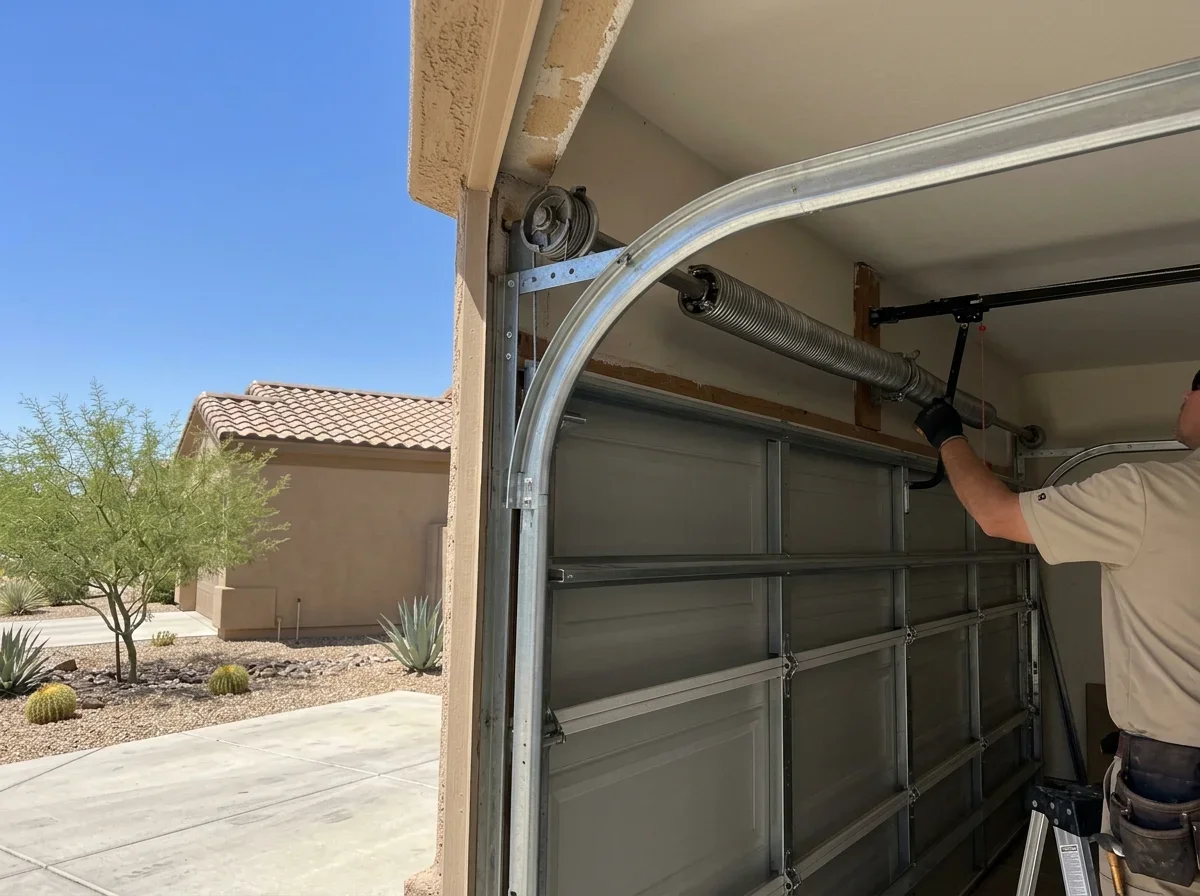
HOA Rules on Keeping a Garage Door Closed
Arizona has no statewide rule that requires a garage door to stay closed. Whether your HOA can make you keep it shut depends on your community's recorded documents, applied within state law. The statute ties enforcement to the requirements of those documents, so a garage-door rule has to be supported by the declaration, bylaws, or adopted rules.[2]
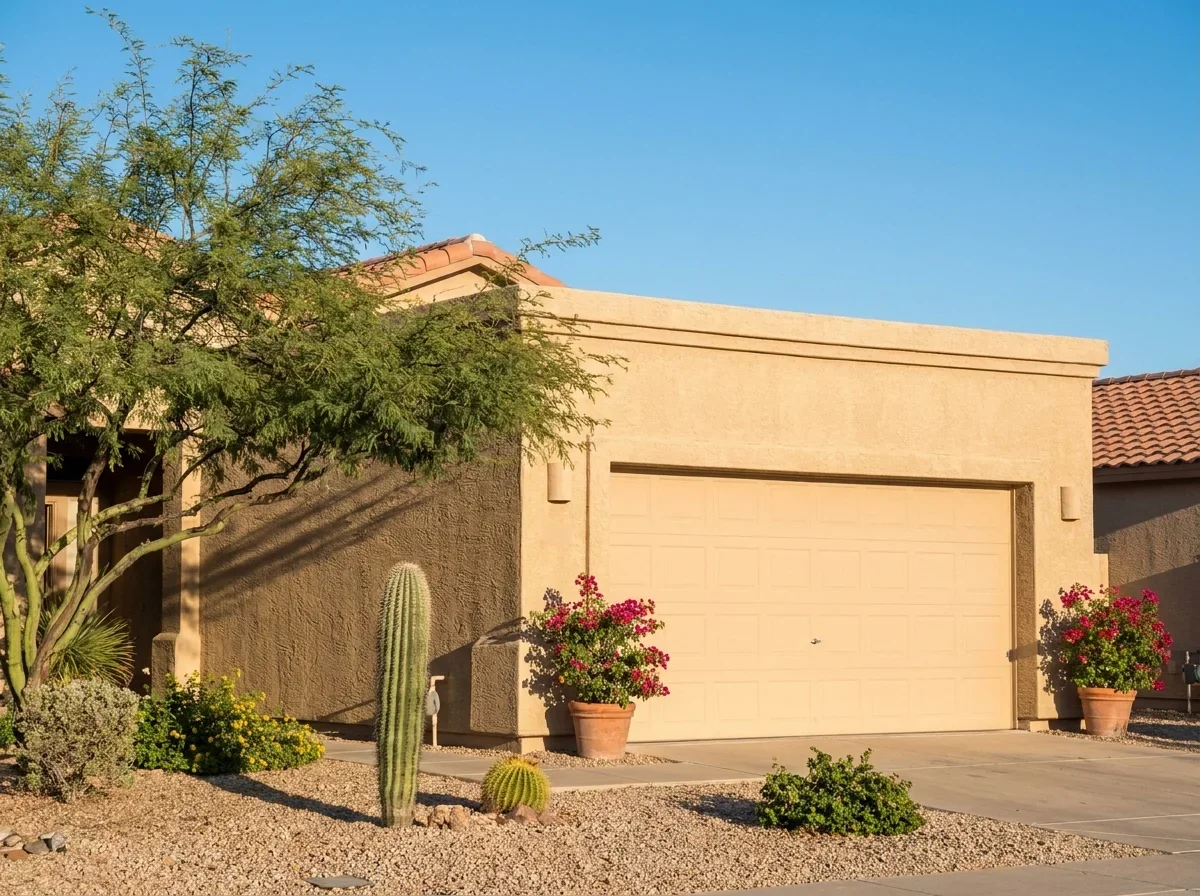
Many CC&Rs do address garage doors, and the wording varies a great deal.
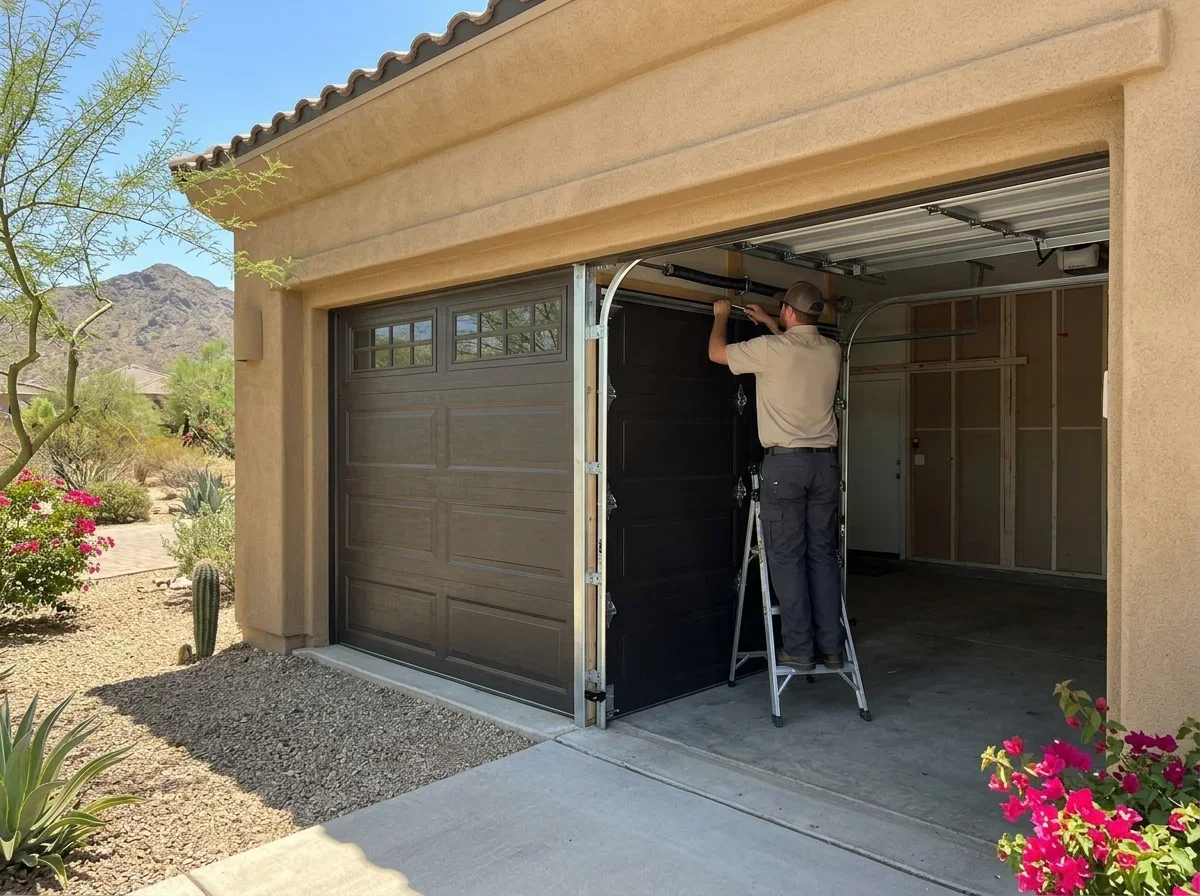
A phrase like "closed except for ingress and egress" can be read narrowly. That means leaving the door up while you work, clean, or cool the garage may not qualify. Read the exact language before assuming that "using the garage" counts as an exception.
The statutes cited here are the condominium provisions in A.R.S. Title 33. If you live in a planned community rather than a condominium, confirm the matching planned community statute that governs your association.
Where the Requirement Comes From
Start with the documents, and look at all of them. Check the recorded CC&Rs, the bylaws, any adopted rules, and architectural guidelines for terms like "garage door," "closed," "ingress and egress," "open," and "nuisance."
The source of the rule matters. It affects how the rule can be challenged or enforced.
Look for details beyond the basic requirement:
- Whether the document names an exception, time limit, or purpose
- Whether the restriction applies at all times or only in certain situations
- Whether the rule appears in the recorded CC&Rs or only in a board-adopted policy
Keep two questions separate. Approval for a new or replacement door is an architectural matter, covered in our guide to HOA approval for a new garage door in Arizona.
A rule about leaving the door open is a conduct matter, and it may live in a different document entirely.
| Question | Type of issue | Where to look |
|---|---|---|
| Can I install a new or replacement door? | Architectural | Architectural guidelines and CC&Rs |
| Can I leave the door open? | Conduct | CC&Rs, bylaws, or adopted rules |
If you are planning a replacement, a garage door installation and replacement professional can help you match the style requirements your HOA has on file.
What to Do If You Get a Violation Notice
Read the notice closely before you respond. For a condominium violation involving the condition of an owner's property, the association must give written notice, and you may respond by certified mail within 21 calendar days.[1] The association's written response must then identify the provision allegedly violated, the violation date, and the person who observed it.[1]
The notice must also describe the process you follow to contest it.[3]
That detail matters if the citation came from a drive-through inspection that caught the door open for a moment.
Next, ask the board in writing which provision applies. Request the evidence, the cure period, and any hearing or appeal procedure before you pay or dispute anything.
Step by step
Responding to a notice
Read the notice
Check the provision cited, the date, and the contest process.
Ask in writing
Request the provision, evidence, cure period, and appeal procedure.
Respond in time
You may respond by certified mail within 21 calendar days.
Get review if needed
Have an HOA attorney review the CC&Rs and the notice if it looks off.
A warning and a fine are not the same thing, and your documents may require a warning first.
If the wording is ambiguous, or the notice looks procedurally off, have an attorney who handles HOA matters review your CC&Rs and the notice. Your association may also have its own dispute process worth using first.
Until the question is settled, keeping the door closed when you are not driving in or out is the lowest-conflict option.
Quick answers
Can an Arizona HOA make me keep my garage door closed?
Only if the declaration, bylaws, or adopted rules support it. No statewide rule requires it.
Does working in the garage count as an exception?
Not necessarily. A phrase like "closed except for ingress and egress" can be read narrowly, so check the exact wording.
How long do I have to respond to a violation notice?
For a condominium violation involving the condition of property, you may respond by certified mail within 21 calendar days.
Questions
- Arizona Legislature. "33-1242 - Powers of unit owners' association." https://www.azleg.gov/ars/33/01242.htm. Accessed October 17, 2026.
- Arizona Legislature. "33-1242 - Powers of unit owners' association." https://www.azleg.gov/ars/33/01242.htm. Accessed October 17, 2026.
- Arizona Legislature. "Chapter 0324 - 472R - C Ver of HB2824." https://www.azleg.gov/legtext/47leg/2r/laws/0324.htm. Accessed October 17, 2026.