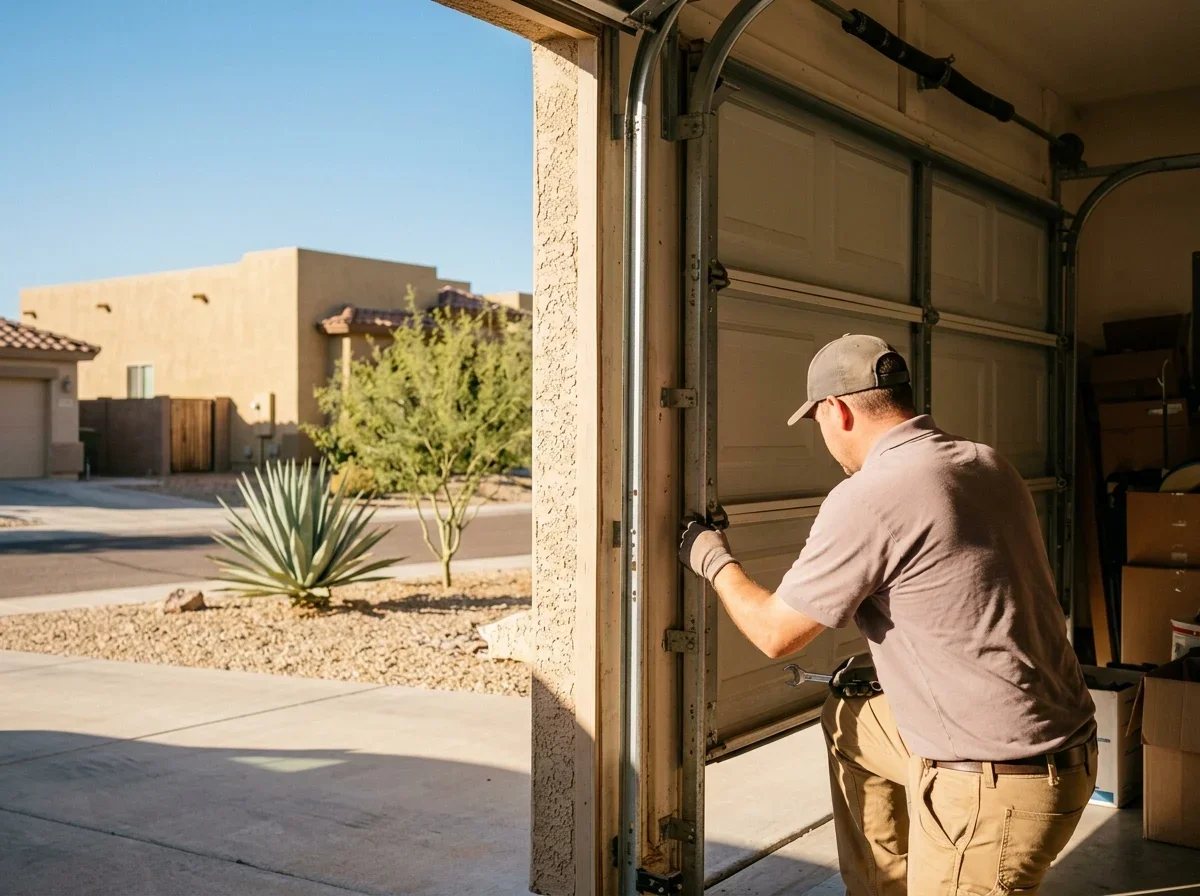
Garage Door Only Opens a Few Inches: Likely Causes
The usual culprits are opener limit settings, a binding or bent track, a weakened or broken spring, or a sensor problem. Each one leaves a slightly different fingerprint, which helps you narrow things down fast.
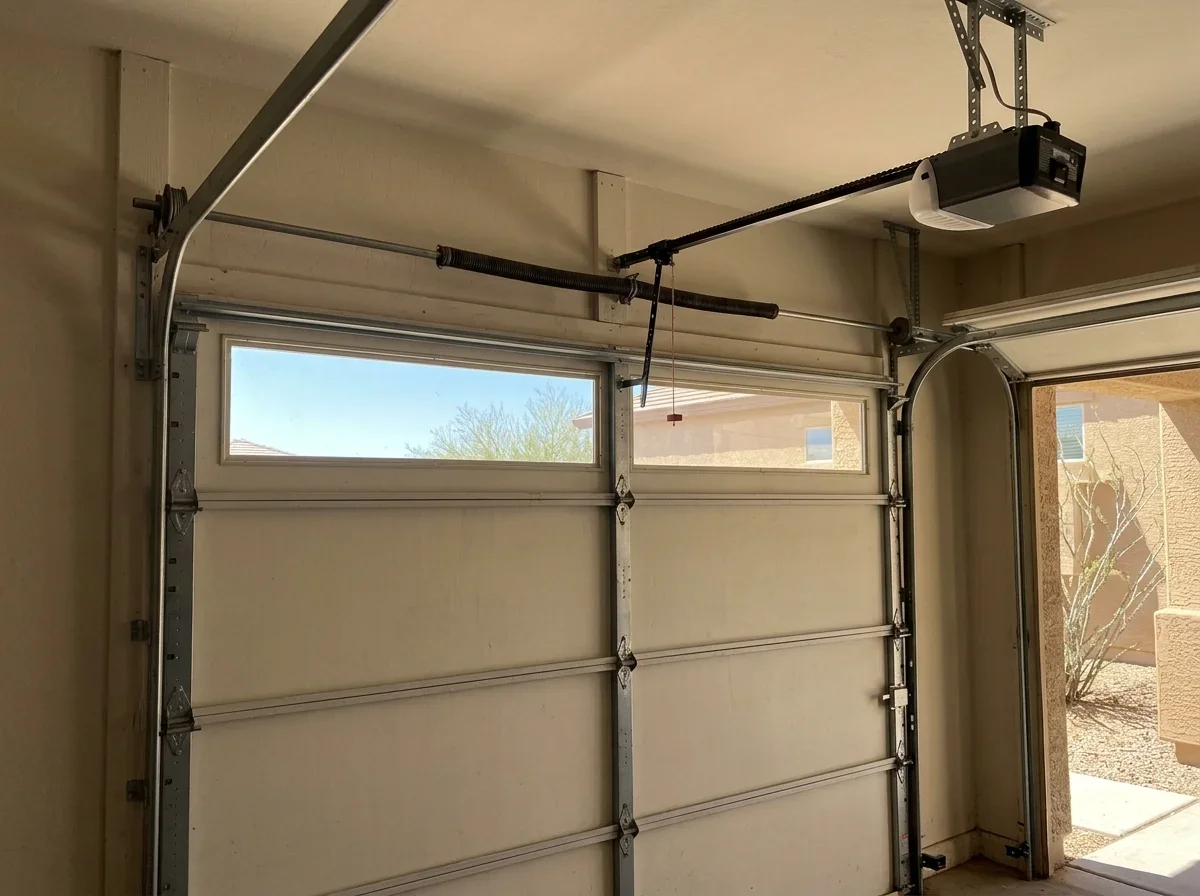
If the door opens a bit and then stops or reverses, the opener is reacting to something. That points to travel-limit or force settings, or to resistance somewhere in the door's path.
If it lifts only slightly and strains or hums, think spring or obstruction. A door that has become too heavy for the opener will quit at the point of greatest load.
Safety sensors deserve a mention, but keep them in perspective. They mainly affect closing, so a door that stalls while opening is less likely to be a sensor fault.
Checks You Can Do Safely
Start with the cheapest test. With the door fully closed, pull the emergency-release cord and lift the door by hand. A balanced door should move smoothly, feel reasonably light, and stay roughly in place if you stop halfway.
If it feels heavy, catches, or drifts up or down on its own, the opener is not your problem.
Next, look at the hardware without touching anything under tension. DASMA notes that homeowners can visually inspect springs, hinges, brackets and fasteners from inside the garage with the door closed.[4] Scan both tracks for debris, bent sections, or spots where a roller seems to bind.
Then clean the safety sensors and check that their indicator lights are steady. It's a quick fix if the door also reverses on the way down.
Checklist
Safe checks before calling a pro
0 of 5 ticked
Tick them off as you go. Nothing is saved or sent.
Only after the door moves freely by hand should you look at limit or force settings. Follow your opener's manual for that procedure, change one setting at a time, and test after each small adjustment.
Turning force up to make a heavy door lift is not a fix. It strains the opener and can hide a dangerous spring or track fault.
Pro tip
Change only one opener setting at a time and test after each small adjustment, so you know what made the difference.
When the Problem Is the Spring or Track
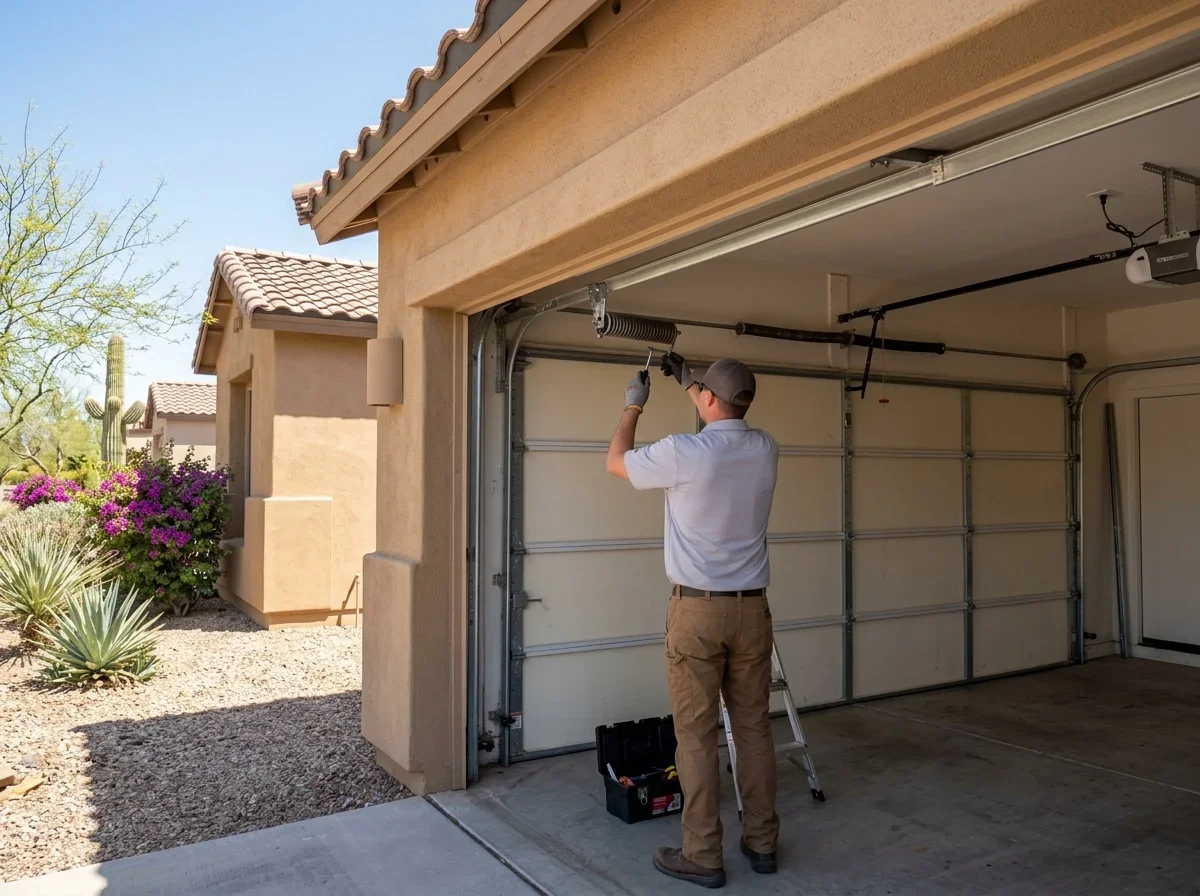
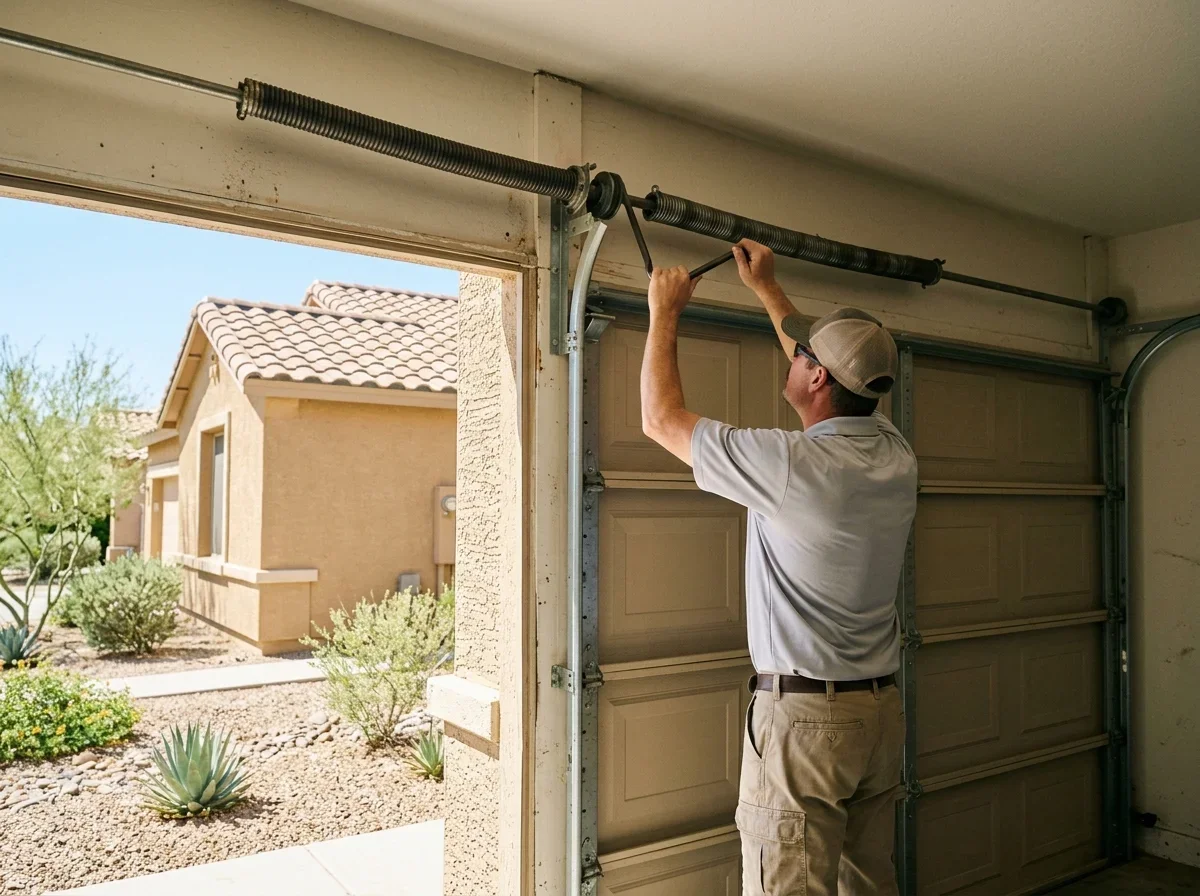
If the door is heavy by hand, a spring is the likely suspect. Springs hold a great deal of tension, and DASMA warns they can cause injury when they break.[2] Components under spring tension should be looked at, not touched.[3]
Leave the springs, cables and bottom brackets alone.
DASMA's guidance is that homeowners should not loosen or adjust bottom brackets, cables, red-colored fasteners or supports.[1] A bent track, loose bracket, frayed cable or visible gap in a spring all call for a trained technician.
Tracks matter too. They need to be securely connected to sound, load-bearing material,[3] so a track that has shifted or pulled loose is more than a cosmetic flaw.
In the Phoenix area, blowing dust and wind-borne grit can build up in the tracks and on rollers. Wiping the track channels clean now and then helps the door roll freely, though it won't fix a bent rail.
When the door stays stuck after these checks, or anything involves a spring, cable or damaged track, book garage door repair. Choose a contractor with an active license, and confirm it on the Arizona Registrar of Contractors lookup at roc.az.gov.
For a broader look at doors that won't move at all, see Garage Door Won't Open? Common Causes and What to Try.
Quick answers
Why does my garage door stop partway up?
The opener is usually reacting to something: travel-limit or force settings, or resistance in the door's path such as a heavy door, binding track or weak spring.
Can I adjust the springs myself?
No. Springs hold a great deal of tension and can cause injury. Leave springs, cables and bottom brackets to a trained technician.
Are safety sensors the cause if the door stalls while opening?
Unlikely. Sensors mainly affect closing, so a door that stalls while opening is less likely to have a sensor fault.
Questions
- Door & Access Systems Manufacturers Association International (DASMA). "Automatic Garage Door Opener Safety & Maintenance Guide." https://www.dasma.com/wp-content/uploads/2024/04/Automatic-Garage-Door-Opener-Safety-Maintenance-Guide-trilingual-3-22-24.pdf. Accessed October 17, 2026.
- Door & Access Systems Manufacturers Association International (DASMA). "Safety Tips." https://www.dasma.com/safety-tips/. Accessed October 17, 2026.
- Door & Access Systems Manufacturers Association International (DASMA). "TDS 151 General Code Inspection Guidelines for Garage Doors." https://www.dasma.com/wp-content/uploads/2022/03/TDS151.pdf. Accessed October 17, 2026.
- Door & Access Systems Manufacturers Association International (DASMA). "Residential Sectional Garage Door and Electric Operator Inspection Checklist." https://www.dasma.com/wp-content/uploads/2023/04/TDS167.pdf. Accessed October 17, 2026.